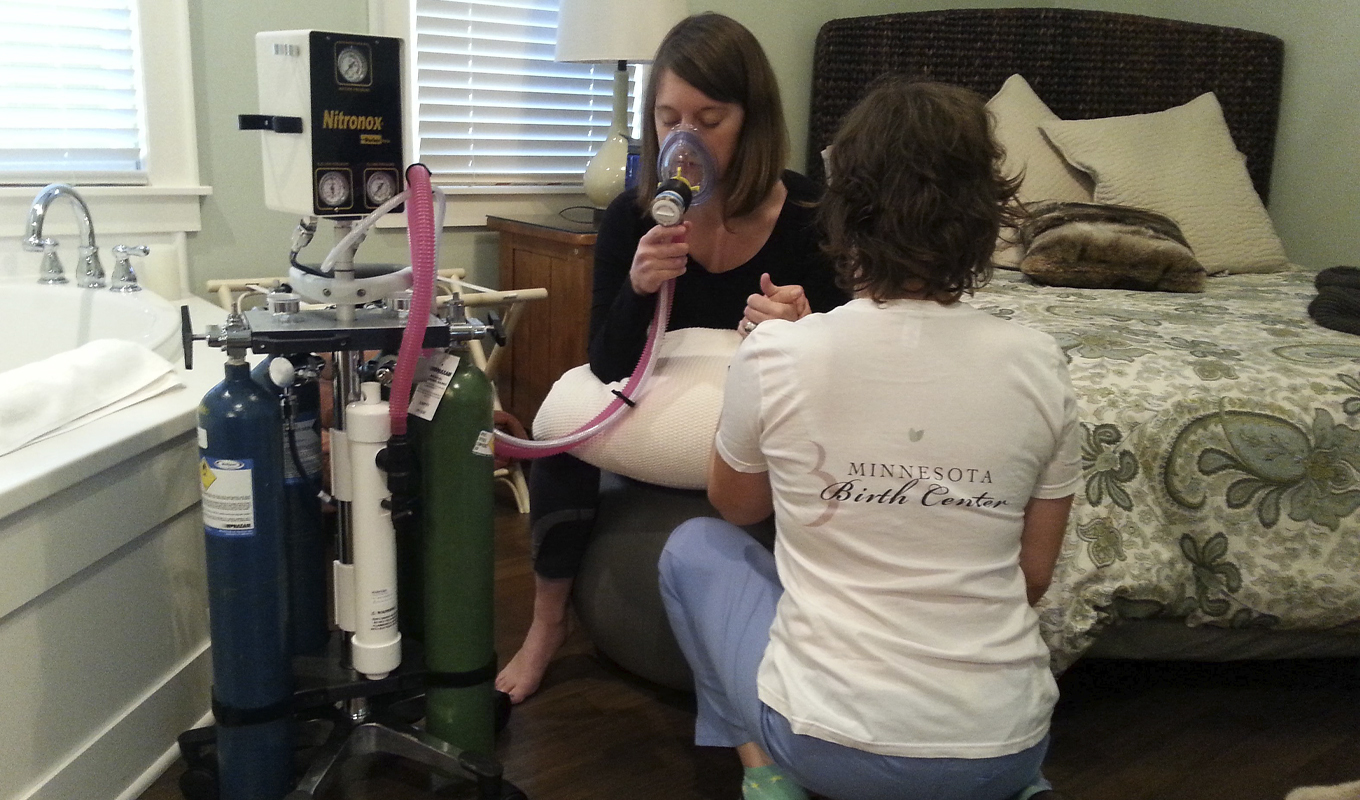
Choosing where to give birth: Birth center
By Anna Moore · Jul 18, 2024
Part 3 of 3.
Read also:
Choosing where to give birth: Home
Choosing where to give birth: Hospital
Minnesota Birth Center treats pregnancy as a wonderful gift
The gift of new life is a miracle from God. The decision where to give birth involves the parents considering many factors, including the safety and comfort of mother and baby, personal convictions, and preferences. In this three-part series, Samaritan Ministries shares information and member experiences related to home, hospital, and birth center births.
While home and hospital births are widely available as birth location options, many communities have also established birth centers for expectant parents. Birth centers offer similar components as homes and hospitals do. They offer many comforts through private suites, but also offer sufficient medical supplies, staff, and equipment when needed.
Birth center births have doubled in the past decade to 20,000 births per year, but that still represents only 0.5% of all U.S. births.
An option for low-risk mothers
The birth center model in the U.S. has roots dating back to the mid-1940s, when Catholic Maternity Institute medical mission sisters and midwives in New Mexico offered a birth center in a small house. There also was a freestanding birth center in southern Georgia in the ’40s offered to black women who had no access to hospital care.
Modern freestanding birth centers started to gain popularity in the 1970s as parents sought to have more control over setting and care in labor and birth. There was an increase in consumer awareness and concern over unnecessary medical interventions routinely taking place at hospitals.
Birth centers as they are known today offer an option for low-risk mothers besides birthing at home.
“What’s really interesting is that about 90 percent of women are low risk,” said Chandra Lattig, co-founder of Pregnancy By Design and a Samaritan Ministries member. “Most women have the option to be able to birth at home or in a birth center, so it’s really only 10 percent of women that would be considered high risk who should deliver in a hospital.”
Unlike a home-birth situation, birth centers are fully staffed and have additional monitoring capabilities. Birth centers do not have access, however, to an anesthesiologist if an epidural is desired. A hospital is usually located within a short distance in case an emergency transfer is needed.
In most cases, birth centers are best equipped to serve single-baby pregnancies where the baby is presenting in head-down position. Mothers who are expecting multiple babies (twins, triplets, etc.) and/or breach pregnancies are generally referred to deliver at a hospital.
'A more natural experience'
There are both freestanding birth centers and birth centers available within a hospital. OB-GYNS primarily practice at hospitals, so mothers are less likely to have that type of provider when giving birth at a freestanding birth center. Generally, birth center providers are midwives who operate under the midwifery model of care. This is a different approach than most hospitals' medical model of care. The midwifery model of care is more personalized and focuses on the woman and her physiology. Outside intervention is used only when necessary, and midwives focus more on preventive care, teaching women how to care for themselves well during pregnancy. Birth centers are also staffed with registered nurses and sometimes doulas.
“I think you would have a more natural birth experience in a freestanding birth center because they operate more in the midwifery model of care,” Chandra said. “If it’s attached to a hospital, they are more likely to operate in the medical model of care.”
Relaxed environment
Karen Daly, a Samaritan member from Delaware, had all three of her children at a birth center. She said she heard many positive stories about the center from other mothers at her church and in her community, which influenced her initial decision.
“As someone who takes a holistic approach to medical interventions in general, I knew I wanted to have a say in my birth experience and wanted it to be a natural experience, but I also was not interested in a home birth,” she said.
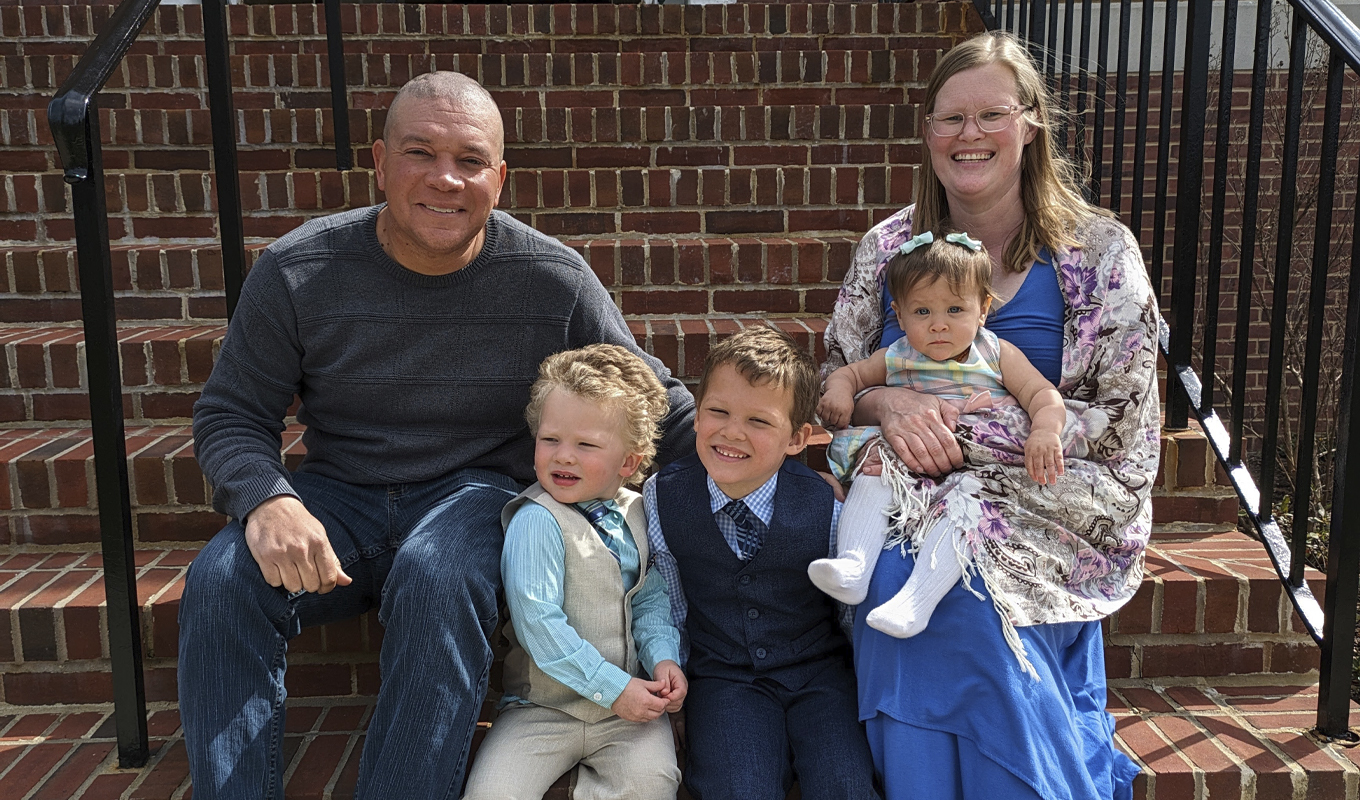
Jeremy and Karen Daly, shown here with their family, like the approach that birth centers take. (Supplied photo)
Because birth centers often operate under the midwifery model, parents don’t have to advocate as hard for the experience they desire from their birth plan.
“A birth center puts the mother in control and views birth as a natural process and not as a need for medical intervention. Because of this, the environment is already more relaxed,” Karen said.
The first hour after a baby is born is known as the “golden hour” if mother and baby can have uninterrupted skin-to-skin contact. Many birth centers support this time.
“Mama and baby can be kept together for bonding and breastfeeding,” Chandra said. “Think about it. The baby’s been in this warm, amazing womb for nine months and comes out and it’s immediately under these bright lights and cold, so they place the baby on mom. You don’t have to fight for that. They will do all the testing, right with the baby on your chest. It’s amazing.”
Solid middle ground
Alicia Schreibeis, a Samaritan member from Montana, decided to have her fourth baby at a birth center after three hospital births, including a cesarean section followed by two vaginal births after C-section (VBACs).
“The birth center seemed to be a good middle ground for me,” she said.
Her birth suite was 15 minutes from the nearest hospital, though she didn’t need it. While she considered a home birth for this baby, the thought of housework after giving birth encouraged her to give birth outside the home.
“At the time, our main reason for not doing a home birth instead was mostly in regard to the clean-up afterward,” Alicia said. “It also appealed to me that I could leave the other three kids behind and focus for a few days on just the baby. The thought of delivering at home with looming piles of dishes and laundry staring at me also pushed me to want to leave the house.”
Cozy, spa-like environment
Like the environment of a spa, some birth centers offer soft, organic cotton towels, non-skid slippers, organic cotton robes, essential oils, aromatherapy diffusers, and gentle background music. Some suites even offer soft lighting via candles, lamps, and dimmers. Many centers have some of the conveniences of a home.
“It was a cozy, spa-like, relaxing setting that had all the comforts of home, like couches, lamps, kitchen, food, jetted tub, and a king-size bed,” Alicia said. “Delivering a baby with only three people in the room (two midwives and her husband) was an entirely different experience than when I had eight-plus at some of my previous deliveries. It was such an enjoyable experience.”
Many birth center suites offer birth tubs for the mother to labor and even deliver in if desired.
“Water births, or hydrotherapy, is what they call the midwives’ epidural. It is amazing,” Chandra said. “I had two water births, and it takes all the weight off you, and you can float around and move into different positions. The warm water is very soothing, and it just helps you manage labor, so it’s an excellent choice. You can also have a water birth at a hospital, but they usually have maybe one or two bathrooms with a tub.”
Large showers are also available at some birth centers.
‘You have more freedom’
Medical intervention rates are lower at birth centers than in a hospital.
“You’re free to move about and you’re not tied up to a continuous IV or fetal monitoring,” Chandra said. “So, you have more freedom.”
Many birth centers have alternative ways to labor such as using exercise balls, birthing stools, and birthing swings. Each option offers different labor positions and levels of comfort to the mother.
“I could walk, bounce, bathe, stand, squat, or do whatever else my body needed,” Alicia said. “I could eat food whenever I wanted. It was all new and different from the hospital. Interestingly, it was also my quickest and easiest recovery.”
Freestanding birth centers have shorter periods of stay than hospitals, too, which could be a benefit to some families. When Karen had her third baby, her older sons were able to meet their new sister soon after her birth and then go home together.
“My boys were able to come to The Birth Center (TBC) just a couple of hours after she was born to meet her before we all headed home for the night, since TBC does an early discharge four to six hours after birth,” she said. “I loved being home and snuggling all of my children together in my own bed right away.”
Emergency transfers
Unlike a hospital, birth centers do not have an operating room within the facility if it is freestanding. If a C-section is deemed necessary or there is a major concern for the mother or baby’s health, the mother will be transported to a nearby hospital.
“The birth center C-section rate is at 6 percent,” Chandra said. “I think the biggest differential is that you have continuous one-on-one care at the birth center.”
With every childbirth, families are wise to prayerfully consider their options for providers and setting. The best experiences occur when families are comfortable with their decision.
“Be comfortable wherever you choose to birth,” Karen said. “Tour the facility, ask questions, and pray about the best environment for you and your family. If you are not comfortable in your birthing environment or with your doctor or midwife, it will significantly impact your birth experience.”
If your family is planning where to have your baby, Pregnancy by Design offers a My Birth Profile Assessment where moms learn about the key areas that influence their birth experience: their personality, beliefs about birth, birth place, health care provider, and birth knowledge. The course was designed to help women make more informed choices in their birth care. Samaritan members can get a 25 percent discount on the My Birth Profile Assessment and Beyond the Birth Plan Childbirth Course using the code: BABY2024.
The information provided in this article is for educational purposes and is not meant as medical advice. It is the opinion of the writer. The information is not meant to replace a one-on-one relationship with a qualified health professional.