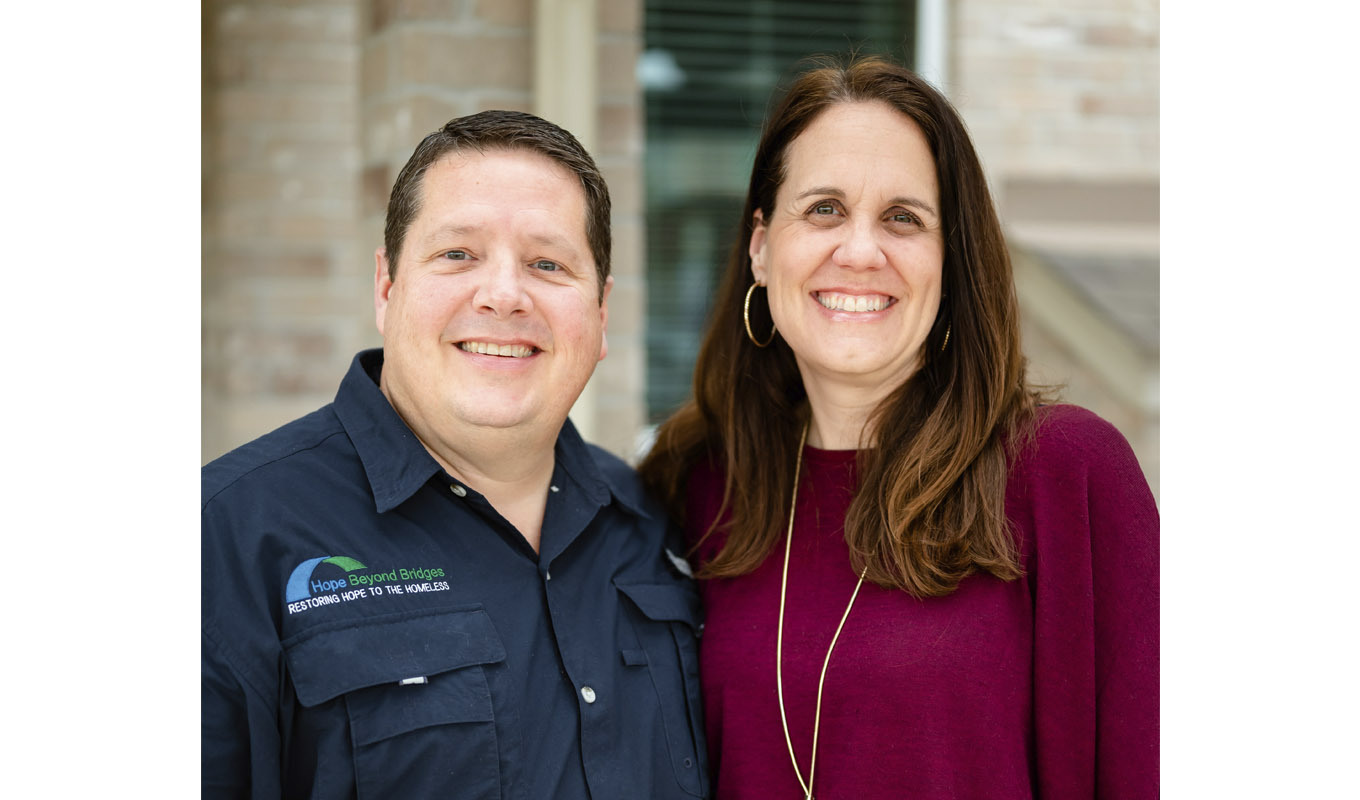
Member Spotlight: David Droll and Hope Beyond Bridges serve the homeless
By Kathryn Nielson · Mar 23, 2023
For more than 700 consecutive Saturdays, Samaritan Ministries member David Droll and a team of volunteers have served hot meals and hygiene kits to homeless people living under highway bridges in Houston, Texas.
Hope Beyond Bridges regularly feeds between 150 and 200 of northwest Houston’s homeless population along three major routes: Interstate 45, State Highway 249, and State Highway 290.
“We are a street-level homeless ministry,” David says. “Our desire is to build relationships with the homeless. We believe relationships are the key to moving them forward in their journey from where they currently are on the streets to becoming free from drugs and alcohol and back to being members of society.”
The call to help
David came to Christ later in life following a divorce. Not long after, he went on a missions trip to Mexico in 2007 and felt God urging him to become a missionary. Being a father to his son was his primary responsibility, so going to a foreign country to serve in missions didn’t appear to be a viable option.
At the time, he was also transitioning out of clinical nursing and into medical device sales, which required him to drive all over Houston. During those trips, God helped him see the homeless and change his heart toward them. He went from believing they were there by their own fault to seeing their need.

David Droll prays with Hope Beyond Bridges members on a Saturday morning. (Supplied photo)
“God just changed my heart and gave me eyes to see the homeless,” David said. “I saw (them) everywhere.”
Homecooked meals and prayer
In 2008, he started what was then called 45 & Hope with two friends who have since moved on but remain active in the ministry in different capacities. The ministry focused on bridges along Interstate 45. As the effort expanded to other locations, he changed the name to Hope Beyond Bridges. David started working full time for the ministry as its own paid staffer six years ago. He oversees 300 volunteers.
From 9 to 11 every Saturday morning, David and his team cook a meal in a local participating church. While there’s nothing wrong with a sack lunch, David says, serving a homecooked meal to the people and being able to sit around and eat with them as well as talk and pray has been a “relational staple, if you will.”
“We greet them where they are,” David said. “We offer them a hot meal, something to drink, a hygiene kit, and we just engage with them.”
The volunteers take prayer requests and requests for blankets, shoes, bug spray, and other everyday items. As God provides, the team can fill those needs.
And they pray.
For David, “it’s less about poverty relief and more about the relationship,” he said.
The chronically homeless
Hope Beyond Bridges focuses more on the chronically homeless, those who have been on the streets for over three years, than the acute homeless. The latter are those who have been on the streets less than a year and are often there due to a job loss caused by an inability to get to work for some reason.
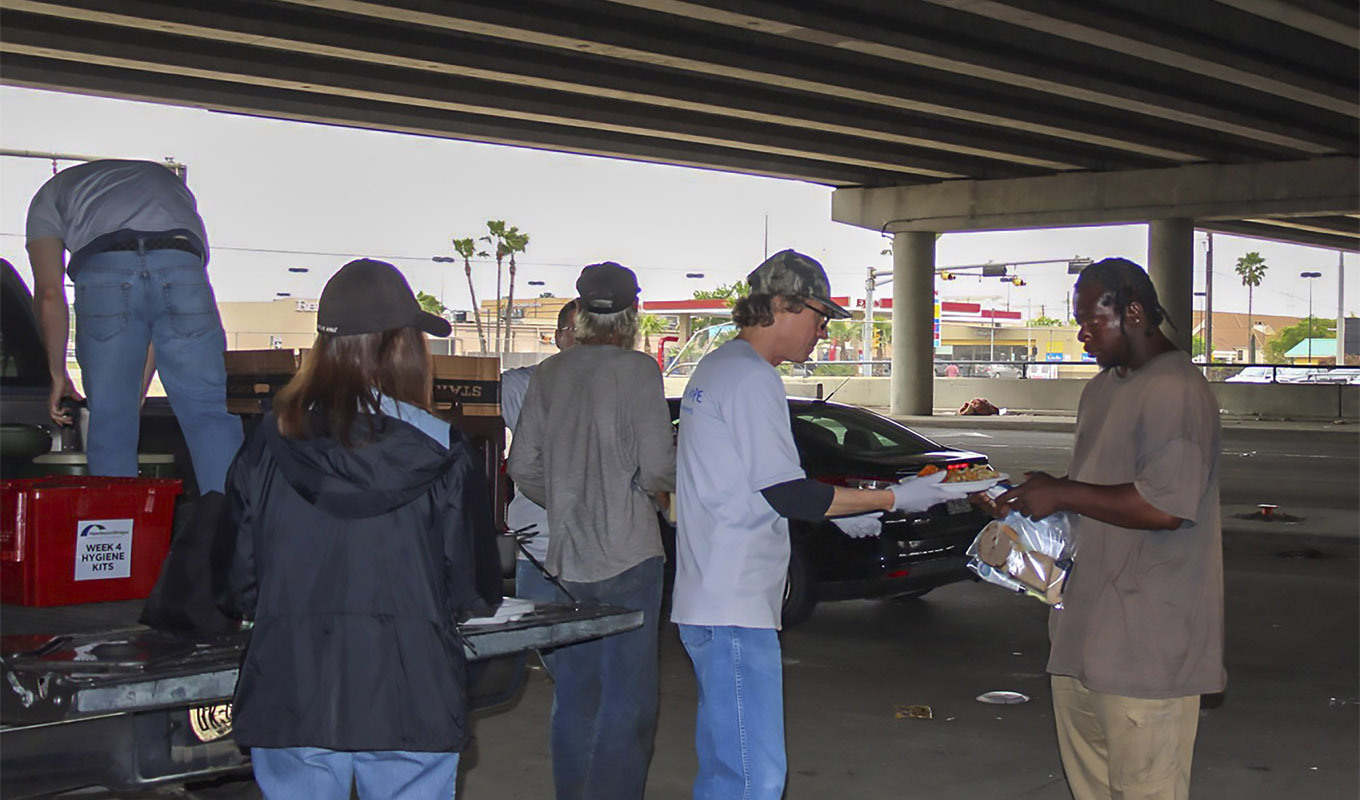
Volunteers with Hope Beyond Bridges serve meals to homeless people below an overpass in Houston. (Supplied photo)
According to one study, 64 percent of people live paycheck to paycheck, so one broken-down car can lead to homelessness. They don’t want to be on the streets and will do what it takes to get back on their feet. In these cases, David can connect them with different community-based and faith-based organizations that help with rental assistance, vehicle repair, or whatever is needed so they can get back on their feet.
“They just need a little hand up as opposed to a handout,” David said.
Chronic homelessness is often the result of trauma.
“As a child, teenager, or young adult, the chronically homeless usually have experienced some sort of trauma, and outside of community support, family support, or spiritual support, they turn to drugs and alcohol to numb the pain of that trauma,” David says.
He adds that drugs and alcohol often lead to prostitution, petty theft, grand theft, or other types of crime that lead to jail and a criminal record, with the addiction continuing.
“It’s very difficult for them to get out of that cycle, and so, our belief is they need a whole lot of Jesus and a whole lot of healing from the trauma,” David said. “God’s got to come in and heal that trauma in their heart and help them see themselves the way God sees them for them to be healed and move forward.”
75 helped off the streets
Over the past 14 years, David’s ministry has been successful in helping around 75 individuals get off the streets along three different routes.
His organization serves northwest Houston outside of the 610 Loop to State Highway 99. Hope Beyond Bridges focuses on the suburban area because the homeless there lack access to relief organizations in the downtown area, such as food banks and Salvation Army outlets. David believes God’s vision was for him to connect with the homeless in the suburban area and then connect them to the resources inside the Loop.
Defining ‘success’
For David, success is more than being off the streets for 12 months or even 24. He sees success as being off the streets for years. Some of the people he’s helped have been off the streets for seven years, and they stay in touch with him. He and his team know what’s going on with them. But he admits that, compared to the number of people he has served over the years, 75 success stories don’t seem like much.
“It’s a very small percentage because, again, it takes a long time to build trust,” David says. “They tend to be very nomadic, and if they move out of our area, we lose contact with them.”
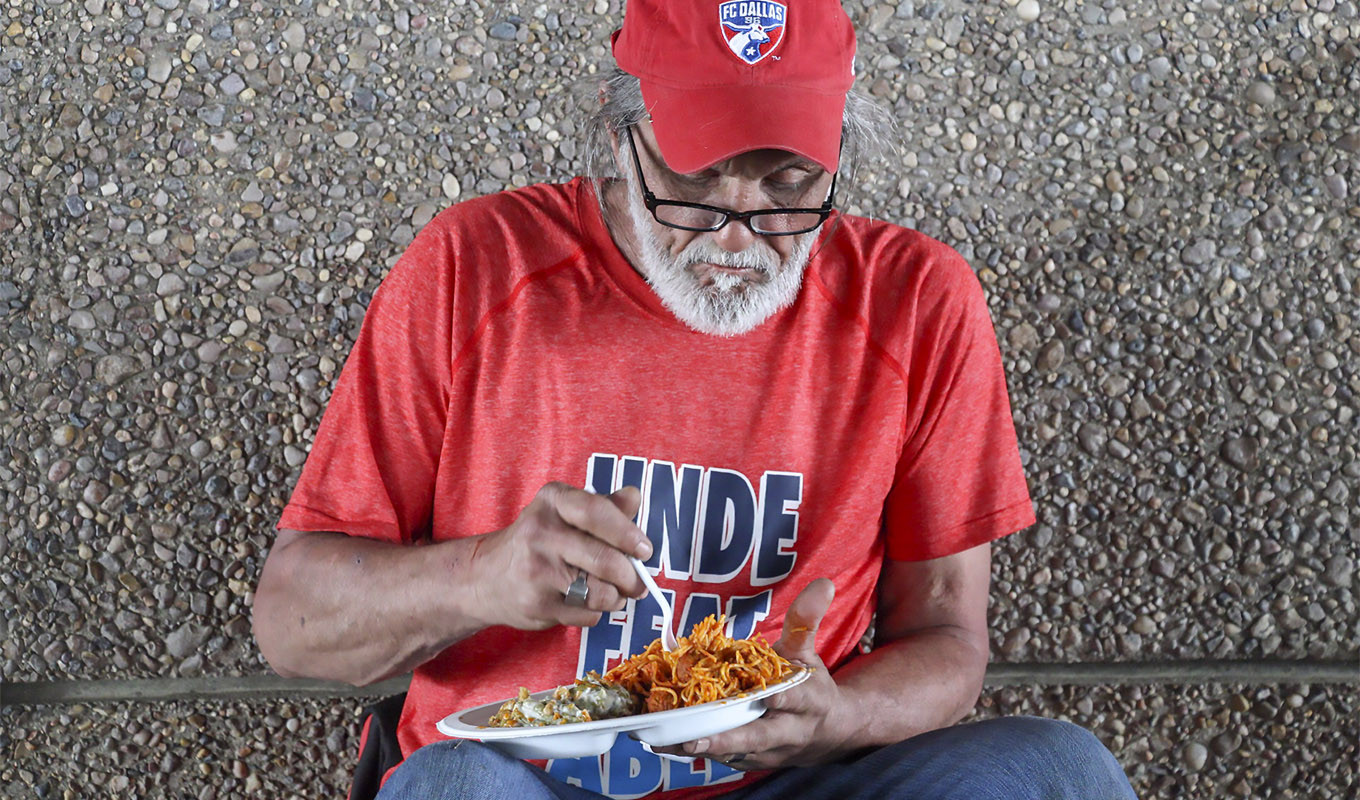
A beneficiary of Bridges Beyond Hope enjoys a freshly cooked meal under an overpass in Houston. (Supplied photo)
Once someone is ready to get off the streets, David’s team will take them to one of the missions downtown. Hope Beyond Bridges requires a minimum stay of 30 days at one of the missions because it demonstrates a commitment to getting help. After the 30 days, if they want to stay with the chosen ministry and complete the program there, that’s great. If not, David’s commitment to them is he or someone from his team will come and get them and take them to one of their ministry partners with a long-term residential recovery program.
He’s in the curriculum development stage for the Hope Recovery Center that he hopes to build. He plans to “go beyond our poverty relief efforts to move into rehab and recovery specifically focused on trauma—trauma-informed care combined with the grace and mercy of Jesus Christ.”
“It’s a long-term strategy that we hope and pray will be successful,” he said. “We’re untested, but this is where God has led us.”
Prayer points
- For Hope Beyond Bridges’ funding and new partners.
- For $1 million to launch a recovery center.
- For the spiritual protection of volunteers, staff, and board members.
When it came to health care, David Droll put his money "where my mouth is."