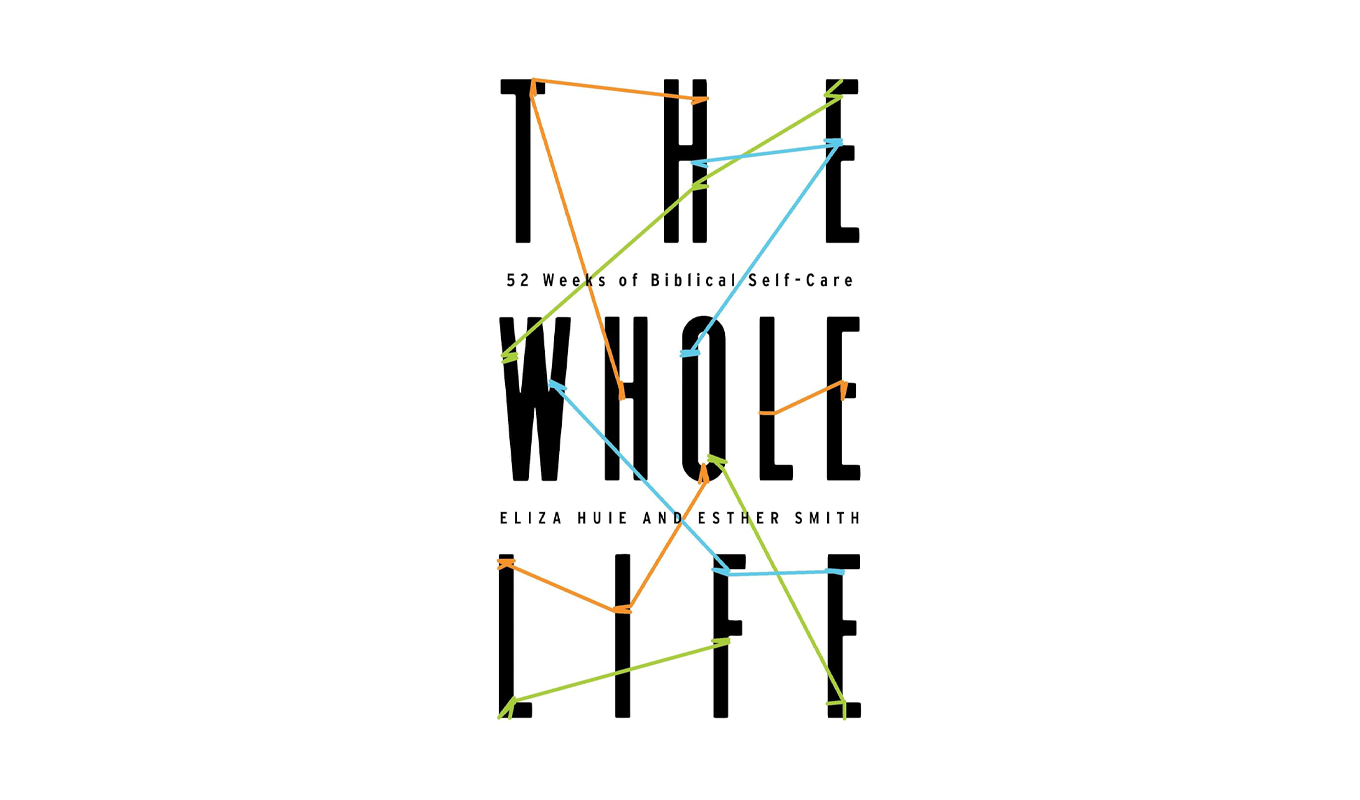
'The Whole Life' offers biblical self-care
By Anna Moore · Nov 15, 2024
Caring for ourselves can feel like a foreign concept for many of us.
Setting time aside for ourselves may even lead us to feeling guilty. Our commitment to Christ calls us to give more than we receive and to deny ourselves.
Biblical counselors Eliza Huie and Esther Smith do a great job of explaining how we can take care of ourselves biblically in The Whole Life: 52 Weeks of Biblical Self-Care (2021, New Growth Press).
Using this book over the course of a year, the reader learns about biblical self-care broken down into spiritual life, physical life, purposeful life, community life, work life, and restful life. The book is set up as weekly devotionals that contain a thoughtful quote, text, Gospel spotlight, action and application, and guided journaling. The action-application portion is broken down by spiritual, emotional, physical, and relational application steps.
Just as the advice for emergency situations on airplanes is to put on your own oxygen mask before helping others with theirs, this book helps us understand we must fill our own cups before pouring into others’. In sharing personal experiences and things they have learned along the way as counselors, Eliza and Esther guide readers through a new practice or rhythm each week that is aimed at bringing calmness, better overall health, improved relationships, rest, and a deeper relationship with Christ.
No matter your roles in life—parent, caretaker, pastor, counselor, volunteer, medical professional, business executive, entrepreneur, or teacher—you may often pour yourself out until you have almost nothing left. What happens when you continue running on empty? This book is for you.
“As you use this book and focus on stewarding your whole life, we pray it inspires a lifelong commitment to self-care that increases your capacity to love others,” the book’s introduction says. “We pray it points you back to your Creator, who gives good gifts to steward for his glory.”
This book did just that for me, giving me a fresh perspective on stewardship and how I can love and live better if I take care of my whole self. I was also reminded of how Christian community is necessary in biblical self-care, and that even Jesus set up healthy boundaries. The sections about Sabbath and rest were especially convicting but again reminded me Christ took the necessary time to rest with His Father and encouraged His followers to do the same.
Included in the book are bonus self-care practices, such as breathing exercises, how to do a full body scan, and how to bullet journal. There’s a burnout assessment in one devotional that’s meant to help the reader identify whether they are experiencing burnout.
“Burnout happens when you push through high levels of stress for long periods of time without a break,” the book says in week 11.
The counselors use their expertise to explain potential causes of burnout and other issues mentioned in the book.
Several weeks after the burnout assessment is a devotional on high-functioning burnout, which I didn’t realize existed. This is when we push through, not realizing we are burnt out and we serve and work until life is best described as a hamster wheel.
Here is how the writers describe it:
People with high-functioning burnout may look like they have a lot of energy, but in reality they are just trying to catch their breath. They continue to willingly engage and are not apathetic. They are effective in their work but live with a level of stress that fuels their forward momentum. This experience is especially common among people in helping or ministry roles.
There are some weeks that offer practices I would not have considered to be self-care, like week 12, when we’re encouraged to “become like a child.” The counselors write, “Children don’t seek important positions; instead, they approach the world with a sense of wonder.” We’re encouraged to make a list of 15 to 30 childlike hobbies or playful interests at the end of the devotional and try one that week. Painting, coloring, puzzling, and dancing made my list. I believe humility is the lesson here. Maybe joy, too.
In week 19, we are presented with two unchangeable and eternal truths we can remind ourselves of:
- We need help.
- Jesus is available to help us.
Sometimes, asking for help is the hard part, as well as acknowledging the need for help. But what is true is that we need His help every single day. The text points us to the Savior, who promises to always be with us.
Overall, this book is very practical, constantly pointing us to Christ and our need for Him.