
Tech neck: Simple exercises may relieve neck pain caused by excess screen time
By Nathan Appleby · Jul 16, 2025
Many of us spend hours each day sitting in today’s screen-centered world, whether we’re working at a computer, watching TV, scrolling on our phones, or even reading on tablets.
This constant forward head posture adds stress to the neck and upper back, often leading to “tech neck.”
But the good news? Simple, effective movements can help to reduce this discomfort. Even better, these exercises take just a few minutes and can be done in the comfort of your home.
As believers, we’re called to steward our bodies well (1 Corinthians 6:19-20). That includes caring for seemingly small things like posture and daily movement, which affect how we serve, work, and love those around us. Taking intentional time to realign and restore your body can be a small act of faithfulness, not just a nod to physical health.
Following are three exercises that can help relieve tech neck by reducing tightness and improving mobility through the upper back and shoulders.
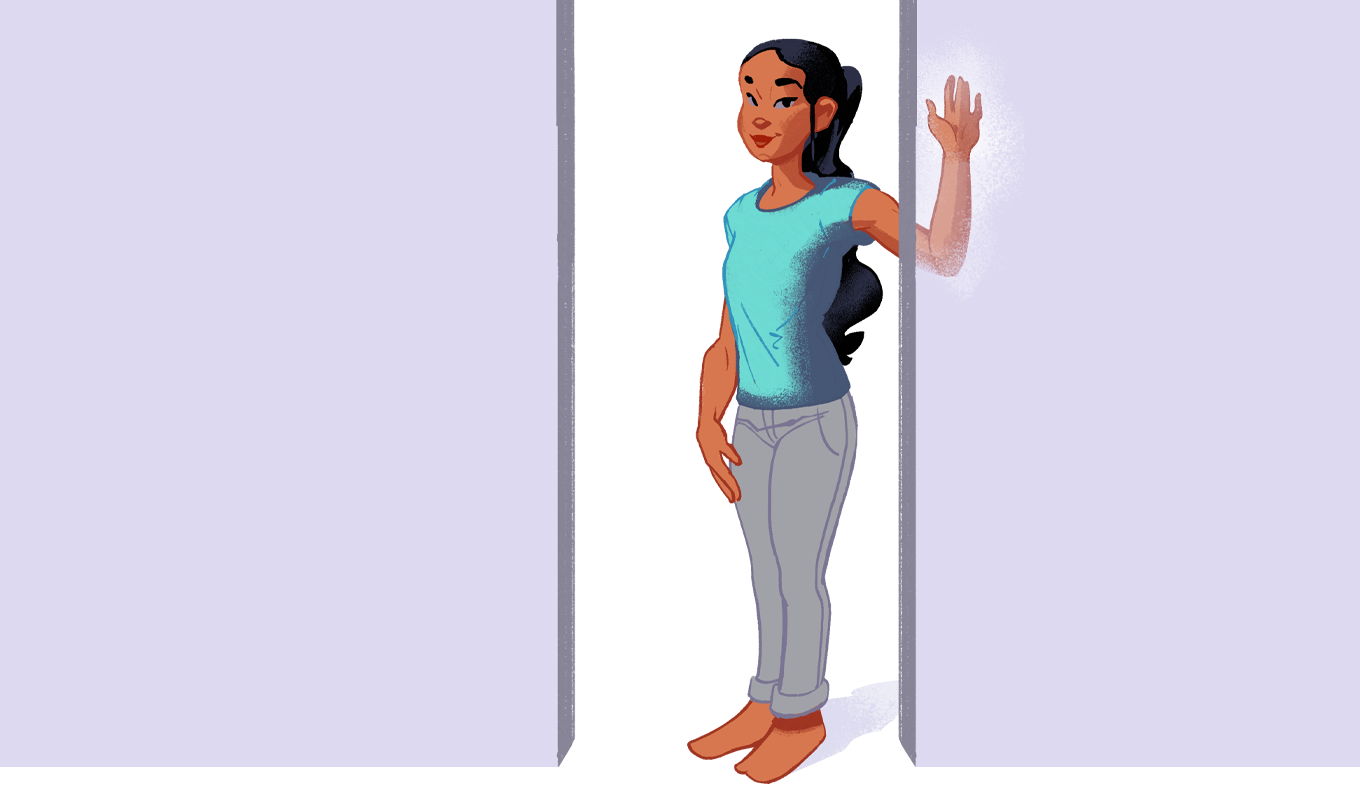
Pec stretch against the wall
Pec stretch against the wall
Tight chest muscles can pull your shoulders forward and strain your upper back. This stretch helps open things up and restore balance to your posture.
HOW TO DO IT:
- Stand next to a wall or doorway.
- Place one forearm and elbow flat against the surface at shoulder height (elbow bent 90 degrees).
- Gently turn your body away from the wall until you feel a stretch in your chest.
- Hold for 30 seconds, then switch sides.

Seated levator scapulae stretch
Seated levator scapulae stretch
The seated levator scapulae stretch targets the levator scapulae, the small muscle that runs from your shoulder blade to the side of your neck—one of the first muscles to tighten when you’re constantly looking down.
HOW TO DO IT:
- Sit tall in a chair with your back straight.
- Gently turn your head 45 degrees to the right (as if you’re looking toward your armpit).
- Tilt your head forward until you feel a stretch at the back/side of your neck.
- To deepen the stretch, reach your right hand behind your head and gently pull your head forward and downward toward your armpit.
- Hold for 30 seconds, then switch sides.
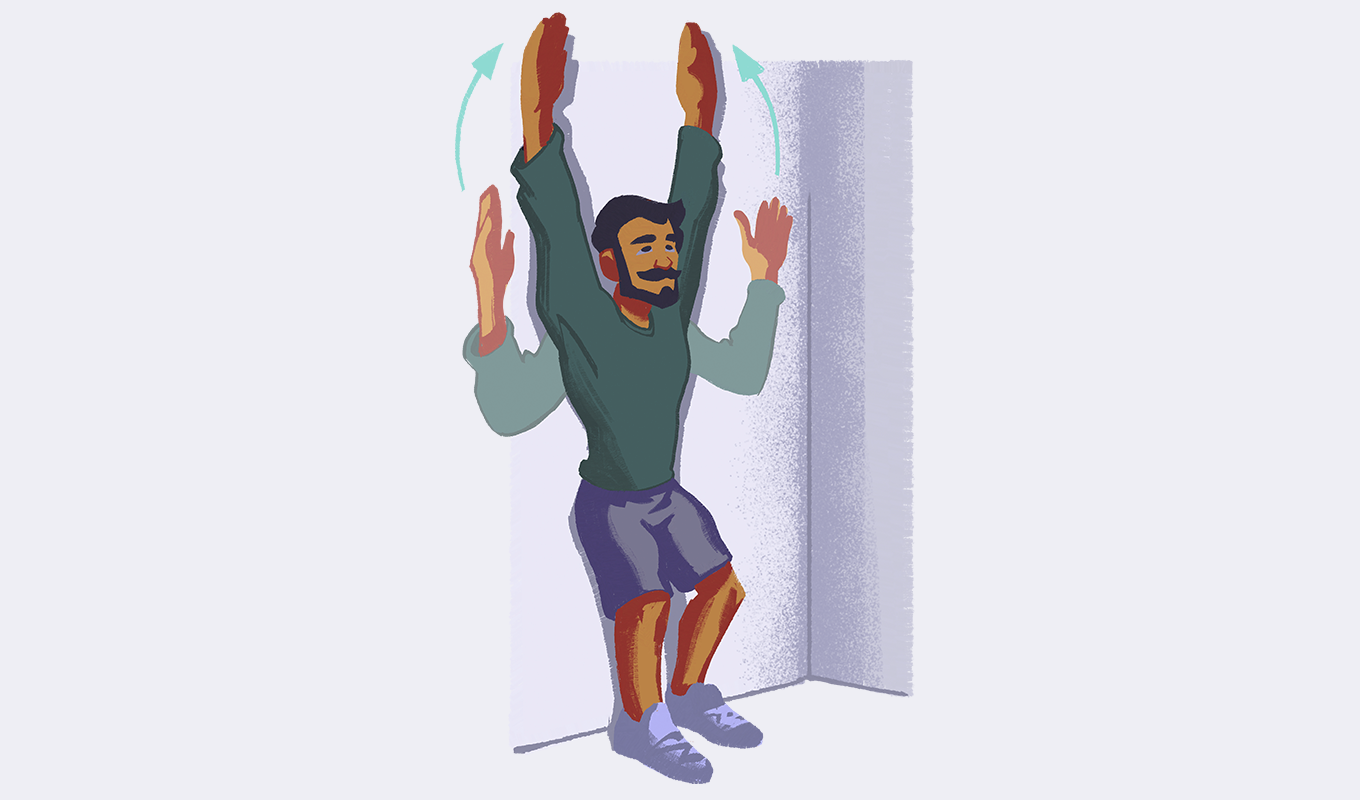
Wall angels
Wall angels
This exercise strengthens postural muscles in your upper back and helps to retrain the body to maintain upright, open posture—the opposite of what screen time encourages.
HOW TO DO IT:
- Stand with your back against a wall—head, upper back, and hips touching the wall.
- Place your arms against the wall in a goalpost position (elbows at 90 degrees).
- Slowly slide your arms up the wall, then back down—keeping elbows and hands against the wall the entire time.
- Perform 5 slow reps, taking 5 seconds up and 5 seconds down per rep.
Final thoughts
Consistency is key. Practicing these exercises even once per day can go a long way toward improving your posture and reducing neck strain. And when we care for the physical body God gave us, we often find we have more strength, energy, and clarity to care for the people around us.
If you’re looking for more personalized guidance to restore strength, prevent injury, or simply move better, I recently launched Forged Training, an online coaching program built around strength, longevity, and connective tissue health, an overlooked and undertrained aspect of physical strength. As a doctor of physical therapy, I’ve designed this program to bring clinical insight and personalization to every plan, with expert movement analysis and programming that helps you train with purpose.
Samaritan Ministries members can mention their membership to receive a discounted rate. You can learn more at ForgedInMotion.com.
Illustrations by David Nielsen/Samaritan Ministries
The exercises and information provided in this article are general recommendations and are not a substitute for professional medical advice, diagnosis, or treatment. Always consult with your physician or a qualified health care provider before starting any new exercise program, especially if you have any underlying health conditions or concerns.