Surgery center bundles procedures with good pricing
By Anna Moore · Jun 19, 2024
Price transparency is rare in American health care today, but it’s a principle Christian Healthcare Specialists (CHS) prides itself on.
To keep costs down, CHS avoids extra layers of administration and bundles costs. The cost for a procedure includes the consultation, surgery if needed, anesthesia, and anything post-operation.
For example, the price of a colonoscopy is $1,250. Implantation of a chemotherapy port costs $3,500. Gallbladder removal at the surgery center is $6,400. Lesion removal starts at $175. Office consultations start at $125.
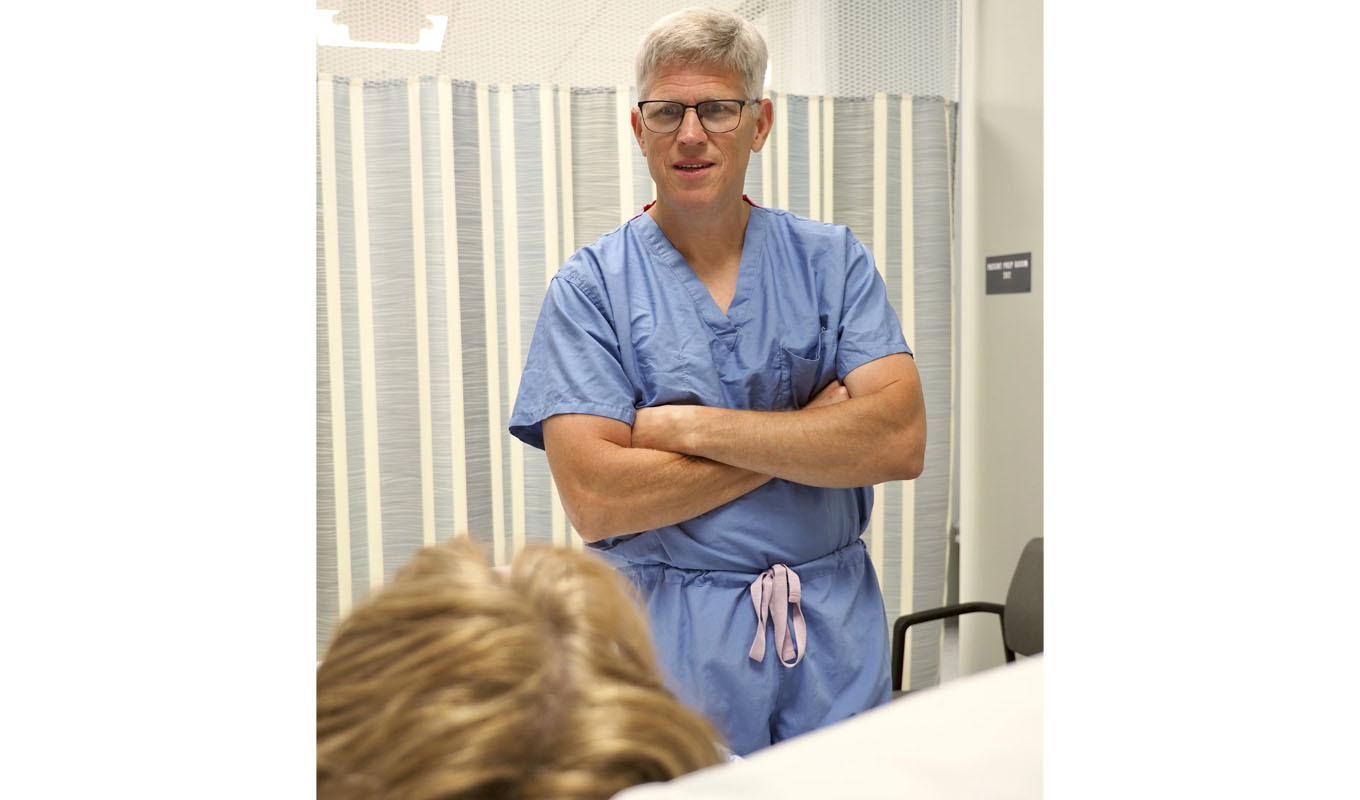
Dr. Ted Vanderkooi, a general surgeon for CHS and a Samaritan Ministries member, saw an opportunity to work for patients instead of a hospital when he began serving at CHS. The general surgeon spent several years working for a hospital in Michigan before moving over to CHS, which was started by Christian Healthcare Centers (CHC) in Grand Rapids. Vanderkooi—who goes by “Dr. Ted”—not only enjoys being in private practice but also appreciates the nonprofit’s price-bundling, which results in services at a much lower cost than at hospitals.
“We have put this together to help people without insurance,” Dr. Ted said. “We publish prices and believe in the bundled-care model. We exist to help people without insurance, so if people can’t pay, then we have benevolent benefactors and churches that can help folks with their bills, but our goal is to try to keep any prices that we publish as low as we can.”
With bundled care, CHS charges patients one price upfront so they know what the cost is going to be, with no surprise billings down the road.
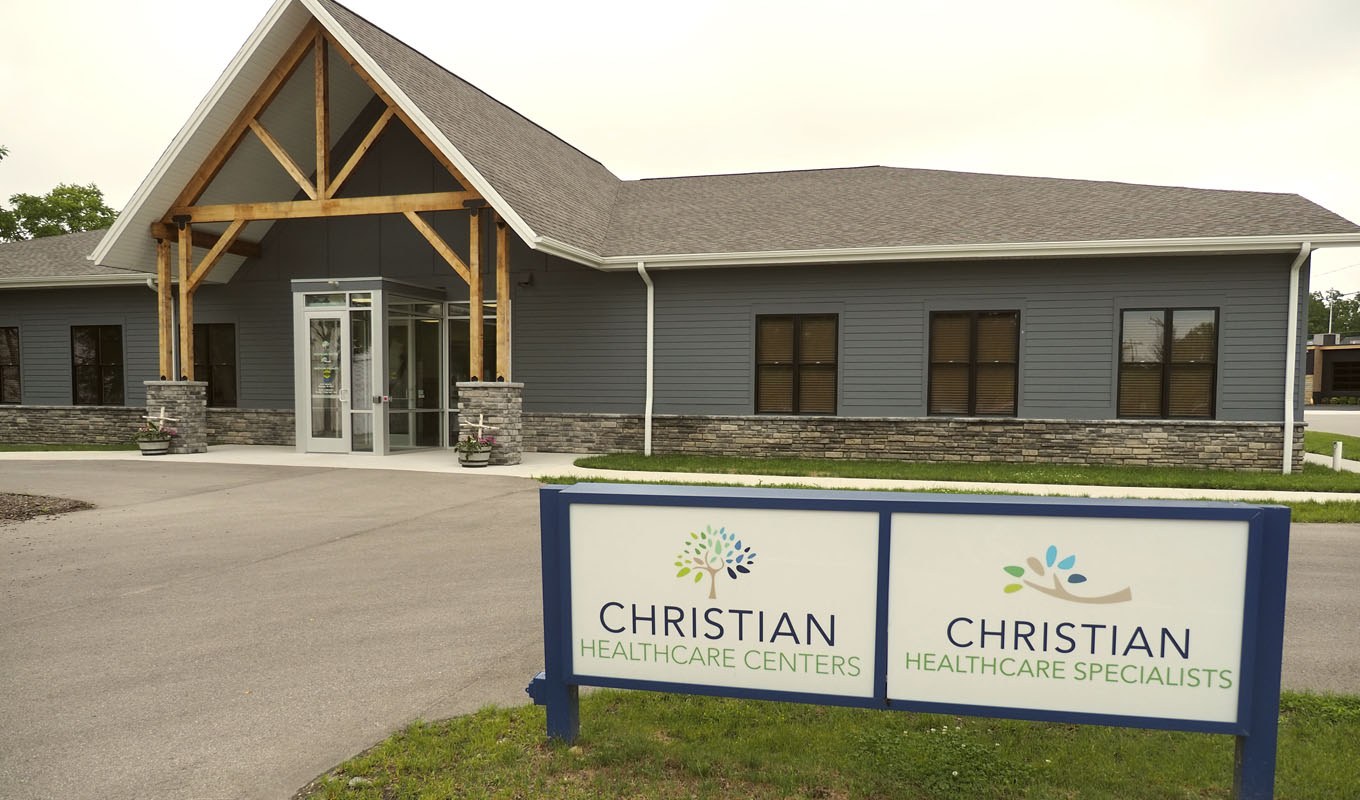
Christian Healthcare Specialists is located in Newaygo, Michigan. (Supplied photo)
CHS is a nonprofit subsidiary of CHC, co-founded by Samaritan Ministries member Mark Blocher. The medical organization’s mission is to provide exceptional medical services to the community, guided by biblical values. CHC has two locations—Grand Rapids and Newaygo, Michigan. CHS operates out of the Newaygo location, which has two operating rooms and is capable of performing procedures with or without sedation.
“We have endoscopy equipment,” Dr. Ted said. “We do colonoscopies and EGDs, or upper endoscopies. We routinely do hernias and other procedures that can be done with just sedation. We start IVs and make people sleepy, but they’re still breathing on their own and they’re not out with a general anesthetic.”
If patients need a procedure requiring general anesthesia, CHS makes arrangements with a local surgery center that can administer it. For example, if a patient needs removal of a gallbladder or appendix or needs surgery that is more invasive, the local surgery center is willing to work with CHS on a price to conduct the procedure there. Sometimes, Dr. Ted said, this can be five times cheaper than procedures at a local hospital.
Samaritan member Matthew Boehringer traveled over two hours from Fowlerville, Michigan, to have hernia surgery at CHS in fall 2023 after an initial consultation.
“My direct care doctor knew about CHS and said I could pay about $3,000 for the whole procedure as opposed to $5,000-6,000 with the hospital. The cost was fantastic, the surgery went fine, and the healing went fine. I recommend them all the time.”
CHS foundations
After CHC opened its doors in Grand Rapids to offer primary care services in 2017, Dr. Ted and Mark Blocher discussed the possibility of also offering affordable advanced care. When CHC opened its second primary care location in 2022, the surgery facility was included. “We began doing a small number of procedures at the beginning and then we just kept working on building the patient volume because ultimately our goal is to have this be a multi-specialty location where other surgeons can come in and do various things besides general surgery,” Mark said.
Patients can have a membership for the primary care services, and if they need a procedure, they pay the amount posted on the website.
Approach saves money
Dr. Ted and his family have been Samaritan members for five years. He believes CHS’s approach to health care can help other members save money while experiencing quality Christian care.
“What I see is that we, as families of Samaritan Ministries, should be good stewards of our money and time and so on,” he said. “We should be shopping around for the best value in our medical procedures. ... If the average of all the families at Samaritan Ministries would seek out care like we offer, it would be such a help to other Samaritan Ministries members.”
Dr. Ted said he sees patients from around the region, state, and even country because they are willing to travel to save on their medical needs, and they trust a Christian practice.
“We’re not trying to make a profit, we’re trying to pass on to the patient what the reasonable cost is of everything from the lidocaine to the sutures."
Dr. Ted Vanderkooi
“We’re not trying to make a profit, we’re trying to pass on to the patient what the reasonable cost is of everything from the lidocaine to the sutures,” Dr. Ted said. “We have churches and folks who believe in our mission to help people as well, so we can help defray the cost that way.”
Mark said patients often give the nonprofit permission to reach out to their church on their behalf if needed to see if the church could help with cost.
“I’ll get on the phone and call the pastor and say, ‘Here’s the situation,’” Mark said. “I have permission from so and so to talk to you about this. Is there anything that your congregation might be able to do?’ I ask, ‘Do you have a benevolent fund or something along those lines?’, and every time the church is willing to step in and help out.”
Looking at the next step
With the first two phases of the Christian Healthcare umbrella launched, Blocher said the next phase is tertiary, or specialized, care.
“Our goal ultimately is to get Christianity—get the Church—back into providing hospital care,” Mark said. “We think that our current health care system is just flat out not sustainable and the fragmentation, the profiteering, all those things make it so that it’s going to be very difficult, if not impossible, for it to be sustainable. In the process, a lot of patients are not going to get the kind of care they need. So, we’re looking to do once again what the Church has done before, and that is to start up hospitals.”
While CHS hopes to bring more specialists onboard first, Dr. Ted said it has connections with other facilities to line up patients with cash-bundled pricing for almost any surgery, whether CHS can perform it or not.
“So far we have a hand surgeon who does work out of the facility and, as time goes on, we hope to attract more specialists,” he said. “The reality of it is, though, for every specialty we take on, it costs a lot of money to get the equipment."
Tax-deductible donations to the practices can be made through the CHC website or mailed directly to Christian Healthcare Centers, 3322 Beltline Court NE, Grand Rapids, MI 49525.
Dr. Ted said he hopes to ultimately see less patient dependence on insurance companies and the government and more dependence on honoring the mandate to bear one another’s burdens.
“It’ll help solve the health care problems down the road because what exists now cannot last forever,” he said.
“Health care is a big problem in the United States, and I think we can help. We can be part of the solution with what we’re doing.”