'Sight' clearly shows God's providence over healing
By Anna Moore · Feb 10, 2026
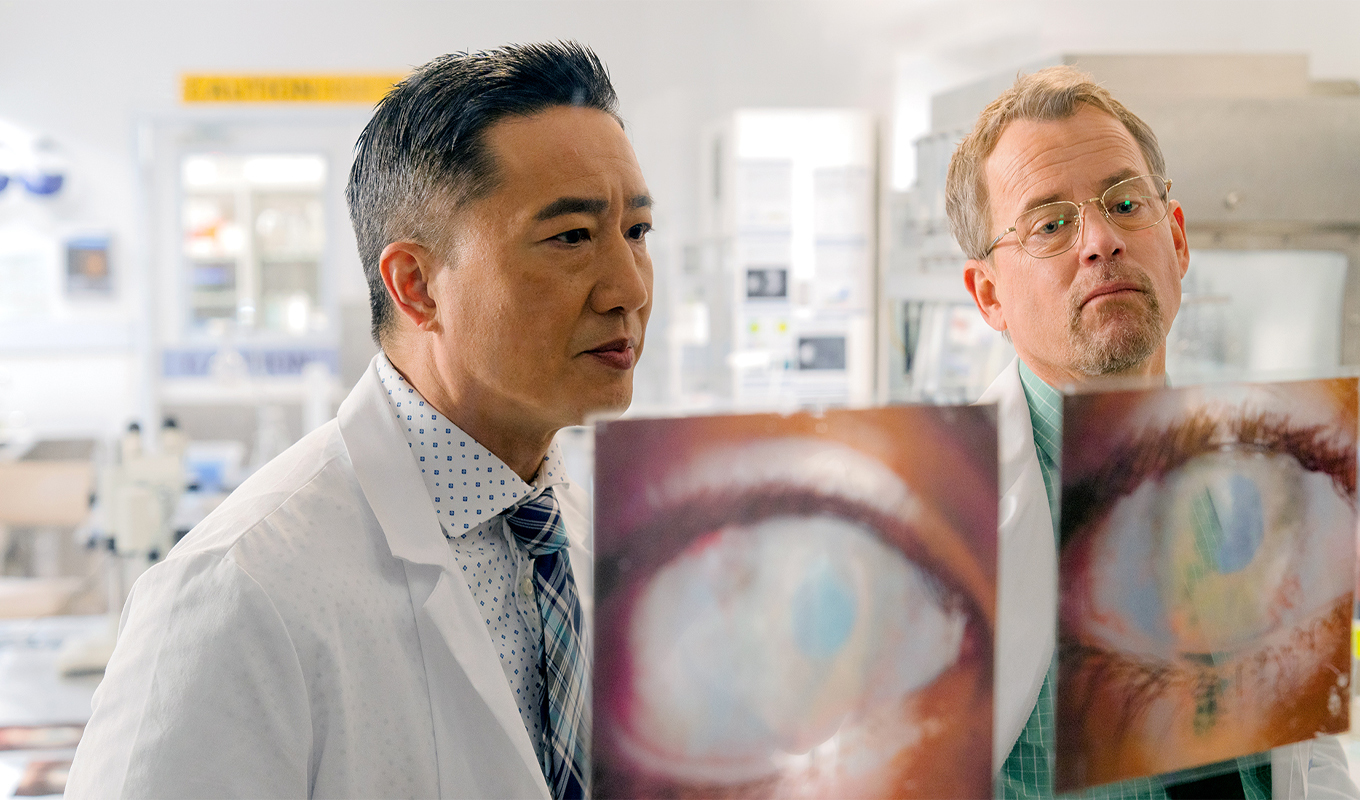
The 2024 film Sight tells the inspiring true story of Dr. Ming Wang and how his invention of the amniotic membrane contact lens has helped restore sight to millions of people across the globe.
The Angel Studios production co-stars Terry Chen as Dr. Ming and Academy Award nominee Greg Kinnear as Dr. Misha Bartnovsky, his colleague and mentor. It’s available for purchase on Blu-ray and DVD and can also be purchased or rented on various streaming platforms.
Spoiler Alert:
This review contains detailed plot points and character developments from the film Sight, including key scenes and the resolution of the story. If you haven’t seen the movie yet and wish to experience it without prior knowledge of its events, consider watching it first before reading further.
As Christians who are part of a health care sharing ministry, we are called to be good stewards of our health and resources because everything we have belongs to God. This film showcases God’s providence and sovereignty over physical healing, as well as His common grace expressed through modern medicine. Through detailed research and experimentation, the doctors in this film demonstrate how God reigns over all aspects of life—including health—and how His decision to heal or not to heal serves His greater purposes and brings Him glory.
Terror in India and China
The movie begins in 2006 in Calcutta, India, with a harrowing scene. A woman pours sulfuric acid into a young girl’s eyes. The girl, Kajal, is blinded in both eyes from the incident because the woman—her stepmother—believes blind beggars earn more money.
The narrative shifts back and forth between the early 2000s in Nashville, Tennessee, and the 1970s in China during the time of the Cultural Revolution.
Inspired by his physician parents, Ming wants to become a doctor, but the Cultural Revolution derails his plans. He faces persecution during the Cultural Revolution but finds the only way to escape deportation to a labor camp is by learning a skill useful to the government.
Instead of continuing school, Ming learns how to play the erhu—a Chinese violin—in order to join a government propaganda troupe and avoid deportation.
Ming’s friend Lily is taken by authorities during the revolution, though, haunting Ming into adulthood.
One-way ticket to the U.S.
Ming eventually flees China in the 1980s after the Cultural Revolution ends and his parents help him get a one-way ticket to the United States. He attends medical school and becomes an ophthalmologist in Nashville.
Working alongside Misha, Ming has much success in performing eye surgeries.
But the team is challenged by the case of Kajal, who comes to them after being rescued by Christian social workers who wanted to give her the best possible chance at seeing again.
A life-changing revelation
Ming is disheartened when the first attempt at restoring Kajal’s sight fails, casting doubt on his approach.
While researching, Ming looks to the miracle of life in the womb. Babies’ wounds heal without scarring in the womb, unlike adults’, where scarring occurs quickly after injury. Since scarring on the eyes is a factor that causes blindness, Ming wants to avoid scarring.
He and his colleagues find they can recreate a womb-like environment for the human eyes.
“Babies do not scar in the womb,” Ming says in the movie. “Because of the amniotic sac, the placenta, they have time to heal slowly. Why do adults scar?”
“Because the human body is trying to prevent infection, so it heals itself quickly, thus scarring,” Misha responds.
“And adult eyes go blind when injured.”
To prevent scarring after eye surgery, Ming uses amniotic membrane to allow the eye to heal without further risk of blindness, developing a special contact lens that for other surgeons to use as well.
‘More to life than what you see’
While the film focuses on the journey toward the discovery of the special contact lens, it also shows joy can exist even without physical healing—and that God uses suffering for His good purposes.
“I know the surgery didn’t work out, but look at what you’ve done for her,” Ming’s future wife, Anle, says in the film.
“Done for her? She’s opened my eyes,” Ming says. “Kajal is teaching me every day that there’s more to life than what you see.”
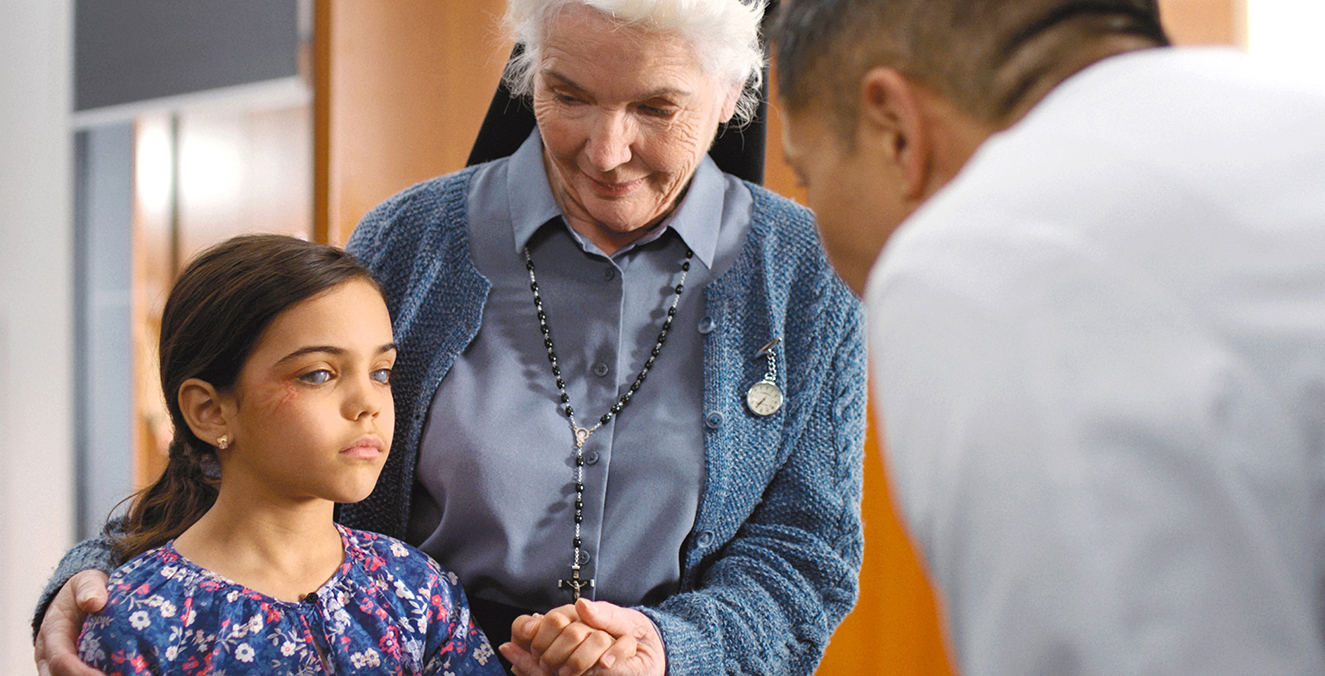
Dr. Ming Wang, right, speaks with a young girl whose blindness he will treat.
Despite her blindness, the girl remains joyful. In a moving scene, she prays with other children. She even tells Ming she is praying for him and gives him a beaded bracelet with a wooden cross.
From faith to ‘Sight’
Though the movie doesn’t explicitly highlight Ming’s faith, he has publicly shared his Christian testimony across the globe. Ming says he encountered God during his scientific research, leading him to a deeper purpose in life.
“The world may have a contradictory solution, but as Christians we need to have a fundamental confidence that God has created a perfect world and we just have to plug along, have that faith and confidence in Him, and do our part, and He will reveal Himself,” Wang has said.
Ming founded the Nashville-based Wang Vision Institute and the nonprofit Wang Foundation for Sight Restoration, which has served patients from 40 states and 55 countries with surgeries performed free of charge.
Ming also founded the Wang Foundation for Christian Outreach to China, showing his commitment to medicine and ministry.
Action points
If you watch this film, consider sharing Dr. Ming’s testimony with others and share how faith and science works together to point to God’s glory. Host a watch party or screening event at your church to share this true story of determination and revelation. Share how God uses humble children for His Kingdom purposes, how He still performs miraculous healing, and how modern medical research can be a common grace for all people.