Samaritan family questions bills, save thousands
By Anna Moore · Nov 04, 2025
Portions of this story were originally featured on the Marshall Allen Project Substack.
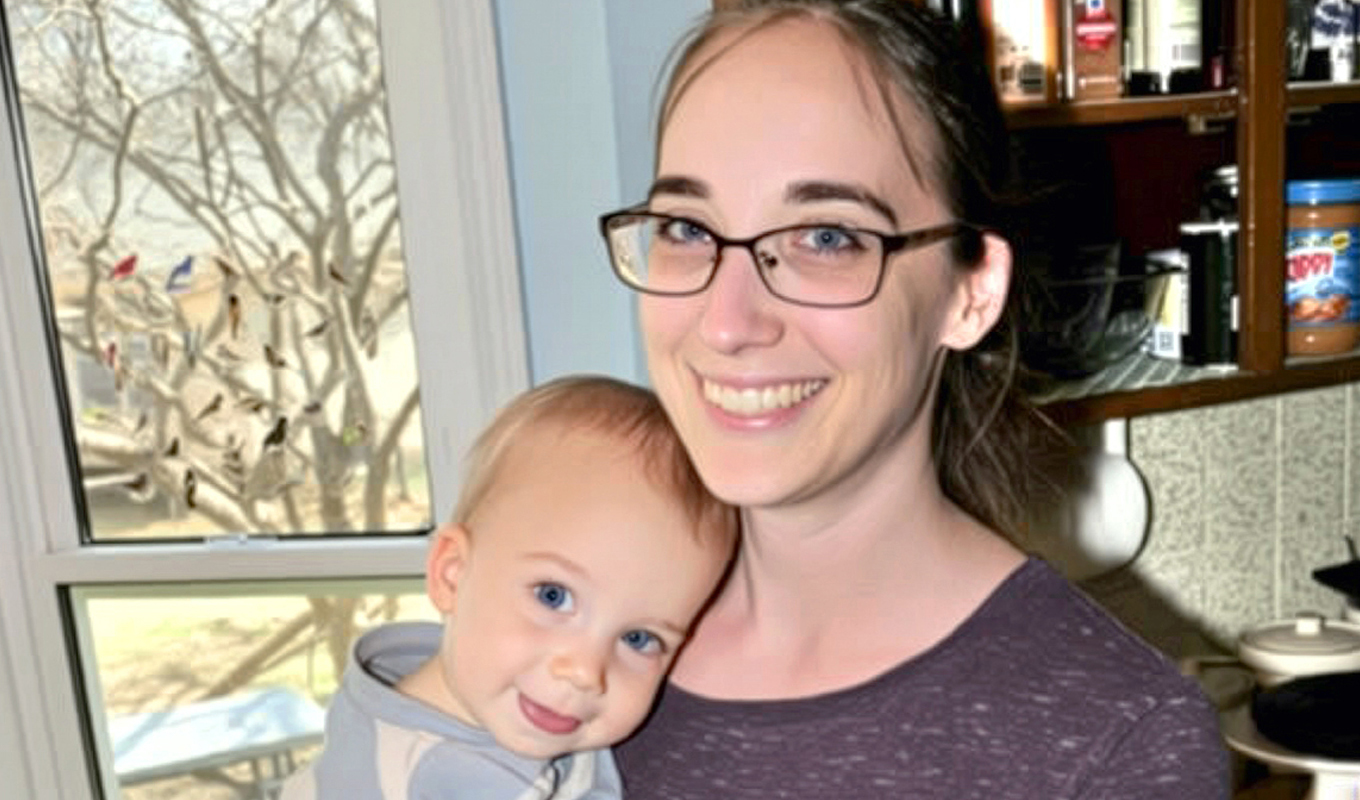
When Lindsay Bockwinkel and her husband, Alvin, discovered a costly error on the bill for their son Andrew’s surgery earlier this year, they realized they had to advocate for their family’s medical needs within a broken health care system.
The result was saving thousands of dollars on Andrew’s treatment.
Surgery prep
Lindsay and Alvin live in Kansas City, Missouri, with their five sons, ages 9, 7, 5, 3, and 1, and recently shared their story with the writers of the Marshall Allen Project newsletter.
Their youngest, Andrew, had a routine inguinal hernia repair in January, a common surgery for baby boys.
“We had the birth of Andrew after we joined Samaritan and I knew what to expect as far as that went,” she said. “But I called Samaritan before the surgery to make sure that I had my ducks in a row for what I needed going into the surgery.”
In Andrew’s case, the surgery was a nonemergent, preventive measure for his intestines. The repair was needed to prevent future complications.
“We were able to schedule a surgery for when it was available instead of having to go through the emergency room or anything, so we knew we were going to have this expense coming up,” she said. “I talked to a Samaritan staffer and he was so helpful making sure I knew what I needed to get, and he prayed with me. It was beautiful.”
Receive a good-faith estimate
Living just minutes from the Missouri-Kansas state line, the couple took Andrew to a hospital in Kansas City, Kansas, for the procedure.
Without her needing to ask, the hospital generated and mailed her a good-faith estimate on January 17, four days before the scheduled surgery. The estimate was $6,745 and included costs for repairing only one side of the hernia. The surgeon told Lindsay that it was possible he would need to repair both sides and would make the final decision during the operation.
“It’s nice because they put in a piece of paper saying if the cost is more than $400 off, then you can appeal it,” Lindsay said. “I think they try to make it easy to understand.”
Ask for an itemized bill
When the Bockwinkels showed up the day of the surgery, the hospital collected $100 up front. The surgery was a success with the surgeon repairing both sides, and Lindsey returned home with her son later that day.
“The bills rolled in over the weeks that followed,” Lindsay said. “First, the surgery fee, then the hospital fee, the surgeon fee, and the anesthesiologist’s fee.”
She recalled a flurry of notifications via mail and quickly responded by placing a call back to the hospital for an itemized bill.
“When I received the itemized bill, it showed $27,841 in charges,” she said.
She was shocked by the amount of the bill and how much higher it was than the original estimate she had been given.
Never pay the first bill
Lindsay said she bought the late Marshall Allen’s book, Never Pay the First Bill, shortly after receiving the breakdown of charges because she had read about the book in the Samaritan Ministries newsletter.
“I didn’t know what to do about it until I read the book and learned that errors are likely,” she said.
Lindsay knew as a Samaritan member to always ask for an itemized bill. After she received the bill, she checked for any errors.
“Marshall Allen’s advice is to check for obvious mistakes, because he said the hospitals don’t have incentive to make sure that their totals are correct because most insurance companies will just pay without really asking questions,” she said. “If people aren’t looking at their bills, they’re just sending it off to insurance and they’re not looking for the errors.”
Question a duplicate charge
After taking a closer look at her bill, Lindsay questioned two charges that exceeded $11,000 and were only a few hundred dollars apart. Both charges read “operating room level two.”
She suspected a mistake and wondered if the duplicate operating room charge may have been tied to the fact the surgeon repaired both sides of her son’s hernia, resulting in two procedures during the surgery instead of one.
Lindsay made three follow-up calls over the next six weeks to have the error confirmed and the duplicate charge removed.
“They told me to give them six weeks, and so when it was finally six weeks from when I first called, I called again and was told they hadn’t done anything at all with it,” she said. “The guy said he was going to escalate it, and then two days later they called back and said there was an error, and they removed it.”
Analyze the bill
The Bockwinkels reviewed their itemized bill before paying anything on it. Here are a few things they recognized just from analyzing it:
- The $11,455 operating room expense was more than four times the cost of the surgeon who performed the procedures.
- The $1,480 charge for the recovery room was separate from the operating room cost of $11,455.
- The surgeon’s fee to repair one side of the hernia was $200 less than the charge for the recovery room.
Lindsay inquired about discounts for payments made in full after seeing a note about it on her bill.
“You have to call them. You can’t just pay online,” she said. “If you did that instead of setting up a payment plan, then you also got a discount, so we did that too.”
According to information in the Marshall Allen Project newsletter, adjustments to the initial $27,841 bill included:
- A correction to $16,776 after the duplicate bill was removed.
- A reduction to $14,852 after the initial discount and Lindsay’s upfront payment of $100.
- A reduction to $7,594 after additional cash-pay discounts, including a 20% discount for paying in full.
The discounts and reductions were made possible by analyzing statements, requesting itemized copies, asking about things that didn’t make sense on the bill, and speaking with hospital staff to clarify details.
The final cost of Andrew’s procedure, $7,594, was near to the initial estimate of $6,745. Because the family is in the Samaritan™ Basic program, members shared 90% of the total. The Bockwinkels ended up paying 10% of the bill, or $759, after their Initial Unshareable Amount was waived because of the significant discounts. They also paid $100 up front on the day of the surgery, which they did not submit to Samaritan, bringing their out-of-pocket total to $859.
Persistence pays off
The Bockwinkel family now has this surgery in their rear-view mirror with new skills in advocating for their medical bills.
“Until this, I don’t think I’ve pushed back on any bills before,” Lindsay said. “However, after having this experience, that may change.”
The amount that Samaritan members shared would have been much higher if the Bockwinkels had not carefully analyzed and questioned their son’s medical bill.
“It’s definitely a broken (health care) system,” Lindsay said. “But being a part of Samaritan, it’s like we’re doing our part to hold them accountable every time. Whether there’s a big error or not, it’s at least calling their attention to the fact that someone’s paying attention and not just paying whatever they send in a bill.”
The Bockwinkels’ experience shows how not taking every bill at face value can save Samaritan families thousands of dollars.
“I’m just grateful for Samaritan,” Lindsay said. “It’s a blessing to be a part of something that is calling attention to this.”
To read similar stories and learn more about how others are successfully navigating their health care bills, subscribe to the Marshall Allen Project Substack.