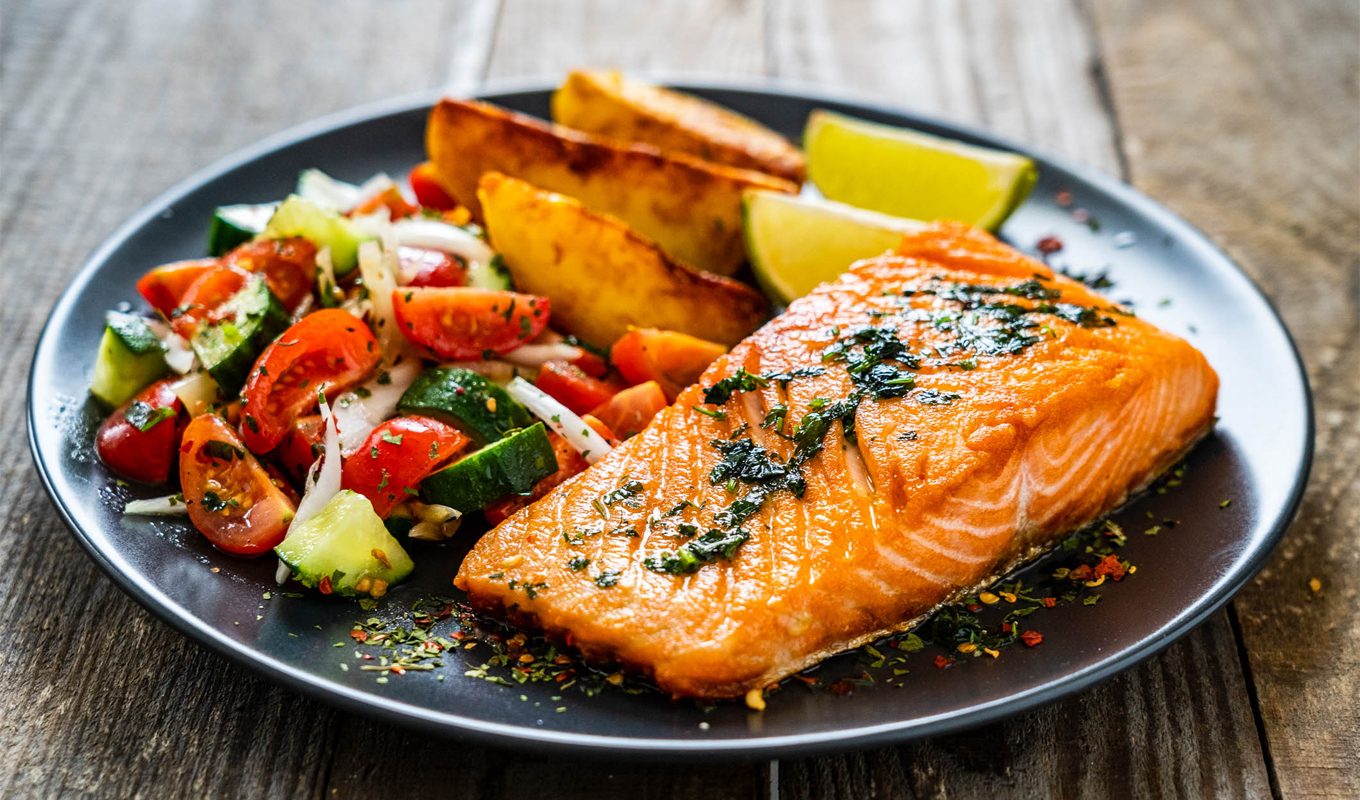
Nutritious salmon deserves a place on your plate this month
By Anna Moore · Feb 19, 2026
If you’re looking for a nutritional powerhouse to add to your meal plans, look no further than salmon.
“Salmon is great for your heart, mental health, and muscle mass,” Julia Zumpano, RD, LD, writes for Cleveland Clinic. “Eating it just a couple times a week can help support an active lifestyle and a healthy weight.”
Salmon contains omega-3 fatty acids, high-quality protein, and lots of vitamins and minerals, including:
- vitamin D for bone health
- B vitamins for energy
- selenium for immunity
The strong-smelling fish helps lower the risk of cardiovascular disease, improve memory and mood, and it has anti-inflammatory properties that can help with joints and chronic conditions.
You can enjoy salmon in a variety of ways. It’s great on the grill, baked, pan-seared, added to salads, in grain bowls, and air fried. Pair it with vegetables for balanced nutrition.
At the grocery store, look for wild-caught salmon for higher omega-3 content and for fewer contaminants. It’s also wise to look for certifications like Marine Stewardship Council for sustainable fishing practices.

(iStock)
Frozen salmon can be just as nutritious (and delicious) as fresh. Just be sure to check for vacuum-sealed packaging and no signs of freezer burn. For all salmon, look for rich orange flesh and avoid dull or brown spots. The flesh should be firm and not mushy.
Here are some basic guidelines for the types of salmon you may encounter at the grocery store:
- Sockeye has rich flavor.
- Coho is more mild.
- King (also called Chinook) salmon is high in fat content.
Make salmon a regular part of your diet and reap long-term health benefits. Here are some recipes to help get you started: