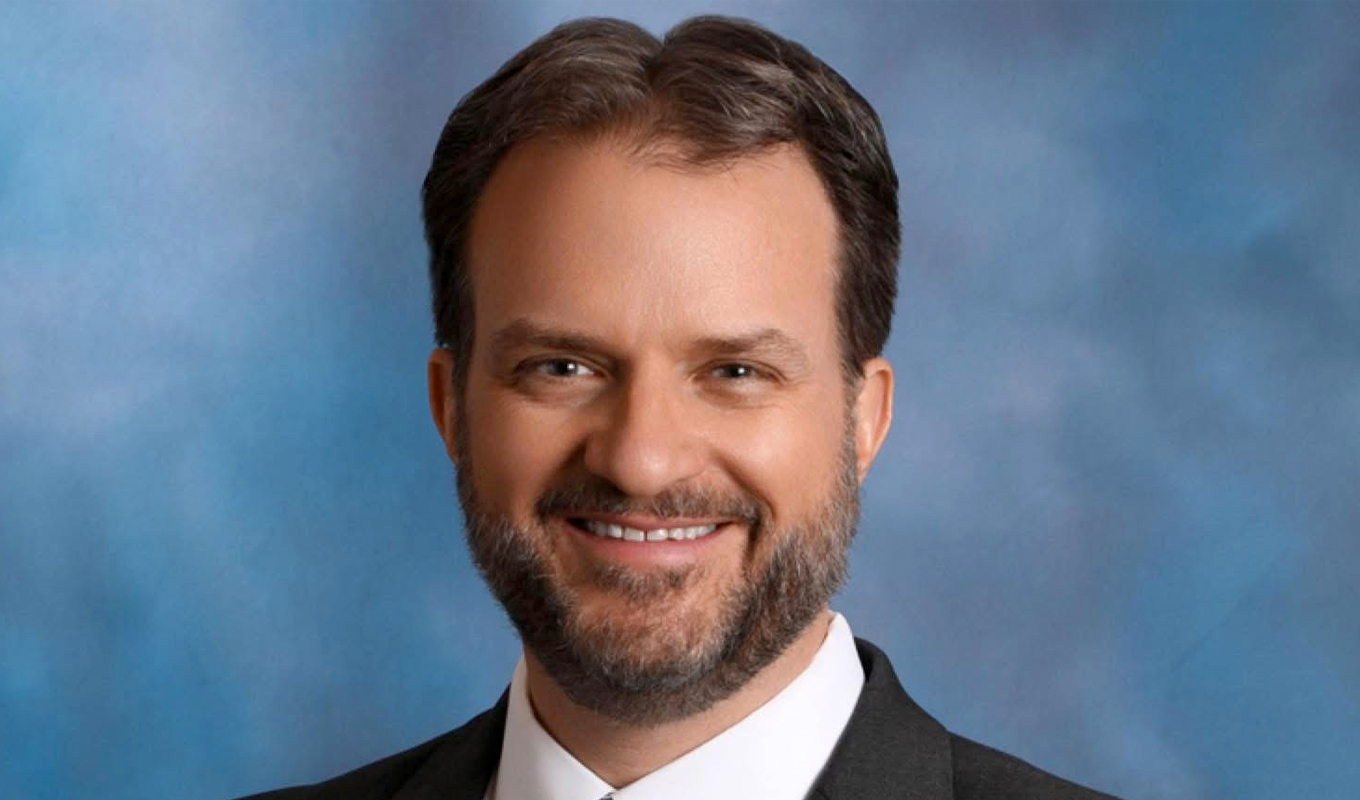
Q&A with Dr. Chad Savage: the state of health care freedom
By Samaritan Ministries · Jan 14, 2026
Samaritan Ministries member Dr. Chad Savage is founder of YourChoice Direct Care in Brighton, Michigan. YourChoice is a Direct Primary Care (DPC) practice, which allows its patients to pay a regular fee in exchange for highly discounted services and medications as well as 24/7 access, no co-pays, and no limit on visits.
Dr. Savage also is regularly featured in the Heartland Institute’s Health Care News and is the organization’s health care policy advisor. He is frequently interviewed on podcasts and radio programs about direct care and health care sharing. Dr. Savage and his wife, Roberta, live with their two children in Milford, Michigan.
The Samaritan Ministries Health Care Newsletter recently asked Dr. Savage about developments in health care freedom.
Samaritan Ministries: What is the state of health care freedom today?
Dr. Chad Savage: We’re actually on a precipice. I think we’re in a better position now than we were about 10 years ago. Ten years ago, all the momentum was kind of towards single-party payer, central control of health care, and, because of movements like our own Direct Primary Care and what the health care sharing ministries are doing, they’ve actually provided choices. Patients realize you don’t have to do things through the health insurance model, which is incredibly broken. So, believe it or not, I think we have some momentum going in the right direction here.
The goal is to improve American health care. I think it’s an incredible drag on our economy and our whole country, and if we can help fix American health care, not only are people going to be in better health, but they’re going to be wealthier. Our economy will be better. It’s 18% of the gross domestic product and there’s no way it should be. If people knew that one out of every $5 they earn was going to health care, I don’t think they’d willingly pay that.
Samaritan: Are you seeing an increase in Direct Primary Care practices?
Dr. Savage: Yes. When I started in 2015, there were several dozen of us in the nation, and now there are between 2,000 and 3,000 practices across the nation, which is not trivial.
Samaritan: How do members of DPCs experience health care freedom?
Dr. Savage: Current health care in the traditional model is really controlled by powerful entities, such as the government and insurance companies. Even though the patient sits in the room directly across from the doctor, there’s the invisible gorilla in the room of the third-party payer that’s really pulling the strings on the decision-making for that physician and that patient. The patient and the doctor can sit down and decide on a treatment plan—what’s going to be done, what testing needs to be done—but the final determination is usually based on the payer. Will they cover it or not?
So Direct Primary Care tries to go back to a true collaboration between the doctor and the patient on that kind of decision-making, get the strings of control on the physician out of that relationship. That is imperative, because studies have shown that if you understand that your doctor is working on your behalf as a patient, you’re much more likely to comply with the treatment regimen. Well, patients can perceive that not only is the quality of care rushed and of low quality within the traditional model, but people also understand that their doctor has conflicts of interest.
Samaritan: Do you see any hope that pharmaceutical prices are going to get straightened out in the same way?
Dr. Savage: That’s a very complex situation. Direct primary care itself has already largely resolved that issue with generic medications. In most states, doctors are allowed to dispense medications to their patients. In the direct primary care model, we kind of work like discount pharmacies, where we can dispense medications directly to our patients at cost. Our sole revenue comes from membership fees. I can dispense three months of amlodipine, which is a blood pressure medication, for as low as 78 cents to the patient, which is about the cost of a single gumball for an entire month’s medication to treat hypertension, which is one of the leading causes of premature, preventable death in the United States.
And you can see that across the generics. Generics have the highest markup of drugs right now. They’re usually marked up in the thousands of percent by pharmacies. So that issue, I think, is being addressed by what we’re doing. You see that downward price pressure impacting the traditional brick-and-mortar pharmacies, and even the mail-order pharmacies, because they’re all now starting to try to offer better pricing, even if they’re nowhere close to what we can offer now.
The big issue is the name brands. The issue with their pricing is complex.
Samaritan: What if there isn’t a DPC in my area? What can I do to keep down my primary care costs?
Dr. Savage: Even just with health care costs in general, know that you do have a say in the pricing. Samaritan does a good job of trying to educate people on this.
You can do things like Good Rx or other programs to try to get less expensive medications. If you do a surgical procedure, you can actually negotiate the price beforehand. Again, if you’re in health insurance, they’ve already got pre-negotiated prices. Your hands are tied, so you have no agency. But if you were a health care sharing ministry member or you’re a cash-pay patient or something like that, you do have agency.
We don’t have a robust free market in health care right now. The whole argument with transparent pricing is not only to know what those prices are but actually have control over those dollars. Combining transparency and agency, knowing what prices are and the ability to do something about it is our goal.
Samaritan: What changes in state or federal laws would help doctors to improve primary care? What would free up a few things for patients?
Dr. Savage: So, there are several bills out there right now that could really help. One is to make it clear whether health savings accounts (HSAs), which are pre-tax accounts, can be used for the membership of direct primary care. If that’s clarified, then, you take the already affordable direct primary care and make it even cheaper.
Further is to really maximize the benefit of HSAs. There is a bill out there by Sen. Ted Cruz and Rep. Chip Roy called the Personalized Care Act, which would decouple HSAs from high deductible health plans.
Well, if they decouple that from the need to buy a high-deductible health plan and you can have that on its own, and even more so if you could turn around and buy your coverage product or join a health care sharing ministry, now you’ve even made it so that you don’t have to get your insurance through your employer. The reason you get it through your employer is because it’s pretax. Well, if you can contribute to an HSA pretax and then use that to buy your medical care, you’ve eliminated the need for employers to become involved in health care at all. And if you can use it for, say, health care sharing, now you’ve drastically decreased the cost of health care.