Post-mastectomy breast implant decision is a challenge for patients
By Kathryn Nielson · Jan 19, 2022
A breast cancer diagnosis opens the door to a world of decisions patients never dreamed they would have to make. One of those decisions is how to handle a post-mastectomy body. Many choose breast implants, but fewer women are making that choice with an increasing number of patients claiming adverse side effects from the implants.
Every year in the United States, 400,000 women choose breast augmentation—75 percent for cosmetic reasons and the other 25 percent after mastectomy. According to The Aesthetic Society, an organization of 2,600 board-certified plastic surgeons, 2019-2020 saw a 14.9 percent decrease in breast augmentation and a 34.4 percent increase in breast implant removal (explantation), citing breast implant illness (BII).
Though not officially recognized as a medical diagnosis, BII is becoming more common and manifests itself differently depending on the patient. Symptoms include joint and muscle pain, chronic fatigue, memory loss and difficulty concentrating, anxiety, depression, sleep disturbances, headaches, and gastrointestinal problems.
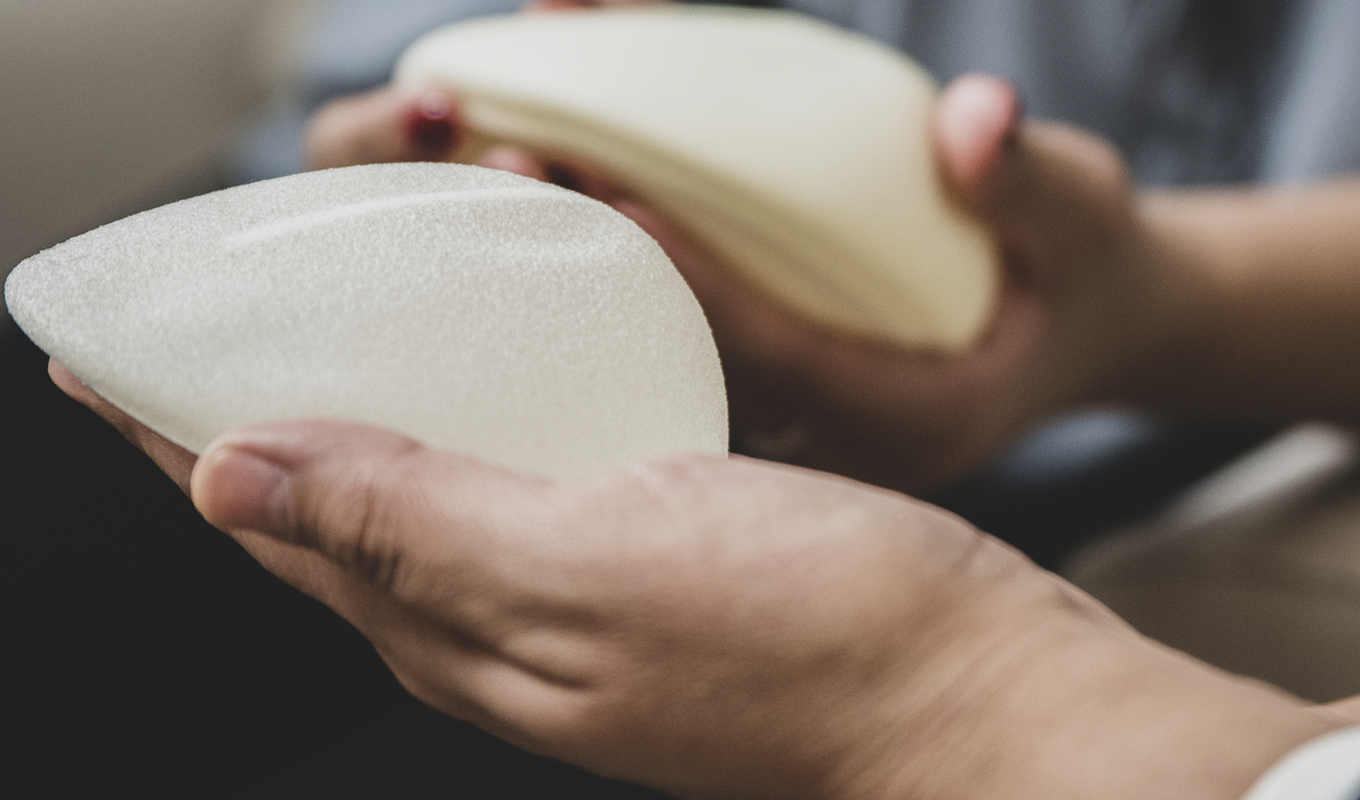
Implants are sacs placed under the chest muscle to restore breast shape and are filled with either saline or silicone. The question of what happens if the implant leaks is a common one, according to Dr. Colleen McCarthy, a reconstructive surgeon at Memorial Sloan Kettering Cancer Center in New York City.
If the implant is filled with saline or saltwater and starts leaking, the liquid gets absorbed into the body, and the implant deflates. If that happens, the patient goes back into surgery to have the implant replaced.
Leakage from a silicone implant is not apparent, because it is semi-solid and doesn’t change. It’s also not detectable by physical examination, so regular monitoring with MRI or ultrasound is needed to make sure it’s still intact.
It’s important to note that the tear rate for either silicone or saline implants is the same, and, according to McCarthy, there is a 90 percent chance that in 10 years the original implant will be intact.
Once the patient has decided on implants and chosen saline or silicone, she then has the choice between a textured or smooth exterior. Implants with a textured exterior adhere to tissue, ensuring less slippage than a smooth-textured implant, but it’s the textured implants that have created much of the controversy. In 2019, the FDA issued a recall for any textured implants manufactured by Allergen, the manufacturer of a specific type of textured implant. At the time of the recall, there were 573 cases of breast-implant-associated anaplastic large cell lymphoma (BIA-ALCL), of which 481 were attributed to the Allergen implants. Allergen is no longer allowed to sell these devices worldwide.
Implants last 10 to 20 years
Deciding to have implants isn’t a one-time decision, either. Implants wear out and need to be replaced at some point. Most silicone and saline implants have been FDA-confirmed to last 10 to 20 years, but patients may need them to be replaced earlier, or they may be able to go more than 20 years.
With all of this in mind, patients not only face a life-or-death disease, but they have to make decisions quickly, as Samaritan Ministries member Kelsie recalls. Her diagnosis was in December 2018, and her doctors really wanted her to have surgery right away. However, she opted to wait a couple of months because of other circumstances.
“Even then, that’s just two months to acclimate yourself to the idea that you have cancer and that you need to have either one or both of your breasts removed, let alone deciding how you are going to handle it afterward,” Kelsie says, adding that the timeline is frequently what is so difficult for most women.
Kelsie realized there was another way
Kelsie’s doctors assumed she would have reconstruction, she says. By the time she left the appointment at which her diagnosis was given, the doctor’s office had scheduled a series of five or six other appointments for her. They had planned out who she was going to meet with and in what order—including meeting with a plastic surgeon to discuss implants. The visit with the plastic surgeon was not to discuss if she was going to get implants, but rather what kind, what size, the effects and risks of the two types, and other issues.
After doing some of her own research and finding someone online who had decided against implants, she began to reconsider and realized there was another way.
“It seems to be rare that surgeons are even telling breast cancer patients they have a choice to have reconstruction or not,” Kelsie says. “It has become such a common practice that it is assumed each patient wants reconstructive surgery with their own tissue or implants.”
It seems to be rare that surgeons are even telling breast cancer patients they have a choice to have reconstruction or not.
Kelsie
Because Kelsie’s cancer was limited to one breast only and was not considered genetic, the risks of recurrence in the other breast were low, which meant that a double mastectomy was not warranted as a preventive measure. The decision then became whether to have an implant, which brought up questions like how a future spouse would feel about her only having one breast. If she did get implants, how would she feel about two completely different breasts? Or should she wear prosthetics?
She chose the latter.
“I don’t think people even realize that prosthetics are out there and are even an option,” Kelsie says.
For Kelsie, the decision to not go with implants was a final one. She had a complete mastectomy on one side, which meant portions of muscle and tissue were removed. At this point, some people will have an expander put in, which acts as a sort of placeholder, enabling doctors to go in later and place an implant. That was not an option that was presented to Kelsie, however. At that point, she had already decided against implants.
Kristen decided to get implants
Not everyone makes the same choice. Of the 400,000 patients choosing breast implants, over 90 percent of them are happy with the results and experience no health problems, according to plastic surgeon Dr. Alan Matarasso.
Fellow Samaritan member and cancer survivor Kristen decided to get implants. Cancer runs in Kristen’s family. Her mom was diagnosed in her late 40s and her aunt was in her late 50s. Kristen started screening at age 32 rather than the recommended 35 for those with a family history because of tenderness in her left breast. She was eventually diagnosed with HER2-positive breast cancer, an aggressive form of breast cancer that tests positive for human epidermal growth factor receptor, a protein that promotes the growth of cancer cells.
An important aspect of this whole journey is finding medical providers who are truly able to give you all of the options and let you make the decision.
Kristen
Because of the aggressive nature of Kristen’s cancer, she went through chemo first before her double mastectomy, giving her six months to research implants and ask questions. The decision to get implants was filled with trepidation based on what she had heard from other people. Initially, she decided against implants, but, as her surgery date grew closer, she began to feel more uneasy with her decision. At the same time, she felt she needed to stick with her original plan rather than change her mind.
“I was in distress. I felt backed into a corner,” Kristen says.
She decided that if she really cared about research the way she said she did, she was going to challenge herself in this area and get more information before making a final decision. She also realized she wouldn’t second-guess a kidney transplant or hip replacement if she needed one of those, so why question breast reconstruction?
“I was in one sense prioritizing my physical well-being around something that may or may not happen and letting my sexual health, emotional health, and mental health take a back seat,” Kristen says. “If I really believe that we are holistic beings—body, mind, and spirit—which I do, then why am I glorifying one aspect over the other? You really have to make the best decision for yourself.”
Her providers were very safety-driven and wanted her to make that decision. She spent hours talking with them about both the risks and the benefits of implants.
“An important aspect of this whole journey is finding medical providers who are truly able to give you all of the options and let you make the decision,” Kristen says. “I feel like, honestly, the Lord provided that for me.”
In the end, she chose to go with smooth-textured silicone implants with the knowledge that, if she changed her mind or started to experience negative effects, they could always be removed.
What is best for you?
Both Kristen and Kelsie emphasize the need for women to do what is best for them in the situation. Everyone is different, and there is not a one-size-fits-all answer.
“This is a deeply personal decision that everybody has to weigh,” Kristen says. “I want to help encourage other people going through this that if your provider is not listening to you or is pushing something and you don’t feel comfortable,” you can seek other help.
Kelsie says that she wants “people to know that they have a choice, and, if they do decide to have (implants), be very aware of your body and whether it’s being affected by the foreign substance.”
Modern medicine has come a long way, but the reality is that no matter how good a hip replacement or breast implant or any other replacement part might be, none of them will ever measure up to the original parts put there by our Creator. But God has given us the ability to think, ask questions, and seek guidance from Him in situations like these.
Kathryn Nielson is a Communications Specialist at Samaritan Ministries.
The information provided in this article is for educational purposes and is not meant as medical advice. It is the opinion of the writer. The information is not meant to replace a one-on-one relationship with a qualified health professional.