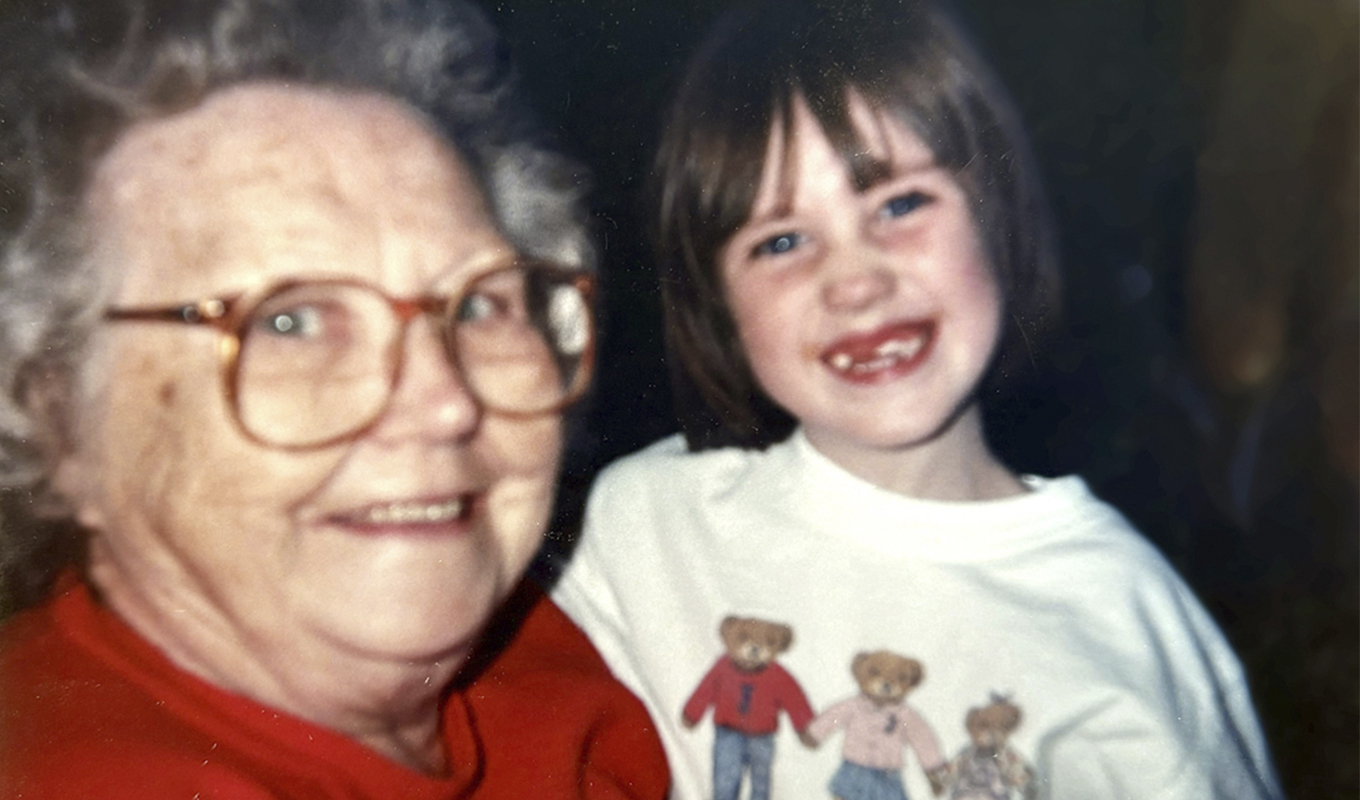
Mamaw and me: a child's view of dementia
By Anna Moore · Jul 03, 2025
My Mamaw Ruby loved cooking for others. It was her love language.
I can still taste the creaminess of her perfect macaroni and cheese, and I’d do about anything to have a bowl of her vegetable soup again. Her pies—always baked with spongy, golden-brown meringue—were known community-wide. I still can’t decide if her peanut butter or lemon was my favorite. Maybe her chocolate.
It wasn’t unusual for me to spend Friday or Saturday nights with her on a typical weekend . I loved spending that time with her and always felt loved and special. She really had a way of caring for her family.
First signs
I noticed a change in her demeanor during my high school years. Her stories became repetitive as she began sharing the same story within minutes of telling it the first time and without realizing we had already heard it. She once put a bag of potato chips inside the refrigerator and once left a burner on for an unknown amount of time.
Something wasn’t right.
Worried about her safety, my parents, aunts, and uncles decided she should no longer live by herself. They ultimately decided she would move into our home, which was less than a mile from the apartment she had been living in.
I liked having her there. She always greeted me with a smile in the hallway or the kitchen. But still, something was different. She didn’t understand things we said to her. She wasn’t doing things the way she used to, and she wasn’t taking good care of herself.
She longed to be with Jesus. That’s who she was.
Her diagnosis was dementia caused by Alzheimer’s disease. Some common symptoms of dementia are memory loss, confusion and disorientation, difficulty with language and communication, changes in mood and behavior, poor judgment and decision-making, and problems with daily activities like cooking and bathing.
I don’t recall exactly how long she lived with us. I just remember it became a hard situation for all of us, especially my parents. The tipping point was either her made-up stories about someone being violent to her, or my dad finding her against the fence near the bottom of our lengthy gravel driveway one night when we couldn’t find her. Somehow, she had wandered down our road without anyone noticing and had taken a fall. I remember her clothes were covered in mud and grass stains. She couldn’t remember how she got there, or where she was going.
I remember feeling scared. For us. For her. What if dad hadn’t found her? What if she had gotten seriously hurt? Was she trying to go back to her former home? Praise God she was okay, but we couldn’t let this happen again.
‘I’m right here, Mamaw’
The next decision was moving her into a local nursing and rehabilitation center, where she would have 24/7 care and attention. This had been a last resort from the beginning of this journey, but we wanted her to be safe and taken care of in ways the adults couldn’t provide.
We tried to hold back our tears as we said goodbye on her move-in day, but when I looked back at her, I couldn’t. I started to cry.
Through her own weeping, she tried to assure me, her youngest grandchild and special friend, that she would be okay. Even then she was comforting and caring for me, though I know she didn’t fully understand why we were being separated from her.
Months later, as I stood in the room that had become her home, I knew she had forgotten who I was. Using my first and middle names like all my extended family always did, she asked me, “Where’s Anna Morgan?”
“I’m right here, Mamaw,” I said.
I’ll never know this for sure, but I believe in her mind, she was looking for the little girl she cooked many meals for, took to church, and talked to as she sat in her recliner and crocheted doily after doily. She was looking for the little girl who once gifted her a friendship necklace and the girl she rocked to sleep amid intense earaches through childhood. She was looking for the little girl who shadowed her while she tended her garden and who enjoyed her company while snapping beans together.
These are moments I treasure.
Broken in need of healing
Dementia is hard on everyone in the patient’s life. It’s a sad reality of our fallen world, and while there are ways to try to prevent it or ease the progression, there isn’t a known cure.
What was true of Mamaw in her final years is true of all of us today—we’re broken and we all need to be healed. In many ways, we’re all fading away. Our bodies—including our minds—need a resurrection. But our ailments and disease don’t define us. It’s not who we are, and though it might look or feel like it, brokenness doesn’t have the final say in the great Redemption Story.
I had the honor of being loved and cared for by Mamaw for 19 years. Her faith became sight on December 9, 2010. I can still hear her singing and shouting her joyous hallelujahs at our small country church where I grew up in small-town Kentucky. She longed to be with Jesus. That’s who she was. That’s how I remember her, and I’m looking forward to seeing her again, shining aglow from the presence of our Lord and Savior, Jesus.