Use Thanksgiving leftovers for bone broth
By Andie Dill · Oct 29, 2024
This month’s Thanksgiving dinner at your house may result in not only leftover turkey meat, but leftover turkey bones as well.
What better way to build your body’s defenses against the cold and flu season than by using those bones to make a healthy broth?
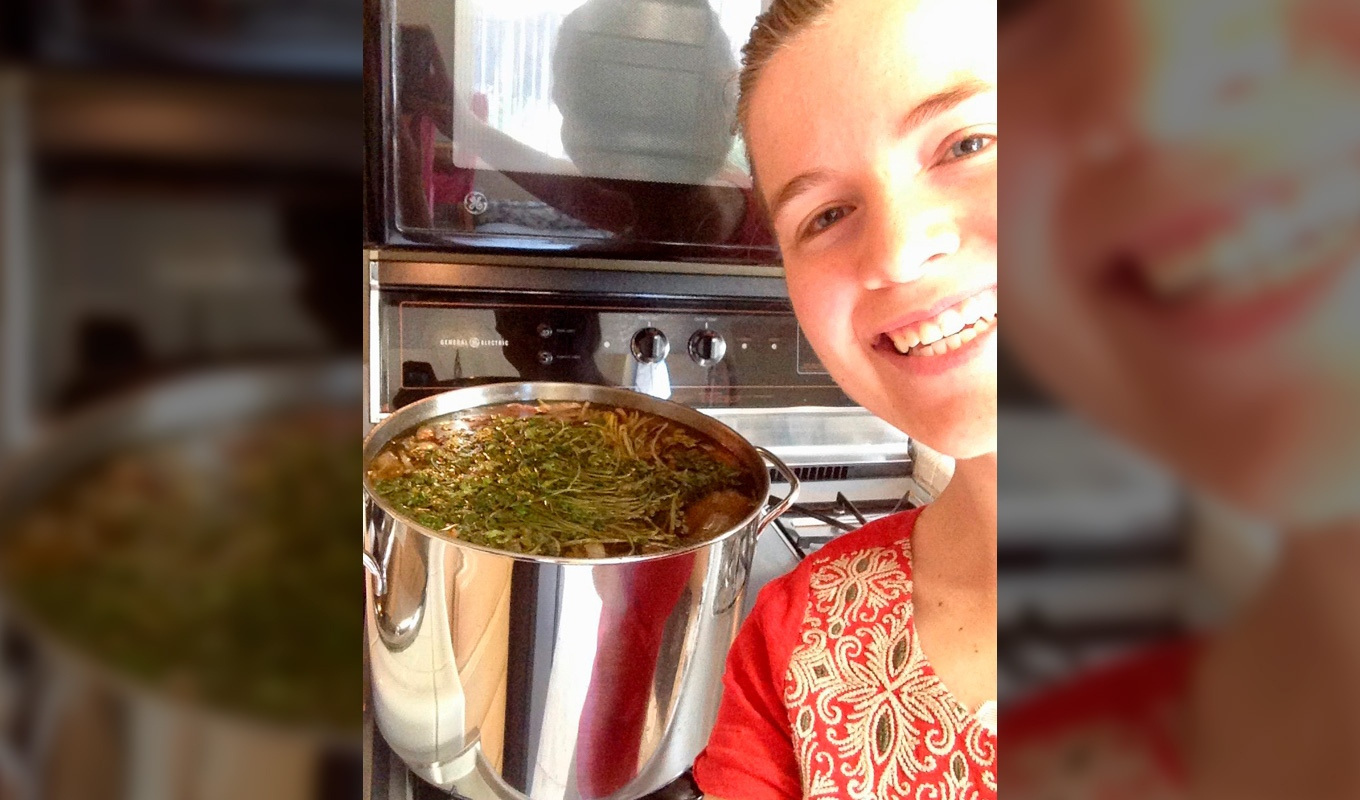
Andie Dill, Samaritan Ministries social media marketing coordinator, wrote this guide to making bone broth five years ago. Treating some of her own ailments, Andie became familiar with the book Nourishing Broth: An Old-Fashioned Remedy for the Modern World by Sally Fallon and began developing her own broth-making skills.
This is Andie’s guide to making chicken bone broth, but you could easily substitute turkey bones.
Ingredients:
Bones from a whole chicken or turkey
2-3 pounds total of livers, kidneys, hearts
Necks, backs, and feet of the bird (if available)
2-3 large carrots
½ stalk of celery
1 large onion
2 tablespoons raw, unfiltered apple cider vinegar
Sprigs of parsley and thyme
1 or 2 bay leaves
Optional: peppercorns, garlic, turmeric, or other spices
Over the years I have tried a few different methods, made some mistakes, and settled on my favorite way to make this delicious food.
Organ meats are superfoods, full of B vitamins and amino acids, so if possible, be sure to put plenty of these in your recipe. I personally would shoot for 2 to 3 pounds of livers, kidneys, hearts, and whatever else I could get my hands on. Also, the necks and backs of a chicken (or turkey) are all-around the most nutritious part and full of collagen. The chicken feet are the hidden treasure of any good bone broth and are responsible for making the broth gel because of their abundant gelatinous content. Gelatin is critical in healing and repairing the gut lining, so be sure to get several of those in your recipe, if possible!
In addition to your chicken pieces, you will need a combination of two to three large carrots, half a stalk of celery, and one large onion. In broth lingo, these three vegetables are referred to as the “Holy Trinity” or mirepoix, according to French cuisine. That is because they work together synergistically to bring out flavor, color, and lots of important minerals. Many people leave the skins on the onions for added flavor and color, but carrots should be peeled to keep the broth from becoming too bitter.
Lastly, at the end of the simmer, you will add a bouquet garni, which is the term for sprigs of parsley and thyme, plus a bay leaf or two, all tied together. You could also add in peppercorns, garlic, or spices such as turmeric to enhance the flavor and nutrient content of your broth.
The only equipment you need is a large stockpot and the ingredients listed above. First, put all chicken pieces in the pot and fill it with water. Before you turn on the stove, pour in a couple tablespoons of raw, unfiltered apple cider vinegar and let it sit for 30-45 minutes. This will help draw extra minerals out of the bones. Turn the stove on and bring the water to a quick boil. You will want to keep it quick so you don’t destroy or boil out the gelatin, which is the best part. As soon as it starts to boil, turn the heat back down to a simmer, then skim off any foam.
Once the foam is skimmed, let the broth simmer on the stove for at least 24 hours. If I keep the heat low, I feel comfortable letting it simmer through the night.
Once you turn off the heat, let the broth cool slightly, but not all the way to room temperature. For me this is usually a couple of hours. I use a 20-quart stock pot, so if you are using a smaller pot, it may cool faster.
Then simply strain the broth and pour it into storage containers that you can freeze. I enjoy cooking eggs in broth for breakfast, sipping it from a mug, and of course incorporating it into sauces, salad dressings, soups, and gravies. Anytime I come down with a cold or the flu, broth is a welcome remedy.
The information in this article is for educational purposes and not meant as medical advice.