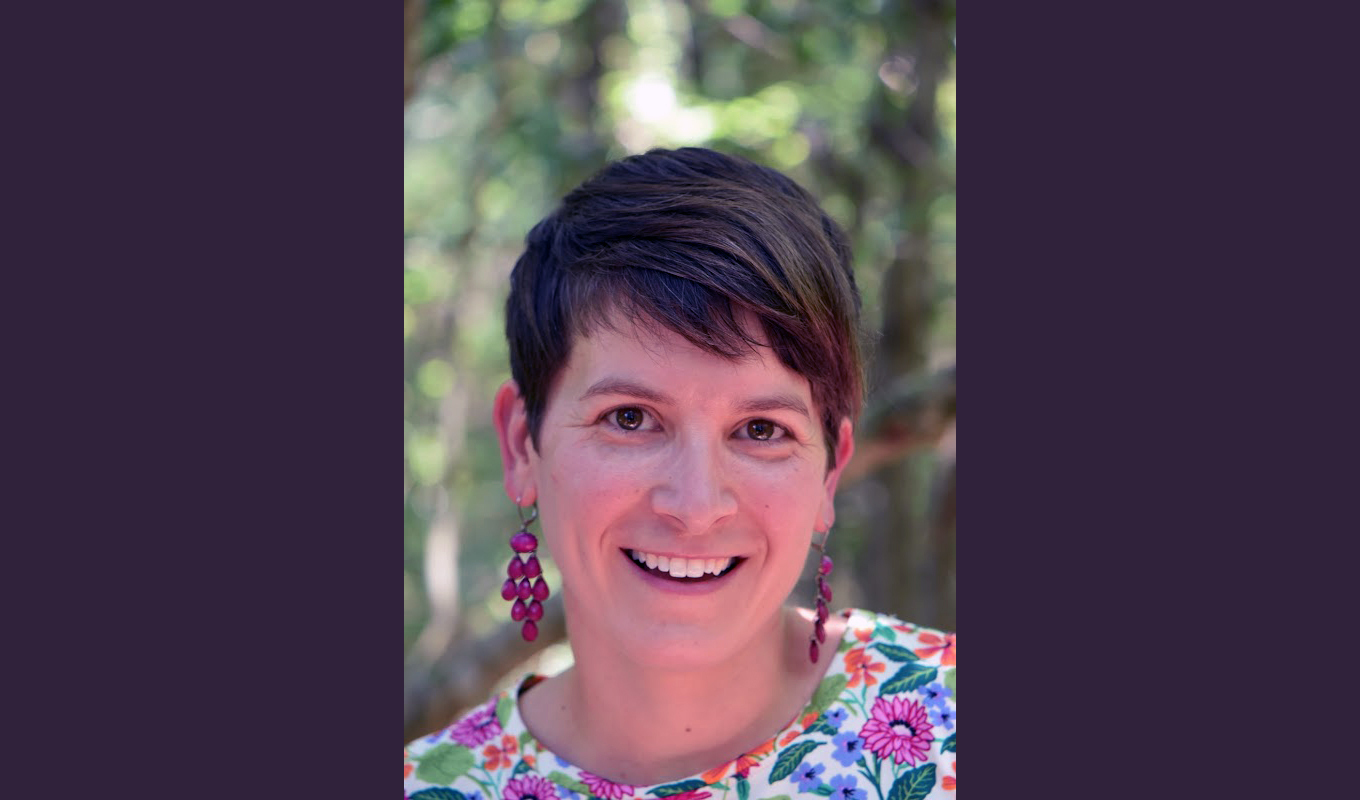
Loss & Light: Finding hope in the midst of infertility
By Anna Moore · Jan 06, 2026
Samaritan Ministries honors the sanctity of life—not just this month, but every month. As part of that commitment, we are sharing a special series called Loss and Light. These stories feature members who have walked through the deep sorrow of losing an infant or child. In the midst of their grief, they have chosen to glorify Christ, allowing His light to shine through their suffering.
When Samaritan Ministries member Emily Ibrahim walks into a room full of adults and children, she gravitates toward the little ones. She has always loved being around children and anticipated the day she would become a mother.
Four years ago, an unexpected diagnosis changed that dream. Emily—an adjunct professor at the Southern Baptist Theological Seminary as well as a mentor, writer, and ministry leader—publicly shares her infertility story to help other women find hope when all feels lost.
An unexpected diagnosis
During a break in her doctoral studies four years ago, Emily and her husband hoped to start a family. Then one morning, she woke up with terrible pain in her abdomen.
“It got so bad that all I could do was lay down flat,” she said.
Emily spent three days in the hospital with a hemorrhagic ovarian cyst. At a six-week checkup, the cyst was gone, but another had appeared on her other ovary. Months of recurring cysts followed, until one was persistent to the point where surgery was needed.
A four-hour procedure revealed stage 4 endometriosis and completely blocked fallopian tubes. Natural conception was no longer possible.
“My experience was like a phone call that somebody you love has died an unexpected death,” she said.
Walking through grief and faith
Processing the news brought a grief unlike anything Emily had ever experienced.
“That evening after I started discussing everything with my husband, it was just like all of a sudden this noise that I had never heard of coming out of my body, just this wailing,” she said.
Three months later, her father died suddenly.
“It was a very dark season,” she said. “It was maybe a year after I learned of my infertility that, by the grace of God, I was able to say, ‘OK, we don’t have to pursue pregnancy by any and every means possible.’”
That surrender lifted the weighted cloud she had been under.
Redemption through creativity
As Emily recovered, the Winnie the Pooh book series inspired her to craft poetry—first to process her pain, then to share hope.
“Poetry became my way of coping, processing, and grieving, and then sharing them with my husband was really helpful,” she said. “While he was grieving, the hardest thing for him was seeing me in pain and not being able to do anything about it. I was able to help bring him into my world a little bit through the poems.”
She eventually published her collection of poems in the book Faith and Infertility: Poems of a Mother, Never to Be.
One of the poems, “Never and Always,” describes the seemingly unending loss of infertility.
Never will I hold your hand.
Never will I watch you stand.
Never will your head I kiss.
Always, always
You
I miss.
Never will I hear you talk.
Never will I watch you walk.
Never will your head I kiss.
Always, always
You
I miss.
This experience deepened her compassion for others and reminded her of God’s sustaining word. Passages like Psalm 119:68 and Lamentations 3:19-33 became anchors for her soul as she memorized and meditated on them.
Through difficult conversations and God’s grace, Emily and her husband grew closer, which isn’t the story for every couple experiencing loss.
“My husband was so kind to comfort me and give me space to grieve. We came to, I think, love each other in a way that we wouldn’t have if we hadn't experienced this trial together,” she said.
‘God is not disappointed with your grief’
Emily now leads a support group for women facing infertility and speaks publicly about her journey.
“If the Lord would use my experience to help others, then my pain has a purpose,” she said.
She encourages Christians not to minimize the pain and difficulty of infertility but to follow up with women who share their struggles and invite childless couples into their lives.
Emily put a lot of expectations on herself about what her grief should look like, but there’s something she was told that she hopes encourages others.
“God is not disappointed with your grief,” she said. “He welcomes you with open arms and He is near to the crushed in spirit. No matter how long your season of grief and infertility lasts, and no matter the outcome—whether you have children or not—God welcomes you in your grief to come near.”