Knowing more about body mechanics may prevent injury
By Jonathan Hamm of MOOSE Physical Therapy · Oct 25, 2022
Knowing more about your posture, body mechanics, and ergonomics can help you prevent injury.
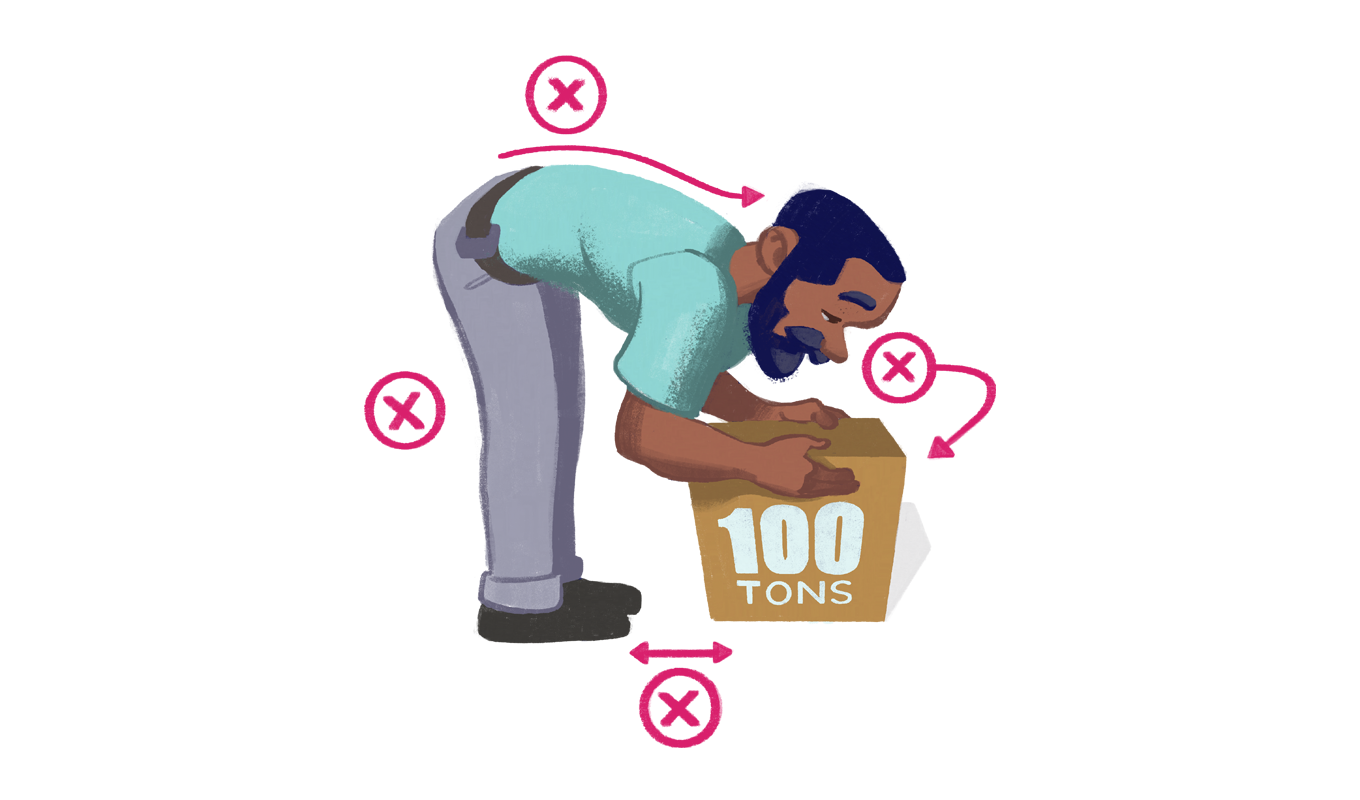
For instance, did you know that lifting a 10-pound object with improper technique actually puts 100 pounds of pressure on your lower back? That means that when you add in the 105 pounds of the average human upper torso, lifting a 10-pound object with the wrong technique actually results in the total load on the lower back being 205 pounds. It is no wonder, then, that the No. 1 musculoskeletal injury people need treatment for is low-back pain.
As a physical therapist, I see back, neck, hip, and knee injuries related to posture problems. In at least 80 percent of these cases, the mechanism of injury is unknown or was something so slight, such as bending over to tie one’s shoes, that the patient wants to know, “How can I be fine one day and then, all of a sudden, in pain the next day?”
How injuries happen
Traumatic injuries happen every day. They can occur when someone sustains a fracture from falling or lifts an object that is too heavy.
The most common musculoskeletal injuries, however, occur because of poor posture over a prolonged period of time, straining muscles and joints, eventually leading to overstressed tissue, which results in too much inflammation, which produces pain.
When, for example, you bend over to pick up an object and you use your back instead of your legs, you may feel just fine after one or two of the motions, depending on the strength of your back. But when repeatedly lifting in this manner, you are asking the muscle in your back and the discs and joints of the spine to handle a load they were not meant to handle multiple times, and that often leads to injury.
Let’s take bungee jumping as an example of how the spine works.
The bungee cord is meant to take a certain known load. However, the cord will not hold the person jumping without either partially or fully tearing if the strength of that cord is not at least as strong as the person’s bodyweight combined with the force of gravity and acceleration.
The same can be said with how our joints deal with the forces we place on them. This is where posture and proper body mechanics come into play. Many of you know what it means to stand up straight or lift with your legs, but what are proper body mechanics?
Standing
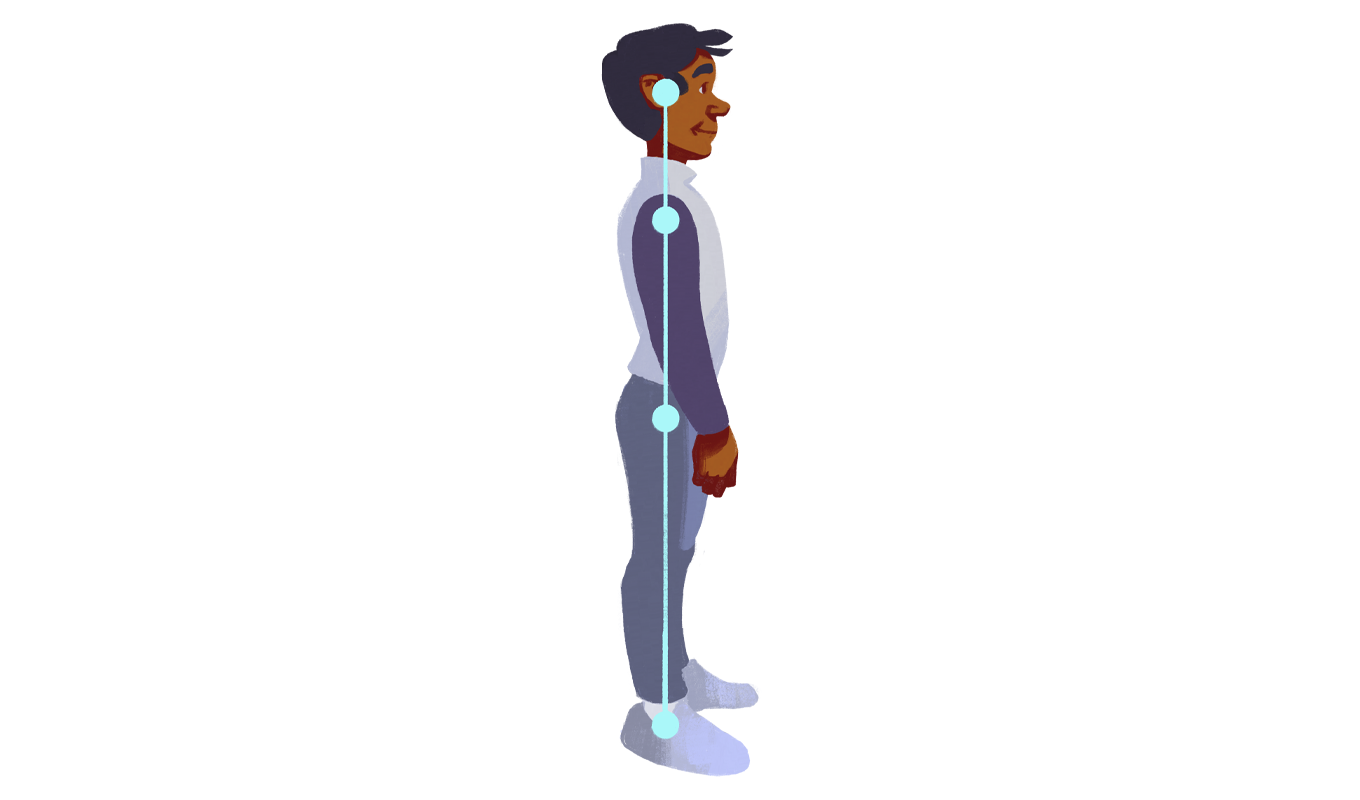
A plumbline should be able to be drawn from the ear to the side of the shoulder to the lateral hip bone to the lateral ankle bone (see illustration below). This is proper standing posture. Now, this isn’t always easy to attain or maintain, but one should try to get as close as possible to this posture.
Sitting
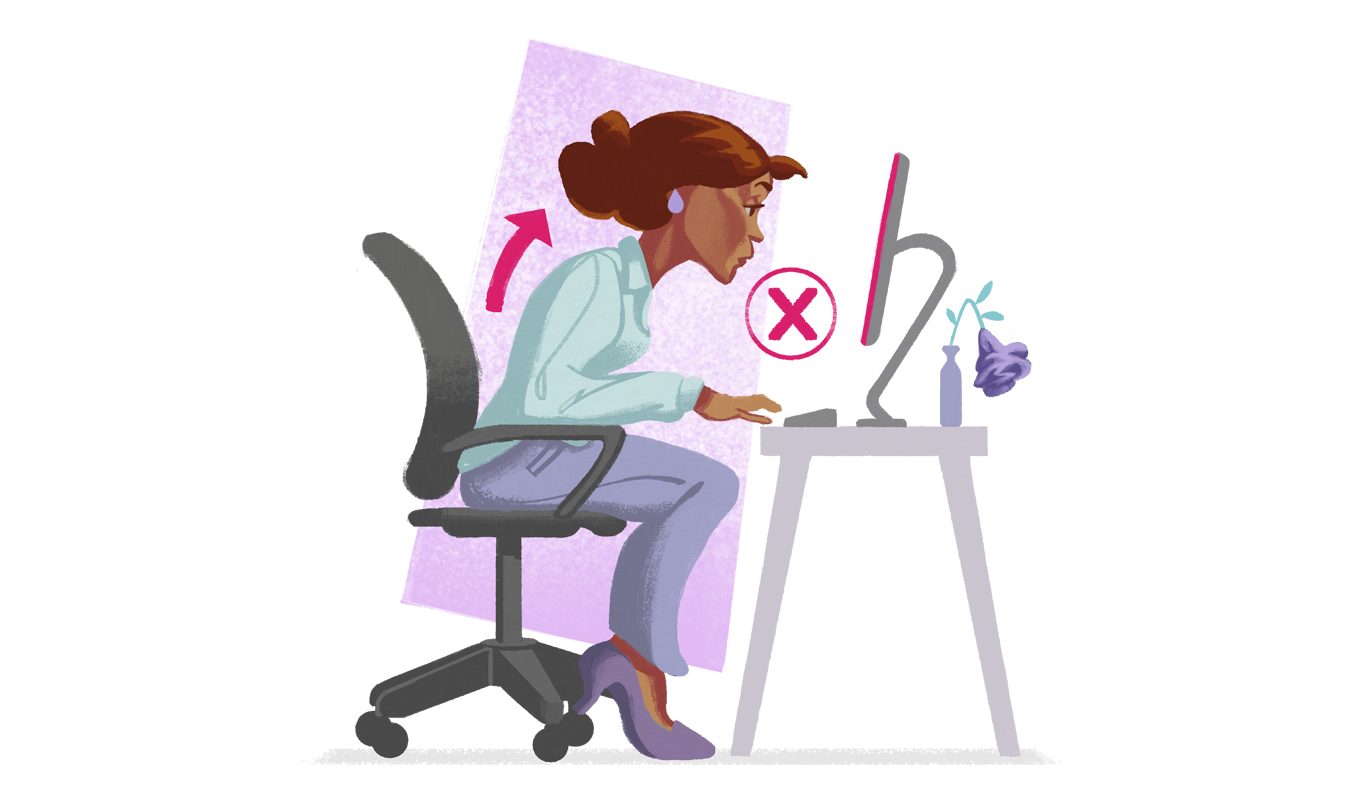
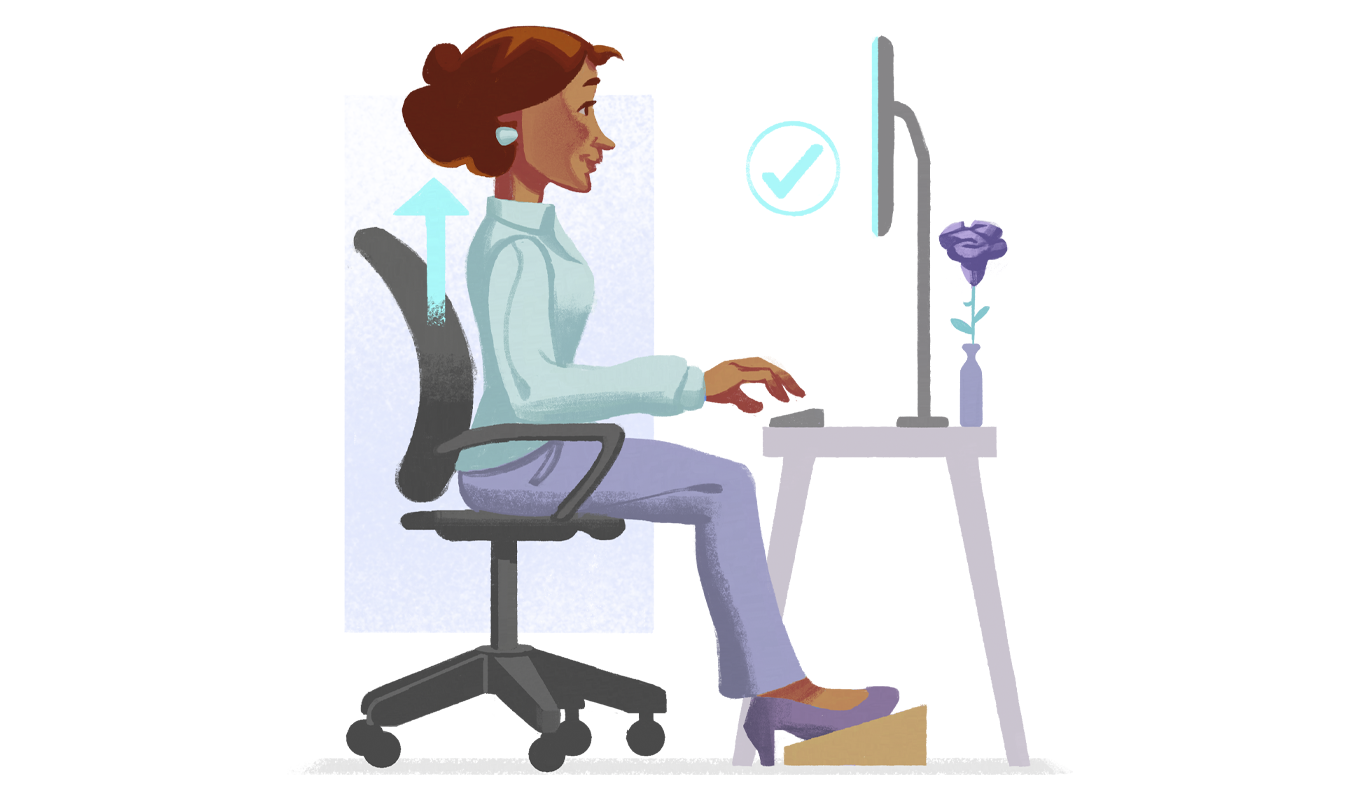
The same plumbline should line up with the ear, shoulder, and hip as in standing, while the feet should be flat on the floor (or footstool, if sitting on an elevated surface) and there should be 2 to 3 inches of space between the back of the knees and edge of the seat (see illustration at left). Should the legs be crossed? The answer is officially “no.”
Lifting
The keys to lifting an object off the floor properly are to
- Keep your back straight.
- Keep the load close to your body.
- Don’t lift too heavy of a load.
- Squat rather than bend over.
A quick tip is that if you can’t keep your shoulders pulled back and your face looking straight ahead, you are probably not using correct form.

Now that you have the basics, let me give you a few additional posture tips:
- You should try sitting on the edge of a sitting surface to avoid slouching.
- A good daily practice to track your progress toward good posture is to stand with your heels, buttocks, shoulder blades, and back of head against a doorframe, without tilting your head back.
- Stand and walk tall! Act like there is a string attached from the ceiling to the top of your head that is pulling you up.
You know an object is too heavy for you to lift if you can’t keep your head and eyes facing forward and your back straight. Injury is always possible.
At this point, some of you may be thinking that since your posture has been bad for years, you’re probably close to the point of injury. Others may be thinking “Hey, if I haven’t had a pain or injury so far from bad posture, maybe it will never happen to me.”
However, injury can happen at any point, and anything from low immunity to a long car ride could be the last straw, so please be aware.
Start thinking about your posture. If you have never had back pain before, praise the LORD, you are blessed! But over 80 percent of the population will experience back pain at some point.
Improving your posture and body mechanics is the first step to achieving a healthy spine.
Samaritan Ministries member Jonathan Hamm is a physical therapist at MOOSE Physical Therapy in Peoria, Illinois.
The information provided in this article is for educational purposes and is not meant as medical advice. It is the opinion of the writer. The information is not meant to replace a one-on-one relationship with a qualified health professional.
Illustrations by David Nielsen of Samaritan Ministries.