Keeping the Gospel primary while 'clicking the dial' back to normal
By Michael Miller · Feb 18, 2022
Two years ago this month, churches pivoted to a new way of congregating and ministering when COVID-19 led to nationwide stay-at-home orders.
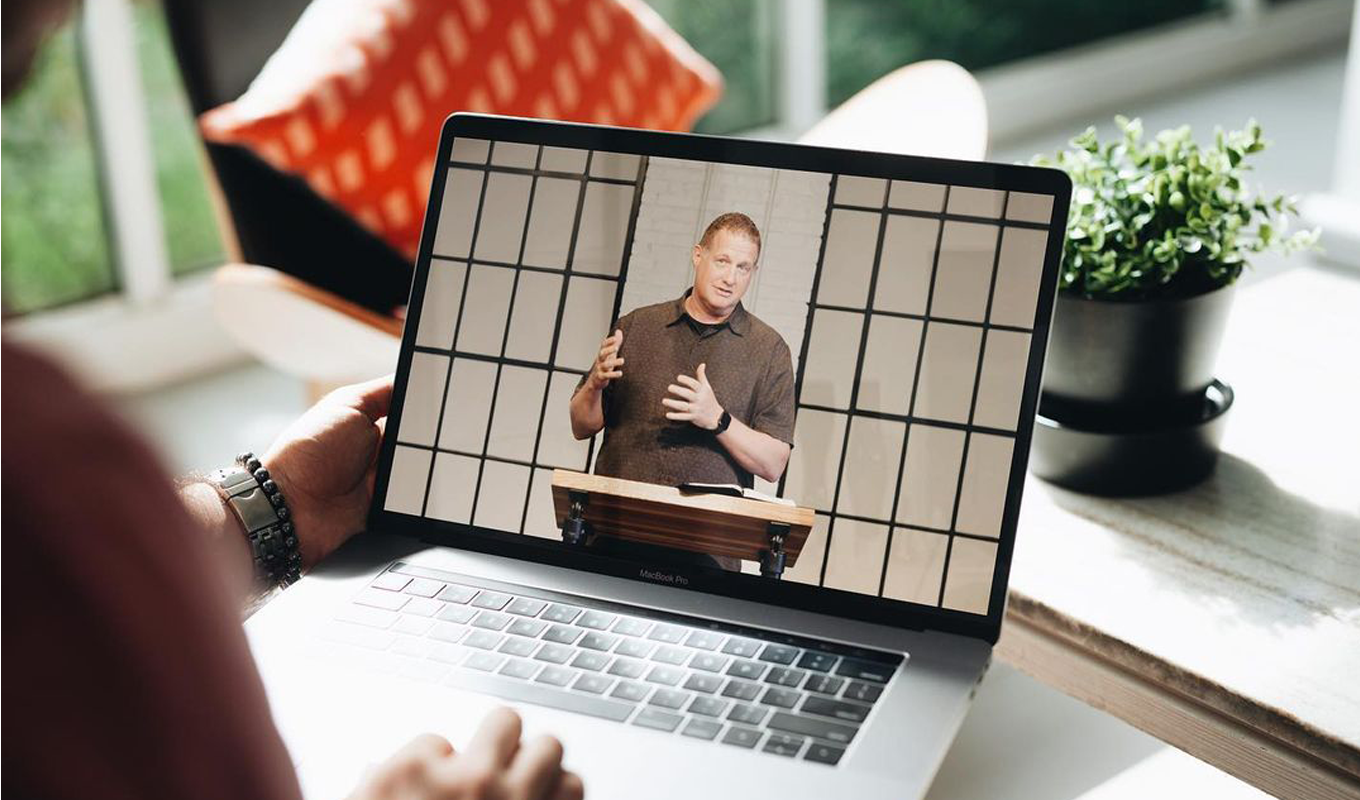
Most churches have started meeting in person again to make sure the Gospel is being presented. The majority of congregations continue some sort of hybrid services using streaming capabilities but have had to find creative ways to personally minister to those limited physically.
“I think the Church should always be asking, ‘Is what we’re doing the best way to communicate the Gospel in this moment?’” says Brian Lowe, a Samaritan Ministries member and pastor of Exodus Church in Belmont, North Carolina.
His congregation had to scramble in mid-March 2020 to get services online when stay-at-home orders swept the nation.
“We had to totally re-envision how we function as a church, and we had to do it in a span of a couple of weeks,” Brian says.
He said Exodus leaders defined three goals during the shutdown.
- Provide an opportunity for worship and teaching
- Provide an opportunity for connection and community
- Provide an opportunity for missions
Like most congregations, Exodus has been able to accomplish the first goal through online services and then socially distanced services once people started coming to in-person services. Online conferencing tools like Zoom helped with the second goal, and church members reaching out to neighbors helped accomplish the third.
“We had a lot of people doing a lot of unique things early on, like dropping off cookies on neighbors’ front porches,” Brian says. “Everybody was just trying to figure it out.”
Exodus Church has continued to “click the dial” back to normalcy one click at a time, the pastor says, by adding programs back gradually or gradually increasing the size of services.
“All in all, we’re really grateful to be back,” Brian says. “We do our best to make wise decisions. We try to pay attention. We’re not cavalier. We try to be wise and good neighbors.”
Church plant surviving
At a church plant in Montgomery, Illinois, Samaritan member Kyle Gennicks’ challenge as pastor during shutdown was not just to hold services but to keep his fledgling congregation together. As the state began to open back up at the end of May and early June 2020, Mission Church started having outdoor gatherings as well as group and home gatherings in small numbers, keeping the online services going from Kyle’s living room. But they still needed an indoor location as larger gatherings were allowed, and schools were no longer an option due to COVID-related policies.
Church leadership explored about two dozen options, from an empty factory to an indoor sporting complex, but nothing seemed like it would work. Finally, Mission Church asked to use space in MorningStar Community Church in nearby Aurora, Illinois. That arrangement is now leading to conversations about the possibility of combining churches, “which would not have been on the radar had COVID not come our way,” Kyle said.
One of the key results for Mission Church was the shutdown’s revelation “of the absolute necessity of anyone in my role pastorally to equip and empower individuals and for the Church as a whole to do the work of the ministry,” Kyle said.
“When as a pastor you can’t leave your own home or be in someone else’s home or go to the hospital to do the pastoral moment before a surgery, the idea of equipping and empowering the Body of Christ to do the work of the ministry—the priesthood of all believers—became an absolute necessity,” he said.
‘We made ourselves available’
Tom Zobrist, pastor of Liberty Bible Church in Eureka, Illinois, and a Samaritan member, says leaders encouraged members and others to let them know “if they had any needs—financial needs, physical needs, food needs, or if they needed someone to get their medicine.”
“We just made ourselves available,” he says. “We tried to make the best out of a bad situation.”
Liberty was already streaming services when COVID hit, so it “wasn’t a big deal” when the shutdown came to Illinois, Tom says.
“I came to church on Sundays with a skeleton crew of guys and music people, and we did church here by ourselves and broadcast it like we always do,” he says. “There were a lot of adjustments that we made, but being sensitive to whatever people wanted to do, we never tried to say you should or you shouldn’t do this.”
Liberty reopened its doors for services around Memorial Day 2020, but only gradually ramped up normal ministries, like children’s programs. The church also switched to two services per Sunday to allow for physical distancing, then went back to its normal single service in 2021.
Tom says that he encourages Liberty members to look past the present.
“One thing I try to teach my people more than anything else is this: Don’t love this life more than the next,” he says. “God is in control. We have a better future out there beyond this life. We’re never going to make heaven on earth here, so we need to look towards the real heaven and not fear losing this life as much as we desire to serve God and do what God wants us to do.”
Staying hybrid
Deveraux Hubbard, pastor of St. Paul Baptist Church in Peoria, Illinois, said his 107-year-old congregation is trying to continue its hybrid approach to most aspects of its ministry, including services, classes, and prayer. The makeup of the congregation, however, requires occasional adjustments.
“We’re just recognizing that for some people, it’s going to take them a long time to be comfortable being around other people. They may want to be in community without physically being in the presence of others, so we’re just making sure that we provide an online option for people to be able to be in community and connect and grow,” Deveraux says.
St. Paul’s has many members with chronic health conditions, one of the reasons the church didn’t start meeting in person again until summer 2021.
“We have members who deal with diabetes, high blood pressure, asthma, and even a number of members who actually bring in oxygen with them when they come to services,” the pastor says. “We also have a number of members who are caregivers for loved ones who may be elderly or sick. And then we knew a number of our members work in medical settings as well.”
The church again reverted to online-only services for two Sundays in January due to the emergence of the omicron variant of COVID-19.
St. Paul’s has found a variety of ways to serve its members. For instance, it developed phone-only classes for seniors unfamiliar with computer technology. The church also created several teams to regularly call and check on people, especially seniors, and has made a point of staying in touch with members experiencing job loss or health issues.
“We tried to shift classes and other things to online as much as possible but then tried to increase our touch via the old-fashioned telephone,” Deveraux says.
He adds that his heart goes out to leaders in general at all levels.
“It’s been a difficult time to manage, and I hope the lesson that we are learning is that, at the end of the day, our commitment to one another needs to take priority. Being able to sacrifice for the sake of the other must take priority going forward.”
Taking care of people
In northern California’s Santa Clara County, Samaritan member Cliff McManis says once Creekside Church, where he pastors, got its streaming going, leadership began focusing on taking care of their people.
“That meant more time on the phone and email,” Cliff says.
He also began writing a daily devotional related to the issues of the moment. Besides the virus, Americans were facing unrest throughout the nation.
“I encourage people to think Biblically with every crisis that comes along,” says Cliff, the author of several books about the faith. “Let’s just keep filtering all this through God’s Word, because the Bible is sufficient, and God has something to say about every one of these issues. That was the united front of our eight elders: If we’re going to be facing unprecedented times and issues, God has the answer. We had to search and find that answer and give it to our people.”
The leadership of the Cupertino, California, church accommodated its members by creating several different venues for worship, including online, in person, in classrooms with windows open at the church building, outdoor seating with screens, and an FM signal for those who wished to park in the parking lot and listen while watching the outdoor service.
“We didn’t want anybody falling through the cracks,” Cliff says. “We wanted to meet people where their conviction was. God is clear, though. He wants His people to meet for worship.”
Creekside initially shut down programs besides services for about a year, but everything, such as Sunday school and missions trips, is being offered again. The church still holds both indoor and outdoor services.
Still, like so many other churches, including the ones previously discussed, Creekside is in a “holding pattern,” waiting to see how the virus develops or devolves and, in the meantime, trusting in the Lord.
Michael Miller is editor of the Samaritan Ministries newsletter.
More: Christian unity is found in Jesus and His Gospel, not masks or mandates, say pastor