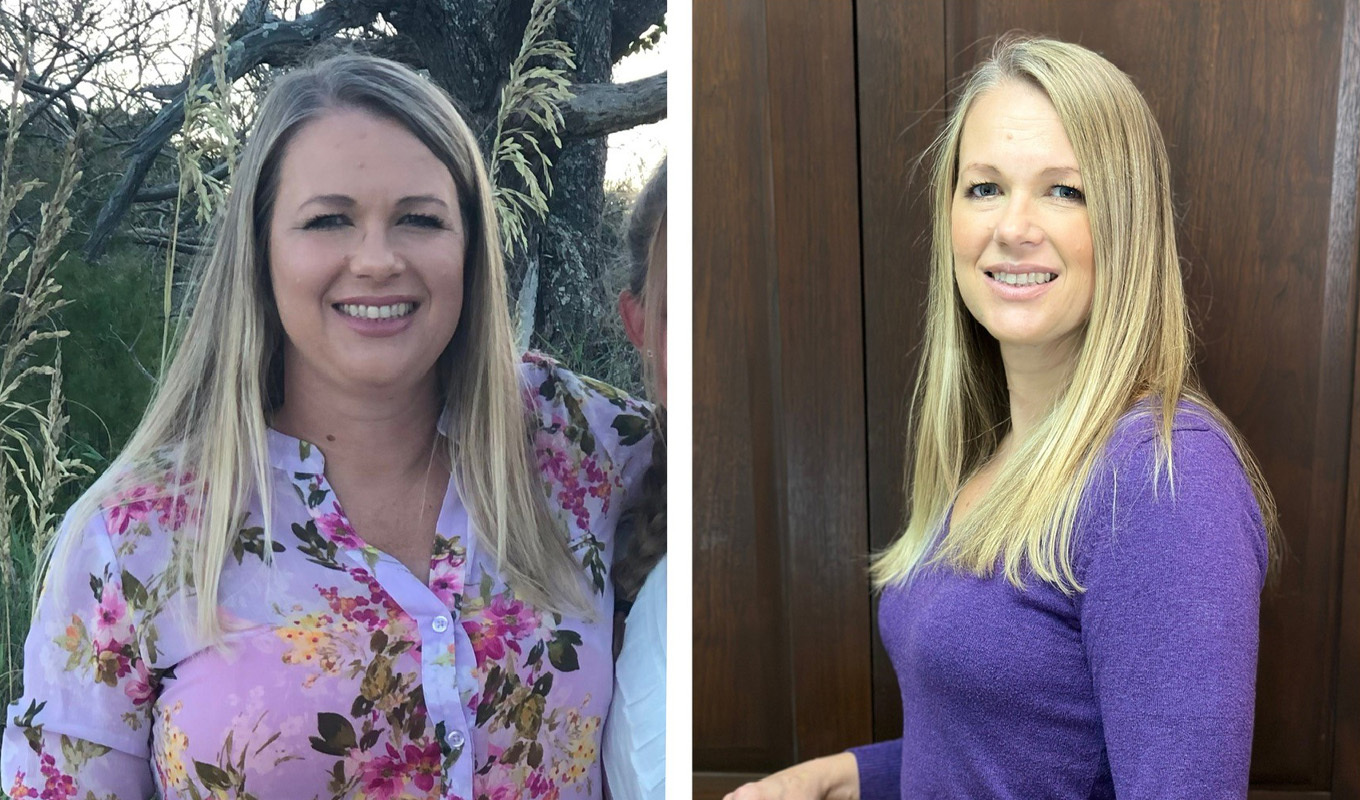
Intermittent fasting led to better health for newsletter creator
By Kathryn Nielson · Apr 22, 2025
Just three years ago, Leslie Dennis Taylor was overweight and suffering from chronic migraines, prediabetes, and interstitial cystitis, a condition she had been battling for two decades along with a host of other health problems.
In August 2022, the Moscow, Idaho, Christian had had enough of her extra 45 pounds and decided to give intermittent fasting a try. Within seven months, she had dropped the weight, but more happened: Her chronic migraines ceased, she was no longer prediabetic, the interstitial cystitis was gone, and the other lesser but equally annoying health issues vanished.
“The thing that I didn’t expect was that all of my other issues would go away as well,” Leslie said. “Then I became really curious about what was going on in my body, and I became interested in all the things fasting does in the body, particularly the way that it causes your body to go into a self-healing mode.”
That curiosity led to a successful online newsletter called Fast Well | Feast Well with over 5,000 subscribers. Additionally, she works as an independent health coach, guiding clients through their healing journeys using the tools, education, and research she has collected over the years.
While different client concerns call for different protocols, almost all her clients are directed to some form of intermittent fasting. The only ones who aren’t are those who are underweight.
Another diet fad?
But is intermittent fasting just another diet fad in America’s quest to lose weight? That’s a fair question given the $90 billion diet industry in America attempting to address the 74% of overweight Americans, with 43% of them being considered obese.
First, it’s important to learn just what the problem is. Leslie said a few abnormalities are at play. The food we eat is highly refined, we have constant access to it, and we exist in a world where little to no physical labor is necessary.
“That’s not normal,” Leslie said, adding that when you put all those things together, you end up with metabolic syndrome.
Metabolic syndrome occurs when the body has such constant access to carbohydrates that some of the signaling begins to get off course in the body. Fasting is “a way to give your body a rest from digesting and to use up some of the glycogen in the liver,” Leslie said. “It’s like the body is saying, ‘Well, I don’t have to digest food right now, so this is a good opportunity for me to start healing X, Y, Z.’”
The key points seem to be glucose levels and insulin resistance. Leslie said that when we eat glucose, the body wants no more than 1 teaspoon of it in the bloodstream at a time—5 teaspoons and we die.
So, if we consume a meal that has maybe bread and rice, and finish it off with a cookie for dessert, we’ve easily racked up a whopping 18 teaspoons of glucose. The body’s main objective is to work like crazy to get that glucose out of the bloodstream to keep us from dying using a hormone called insulin.
The glucose is then temporarily stored in the liver as glycogen. If our insulin is constantly high because of the constant glucose input, the cells can sometimes stop responding well to insulin, similar to how a child stops responding to a parent who is always yelling at them; they’ve become used to it and tune it out. That’s when the blood sugar starts to creep up. But when we fast, we’re giving our bodies a nice long break from having to “hear” insulin so that when we do start eating again, they respond very well to insulin.
This is a big deal given that insulin is often referred to as a master hormone, as it’s in charge of over 200 processes in the body. Not only that, but our other hormones depend on it and are highly influenced by it. When our insulin is constantly elevated, those 200 other processes in the body become dysregulated. Incidentally, Leslie said, this is not done by being what she would describe as a “carbohydrate hog,” but is a result of the way the average American eats—those pesky processed foods. Research suggests that the standard American diet is made up of 60% to 90% highly processed food.
When we give ourselves a break from food, something magical happens after about 12 hours: Autophagy sets in. Autophagy is a fancy word for the process of cleaning out old, damaged cells and recycling them into something useful. So if we’re fasting for say, 16 hours, our bodies get about four hours of time to clear out the junk.
Different fasting modes
So what are we talking about here? Do you have to give up food for 40 days and 40 nights?
Nothing quite so drastic.
There are multiple ways of fasting, but Leslie starts many of her clients on a 16:8 protocol for about a month, which means that in a 24-hour period, they fast for 16 hours and eat during the remaining eight hours.
For minimal weight loss, this is usually enough to do the trick. However, if the client isn’t responding to that in terms of weight loss or the condition they’re attempting to treat is not improving, she has them add in a 24-hour fast once a week while continuing with the 16:8 the other six days of the week.
There is a subset of people who really need a longer fast—people who are diabetic or prediabetic, those who suffer from insulin resistance and autoimmune diseases, and those with health problems that have been lingering a long time. For those she recommends starting with a 24-hour fast. In some cases, a 36-hour fast is warranted. Leslie was one of those people that needed something a bit more drastic. After trying the 16:8 method with no success, she heard about alternate day fasting (ADF) and tried it, and that’s when things started to turn around for her. ADF consists of a 36-hour fasting window followed by a 12-hour eating window.
Applicable science
Her own failures and triumphs with intermittent fasting are why she is so passionate about helping others and why she created her Substack account and personal coaching business. While there are good science and resources out there for anyone to read, many people won’t read it because it’s too “sciency.” Leslie’s passion is taking the science and the research and explaining it to the average person in an understandable and applicable way.
In just a couple of years writing and coaching on the subject, she has been privy to the health improvements her clients have reported.
One example is a man with Stage 4 metastatic colon cancer. He was considered terminal, even with chemotherapy. After a year on chemo, doctors took him off one of the drugs because the side effects were so severe. When his blood was checked, a marker that is used to determine the cancer’s activity level was very high. He decided to fast along with implementing the ketogenic diet with Leslie’s help, and, in doing so, the marker’s number deceased drastically. Encouraged by the outcome, he has started to incorporate more extended fasting.
It’s important to note that in addition to fasting, some of Leslie’s clients need additional therapies. The ketogenic diet is one such diet she uses, as in the case of the cancer patient.
“Sometimes when I’m reading some of this research, I have to pinch myself and [ask], ‘Is this magic’?, because God created our bodies to heal themselves,” Leslie said.
The information provided in this article is for educational purposes and is not meant as medical advice. The information is not meant to replace a one-on-one relationship with a qualified health professional.