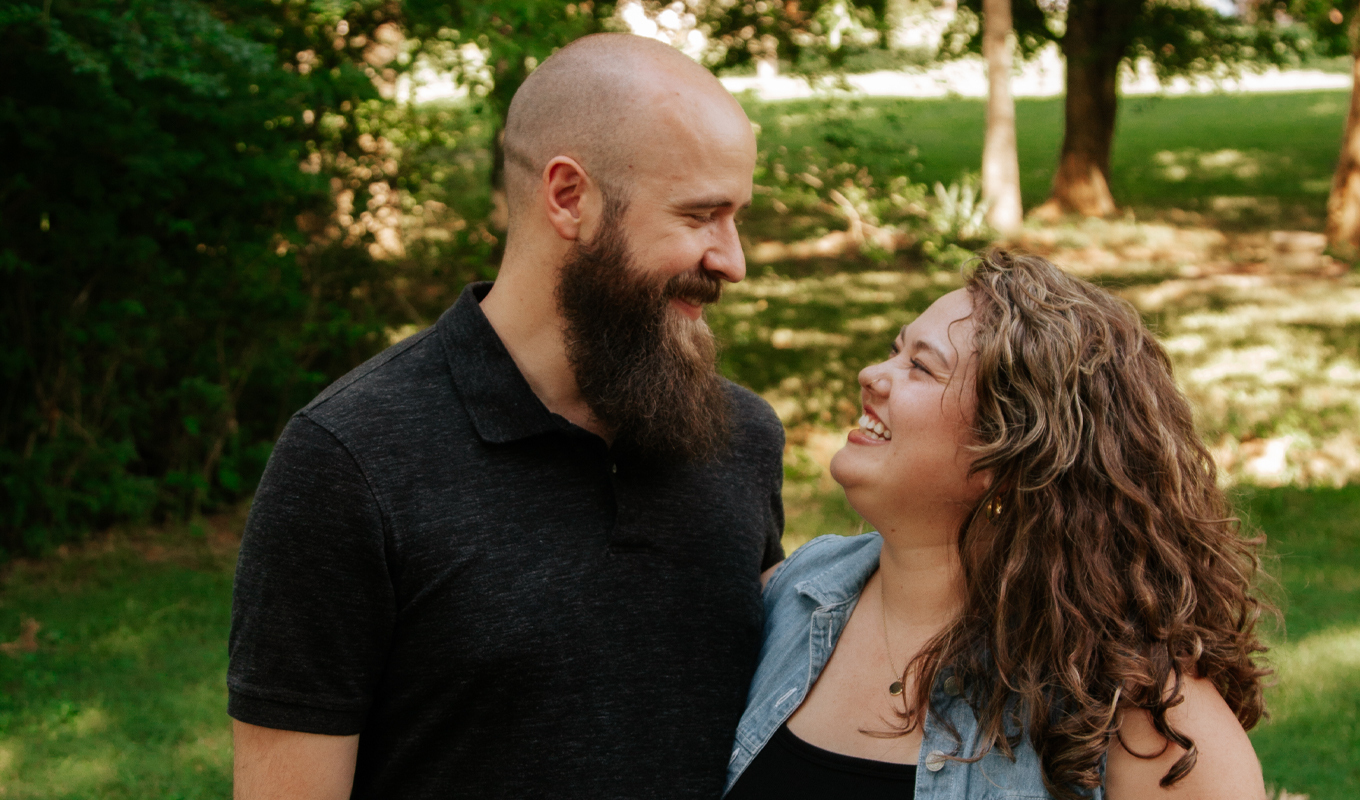
Nathan and Olivia Giles (supplied photo)
Loss & Light: How infertility led one woman to reclaim her identity in Christ
By Anna Moore · Mar 30, 2026
Samaritan Ministries honors the sanctity of life. As part of that commitment, we are sharing a special series called Loss and Light. These stories feature members who have walked through the deep sorrow of losing an infant or child. In the midst of their grief, they have chosen to glorify Christ, allowing His light to shine through their suffering.
Nathan and Olivia Giles began their marriage already knowing that conceiving a child might be difficult. Olivia had been diagnosed with polycystic ovary syndrome (PCOS), and Nathan was a Marine who worked on radio reconnaissance, a role in which fertility issues were reportedly common.
“We always knew we wanted kids, but we thought that it was very likely to be hard for us to have them,” Olivia said.
PCOS is a hormonal imbalance causing the ovaries to produce high levels of androgens, which causes the woman to have irregular and missed periods and unpredictable ovulation. It's one of the most common causes of female infertility, according to Cleveland Clinic.
Though they knew they could face challenges or never be able to conceive children naturally, they went into marriage trusting God’s plan through the uncertainty.
Wrestling with theological questions
After the couple’s initial efforts at conception failed, Olivia tried natural approaches, which took a physical and emotional toll. She tried doctor-guided diet changes, weight loss attempts, a full year of acupuncture twice a week, and natural family planning through cycle and temperature tracking.
Nothing seemed to help.
“We said, ‘OK, God. What is Your plan for our family?’” Olivia said. “And we had a lot of wonderful, well-meaning Christians in our lives saying, ‘Oh, of course it’ll happen. Why wouldn’t God want you to have a family?’”
Olivia is a spiritual director, while Nathan is a professor at a Bible college. The two leaned into their faith and allowed their theology to help them process their disappointment.
“We just started going, ‘OK, theologically, what do we believe about this? What do we believe about what it looks like when we desire something that is a good thing and God says that’s not the plan, or at the very least, not in the timing you want it to be?’” Olivia said.
As they wrestled with those questions, they learned more about honesty with God and having the ability to hold their desires without demanding certainty.
Rooted as a child of God
Olivia has embraced a maternal identity since she was young, even getting told repeatedly how she would make a great mother.
She spent some time in solitude early in marriage grappling with the Lord over motherhood. She sensed God inviting her to surrender her identity as a future mother and instead root herself as a child of God.
“I determined my identity is not lost if I’m not a mom in the way that I wanted to be a mom,” Olivia said. “That felt really profound and very comforting, not in the sense that He took the desire away and not in the sense that He said, ‘Don’t worry, I’ll just give you what you want,’ but in the sense of ‘you’re seen and you’re known in this and I’ll be with you as we go forward.’ That was incredibly comforting.”
Infertility as a ministry gateway
The more Nathan and Olivia learned to submit to God’s plans and timing, the more Olivia started having others bring up similar struggles with her.
“Something that was painful for us ended up being an entry point to have conversations with people, and it just felt like the Lord was saying, this is actually an area in which I want you to care for people,” Olivia said.
She discovered infertility is a struggle many women carry for decades. This opened doors for them to minister and love others through their own hurts and to create deeper community.
“The more we progressed into our marriage and time together, we realized that as painful as this is, there’s a way in which this is a gift that God has given us to care for other people,” she said.
God’s redirection of their parenthood
Olivia asked the Lord to show her how she can still be a maternal person, even without the clean-cut picture of traditional motherhood. When they moved closer to her family, her younger brother, Chase, moved in with them. Chase has Down syndrome.
“We recognized that if we had little kids in the home, which would have been the case if our timing had worked out, we probably would not have said yes to this,” she said.
Olivia said while having Chase around has been hard at times, it has been wonderful, too—challenging, sanctifying, and purposeful, like parenthood can be.
“It feels like we’re parenting with him, so I think that is one of the ways in which we see that there’s going to be things throughout our lives and God is going to ask us to focus on them for a time,” she said.
Sharing learned lessons
As a part of her job as a spiritual director, Olivia talks with women who go through seasons of waiting and disappointment. She emphasizes God’s goodness despite what they feel they are lacking. She encourages them to challenge cultural or family expectations that may be weighing them down and to be honest with God, like how she was when He reminded her of her true identify.
“I think the general concept is, what would it look like to say, ‘God, teach me to still understand You as good, even though I’m confused or disappointed or angry.’”
Nathan and Olivia’s journey has been marked by waiting, yet God has woven unexpected ministry and meaning through it all, reminding them of their identity in Him. They continue to walk in that calling, holding tightly to His goodness.