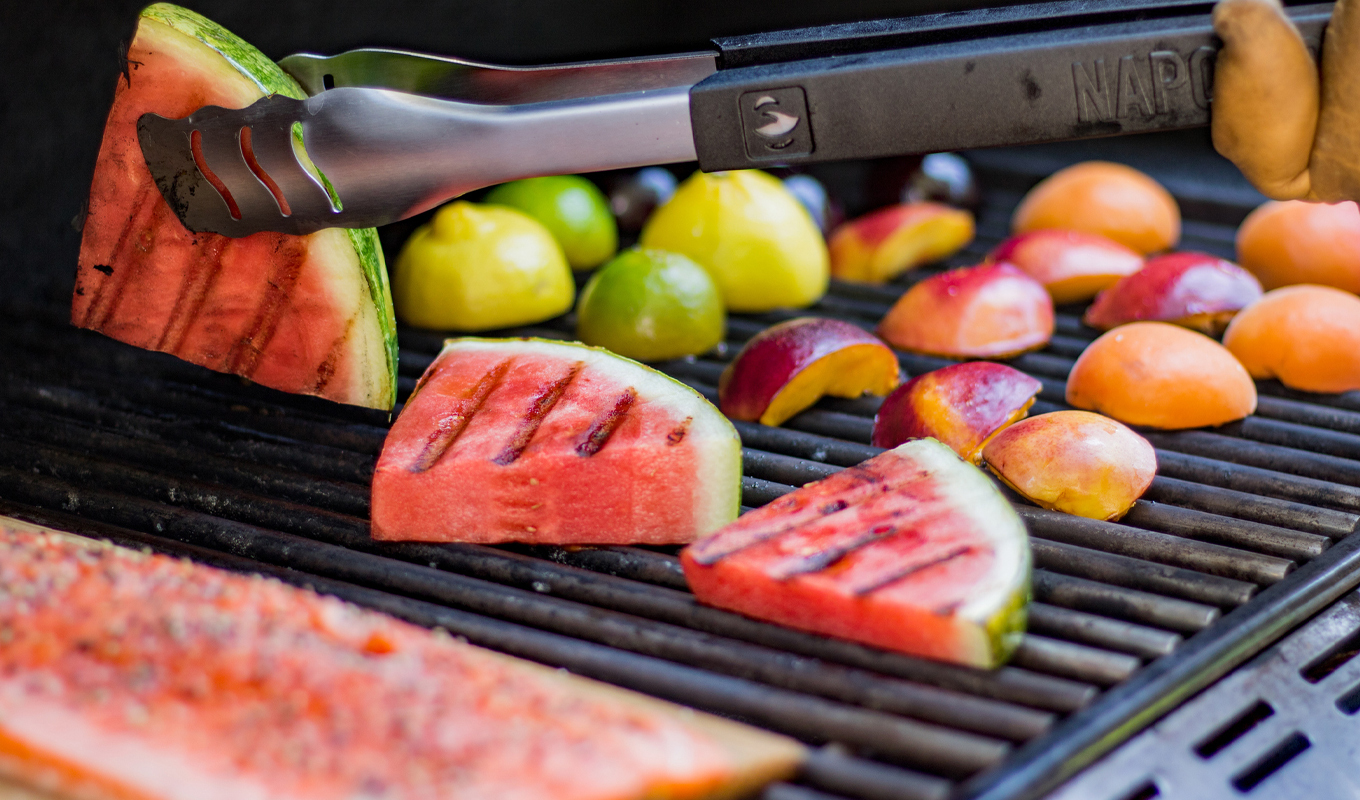
Complement that grilled salmon by adding fruit like pineapple, lemons, limes, and peaches. (iStock)
How to grill fruits and vegetables this summer
By Michael Miller · Jul 06, 2026
There’s nothing wrong with barbecuing a juicy burger or succulent ribeye, but your grill can be used for non-meat side dishes as well.
Yes, potatoes and bread are obvious candidates for adding to the grill for a hearty supper, but so are less starchy delicacies.
Vegetables like asparagus, corn on the cob (OK, it’s a grain, but still …), zucchini, and artichokes can be prepared to perfection with a little planning, wrapping, and zone heating. You can even quickly barbecue fruits like peaches, plums, nectarines, pineapple, and watermelon for a distinct taste.
Plan it right, and you can cook an entire meal on a grill.
Getting started before you grill
Prep everything ahead of time
Prepping the vegetables or fruit ahead of time saves time during cooking, enabling you to enjoy the process and spend time with guests if you’re having friends over.
Start with slow-cook items first
- Get the slow-cook items on the grill first. That allows them to be almost ready when it’s time to put the fast-cook items on. Then everything can finish at once.
- Add the longest cooking vegetables (corn, onions) first, then quicker-cooking ones (bell peppers, zucchini) as space becomes available.
- Vegetables like asparagus, cherry tomatoes, and thinly sliced veggies need the least time and should be turned frequently.
- Other experts suggest searing dense vegetables first and then moving them to indirect heat.
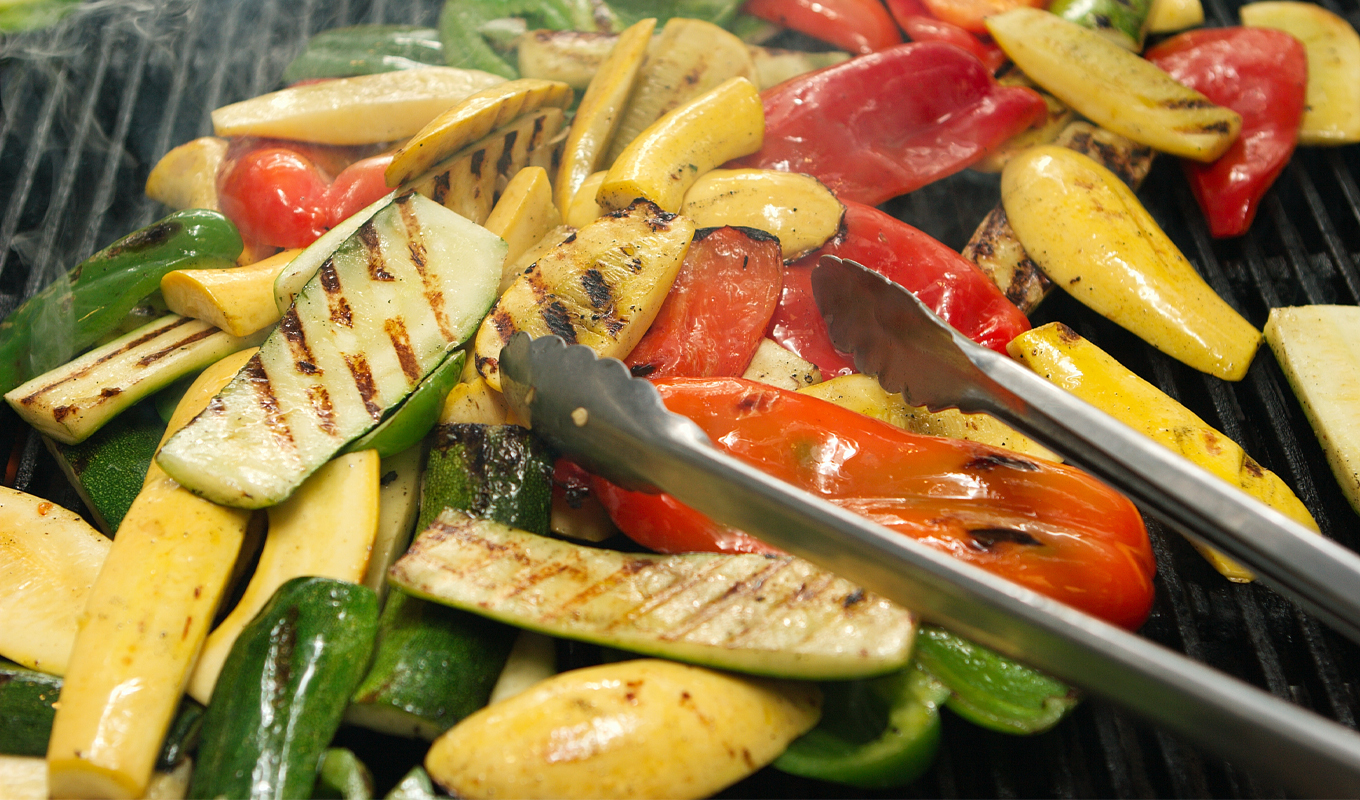
Among vegetables suitable for grilling are zucchini, yellow squash, red and green bell peppers, and sweet peppers.
How to grill vegetables
Grill masters like those at BBQ Journey Online suggest these vegetable basics to begin with:
- Cut veggies into ½-inch to ¾-inch pieces.
- Preheat the grill to medium-high heat.
- Aim for 400 to 450 degrees to achieve caramelization, which produces a nutty flavor and brown color.
- Lightly oil veggie chunks instead of your grill’s grates. Use 1 to 2 tablespoons per pound of vegetables. This not only helps to keep them from sticking to the grill but also adds flavor.
BBQ Journey Online also has advanced techniques that will yield better flavor, such as direct vs. indirect grilling methods and marinade suggestions.
How to grill fruit
Grilling fruit causes evaporation of water molecules and concentrates natural sugars, leading to surprising sweetness, a process known as caramelization. You can also brush fruit that has been cut into chunks with honey, maple syrup, or brown sugar ahead of grilling, or sprinkle it with cinnamon, nutmeg, or cardamom.
Plus, it’s good for you, providing antioxidants, fiber, and low-calorie gratification.
EatAndGeek.com says that the most popular grilling fruits are pineapple, peaches, banana, apples, and apricots. Remember the key rules with fruit:
- Use firm fruits such as pineapple, peaches, or watermelon.
- Cut into large pieces.
- Aim for 350 to 400 degrees when grilling fruit.
So, when you’re prepping those steaks, burgers, or bratwurst for a cookout this summer, don’t forget your veggies and fruits. You’ll be a true grill master and can tell mom you’re eating healthy.