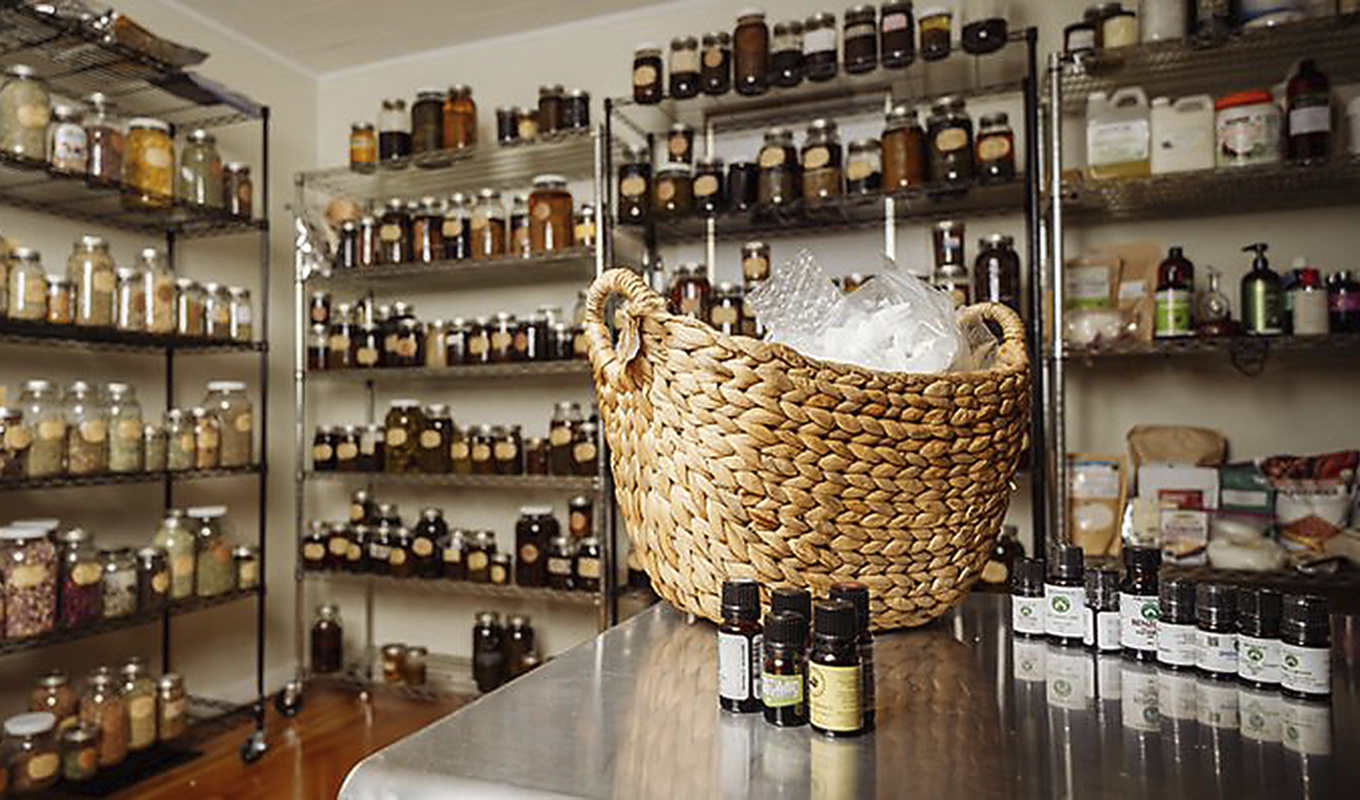
Herbalism teacher Heidi Villegas looks at the whole picture
By Anna Moore · Jul 02, 2025
Read how Heidi Villegas became an herbalist.
Samaritan Ministries member Heidi Villegas discusses herbalism safety, identifying uses for specific plants, how to make medicine from the plants, and different preparation methods through her online courses and website Healing Harvest Homestead.
“Science likes to take one active constituent out of a plant and turn it into a drug, and that’s where we get all the side effects,” she explained. “I truly believe that God made these whole plants, and He put all those little chemicals in them, and they all have an action, and they all work together to make that plant work for what it’s supposed to do, and that reduces the danger.”
After learning about different plants and their health benefits, herbalists know how, when, and how often to use them for their needs. Heidi said many of medicinal plants can be grown in your own yard.
Herbalism does work differently, however, than allopathic medicine. Heidi says with herbalism you think of your body in terms of it being a whole rather than in parts.
“We are a system that includes our physical body. It includes our emotional health and state, our mental well-being, and our spirituality. Our faith is very much involved in this too,” she said. “If you’re weak in any of those areas, you may have implications in your body. So when we talk about working on our health, we try to look at the whole person and then work on lifestyle factors, emotional supports and help the person handle those things.”
Herbalists have a good understanding of how herbs work in and on the body and they create their own natural products, remedies, and medicines, likely from plants they’ve grown themselves or have access to. They know how to forage the wild medicinal and edible plants and practice traditional ways of preserving food and herbs.
Warnings against herbalism
Herbalism is illegal to practice in the U.S. as a health practice in most states, but in terms of learning and using herbs for healing in the home setting or personally, there are not restrictions. A family herbalist certification is something Heidi offers to give people a way to show where they learned herbalism if they start making and selling their own products. The family herbalist certification and any other herbalism certification are not recognized by any regulatory or legal board or organization.
“There is no certification process or process for legitimizing herbalism in any way, shape or form,” Heidi said. “A person can literally wake up one morning and say, ‘I’m an herbalist’ and they can start sharing whatever they want to share. And that’s one of the dangers of it. On the other hand, when the government gets involved with things like this, they tend to start shutting aspects of it down.”
Heidi does warn that some use and teach herbalism as misplaced worship, such as Wiccan practices, and she advises anyone who wants to learn about it to have good discernment in where they are learning from.
“It’s steeped in paganism. It’s steeped in Wicca,” she said. “You see some very shadowy kinds of things going on for some and there’s astrology involved in some herbal schools. I mean, there’s lots of dangers.”
For this reason, Heidi says she makes sure her students understand she teaches from a Christian perspective that God is Creator and He created these medicinal plants for us to use appropriately.
“We don’t do divination, and we don’t do spells,” she said. “We look at the plants from the view of God as the Creator and the Great Healer and look at what He’s done for us and how blessed we are.”
The information provided in this article is for educational purposes and is not meant as medical advice. The information is not meant to replace a one-on-one relationship with a qualified health professional.