Health care is from God; we're trying to redeem it with Him
By Anna Moore · Sep 18, 2024
Thirty years ago, Samaritan Ministries began its Mission of redeeming health care.
But health care didn’t always need redeeming.
Long before Jesus took on flesh, God declared to His people, “I am the LORD, your healer” (Exodus 15:26). Although some doctors and nurses would not admit it, the triune God, Jehovah Rapha, is still the One who heals today.
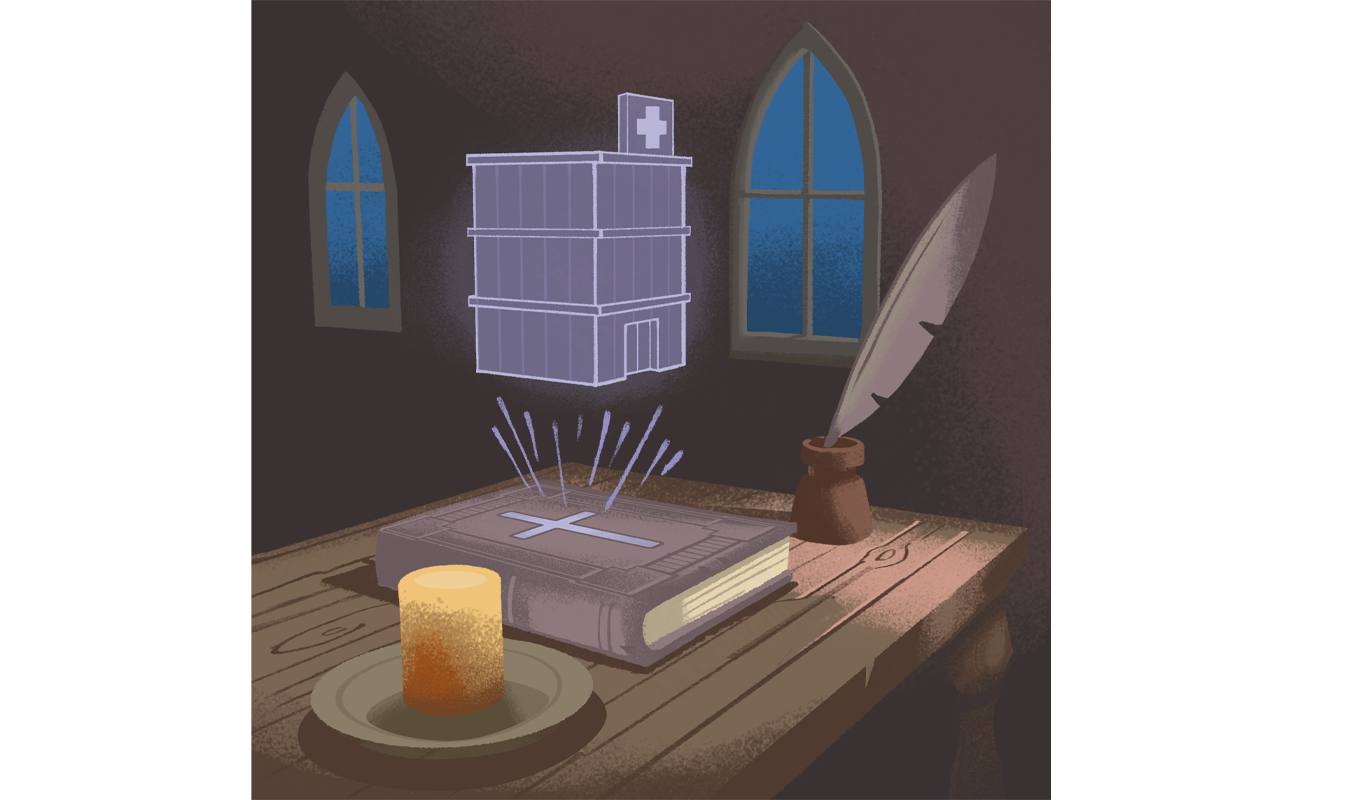
Health care in its essence is from God.
“God is the one who heals; sometimes He uses doctors,” said Mark Blocher, Samaritan Ministries member and author of Missional Medicine (2022, independently published).
In the Gospels, we read true encounters of Jesus caring for people’s physical needs as a way to point them to their spiritual needs. He healed the sick and diseased. He gave the blind their sight, let the lame walk again, gave the deaf their hearing, cleansed lepers, and even raised the dead. He also shared the good news (Matthew 11:5).
In all of that, He demonstrated to His followers how to love their neighbors.
After Jesus ascended to Heaven, His apostles continued in the work of His ministry, though not in their own strength or abilities. In Acts 9, Peter tells the paralyzed man who was bedridden for eight years, “Jesus Christ heals you; rise and make your bed” (Acts 9:34). Though God used Peter to command the man to walk again, it was Jesus who did the healing. God heals, but He uses people to achieve it. The Church has continued its mission of sharing Christlike compassion and care for the sick and weak since its founding. Though health care is presented differently today as technology and ideologies have developed, its roots remain Christian.
Demonstrating compassion
Jesus tends to the physical needs of believers and unbelievers alike today as He deems appropriate. By healing and treating physical needs, many have come to realize their spiritual needs can be met through Jesus Christ also. The early church could recognize this because Jesus' earthly ministry was fresh in their minds, and they lived out the mercy and compassion Christ had demonstrated.
The Church was born at the time when the emperor Nero was in Roman power. Blocher writes that moral debauchery, abortion, and infanticide were widespread at the time, and it was commonplace to find unwanted babies abandoned on city trash heaps, left to die by an uncaring government and indifferent family members. Yet, through God’s work in the Church, there was redemption.
(David Nielsen/Samaritan Ministries)
“The church stepped in to care for the babies, with Christian families raising them as their own. Christians provided care for the sick without receiving payment, in many instances risking their own lives and spending out of their own meager resources,” Blocher writes.
Despite poverty, public ridicule, and persecution, Christians loved their Roman neighbors, Blocher adds.
“When they encountered the worst forms of human depravity, they responded with acts of mercy. They rescued the sick and diseased, providing care in Christ’s name to strangers, even though it required the use of resources already in scarce supply. Amid the most horrible plagues, famines, and natural disasters, Christians lived out the gospel, showing their Lord’s sympathy and human compassion in remarkable, selfless ways. They buried the dead, comforted the dying, fed the starving, and endured horrendous slander and brutality for their efforts.”
Continuing the mission
Where Christianity spread, churches continued in the ministry of mercy and compassion, recognizing God as ultimate healer and Jesus as Savior. What this often looked like was providing water, food, rest, prayer, shelter, comfort, and company in all its basic forms. With the developments of technology and modern medicine, medical care has transformed over time.
(David Nielsen/Samaritan Ministries)
“Just as the first Christians took God seriously when Scripture says to serve the sick, widows, orphans, and the poor, throughout history the church has put this mandate into action by opening medical clinics and hospitals all over the world,” Blocher writes. “What the church has done before can be done again.”
Mennonite, Lutheran, Baptist, and Methodist groups expanded ministry to the sick in the 19th century. Roman Catholics organized and institutionalized medical charity. Hospitals and medical facilities eventually took shape and medical training for nurses and doctors set the pathway for careers in health care.
In the 1800s and early 1900s, doctors were known to visit patients in their homes, carrying what few tools and supplies they used at the time in a bag. They weren’t restricted to meeting certain benchmarks by hospitals or insurance companies but cared for their patients with their God-given abilities, wisdom, and time.
Praying with the patient
Because of its Christian roots and humble dependence on the Lord, prayer once played a larger role in the health care field.
Historian Jennifer Woodruff Tait reported in an article for Christian History that upon entering an early Christian hospital, the first thing that happened would be someone greeting you and praying with you. After the initial prayer, the patient would remove their dirty clothes that likely included disease-carrying vermin, and they would be bathed. Clean clothing would be provided and an invitation for confession was given. This aligned with the pattern found in James 5:13-16 that recognizes the sin-sickness consequence of the fall.
After being admitted, the patient was given a bed near worship spaces. Worship and prayer were standard aspects of medical care, and doctors and nurses were expected to provide spiritual care along with the medical services. A chaplain regularly visited with each patient. At the time of impending death, entire care teams would pray with the patient.

(David Nielsen/Samaritan Ministries)
“What we can learn from this summary of the history of Christian health care is that today’s Christian practitioners are the beneficiaries of a rich heritage from which to draw as we strive to restore the church to its place of prominence in missional medical ministry,” Blocher writes. “In the wake of a troubled, failing health care system, the church once again has an opportunity to restore the concept of ministry to medicine, only this time the need is not only in an undeveloped part of the world largely devoid of medical services. The work of missional medicine is needed right here in the United States.”
While today’s health care industry does not affiliate with Christianity or a particular religion, the basic principles traditionally taught in medical schools and training follow a Christian ethic. These principles include not causing harm, treating each person fairly and equally, practicing patient autonomy, and beneficence. Whether each practitioner maintains those principles in their practice is up to them.
When sin entered the world, the results were disharmony, disease, and death. The simple fact that jails, hospitals, and funeral homes exist gives evidence of a broken world.
Jesus was intentional to show His power over sin and death. He demonstrated compassion, care, and love—something He continues to teach us today as we aim to be more like Him. Just as people could go to Him for healing when he walked on the earth, we can do the same today.