'Good Energy' has some good information but faulty worldview
By Kathryn Nielson · Jan 16, 2026
Editor’s note: Samaritan Ministries strives to present a biblical worldview in everything we do. Sometimes we review books or films that don’t share that worldview but still may have helpful content. When we do that, we also try to raise awareness of faulty worldviews in content that is otherwise helpful.
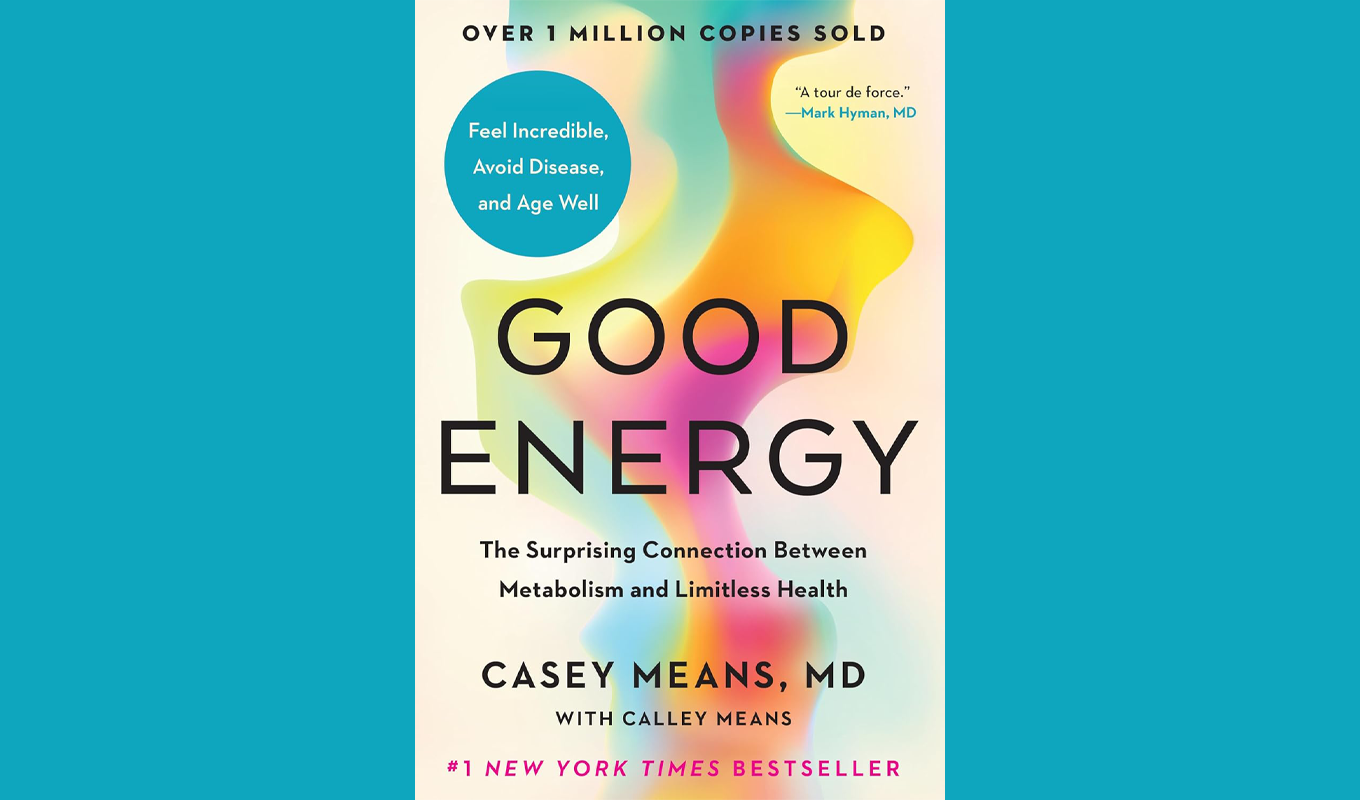
Good Energy: The Surprising Connection Between Metabolism and Limitless Health by Casey Means has some useful information in it but should be perused cautiously by Christians.
The author’s name has been popping up in the media as President Trump’s nominee for surgeon general. She also has gotten attention for her bestselling book, in which she explains why she believes the health of Americans is falling apart and offers suggestions to reverse the trend.
Means, who is also co-founder and chief medical officer of Levels, a glucose-monitoring system, writes that:
- 74% of Americans are overweight or obese.
- 50 million have autoimmune diseases, and 25% of young adults have fatty liver disease.
- 60% of adults live with chronic illness.
- 80% of modern human deaths are attributed to preventable lifestyle conditions.
- We consume up to 3,000% more liquid fructose today and sleep 25% less than we did 100 years ago.
I first heard about this book on a podcast shortly after its release. In many ways, she spoke “my language”: take control of your own health, quit eating junk, move more, and do your best to stay out of the doctor’s office for anything non-acute.
The book is the result of countless hours of research into health at the cellular level, why we get sick, and how to go after good health for ourselves.
She spends the first part explaining terms like mitochondria, metabolic dysfunction, inflammation, and talking about why there is so much chronic illness in America. But we have to back up for a minute because, while all of this sounds good, her use of the term “energy” at times may be off-putting to a Christian. It sounds a bit new age-y, and—spoiler alert—she does go down that path.
Good and bad energy
For starters, Means defines good energy as metabolic health and bad energy as a problem with how our cells make energy.
Means says that good energy has a life-changing impact on our lives. She writes:
It governs the very essence of what (quite literally) makes you tick, and is the core underlying physiological function that, more than any other process in your body, determines your predilection to great mental and physical health or to poor health and disease.
Part 2 of the book gives practical steps on how to take responsibility for our own health through our diet, meal timing, moving more, sleeping better, and learning to read blood tests and the results from “wearables,” like a continuous glucose monitor. Means spends a fair amount of time explaining the benefits of continuous glucose monitoring (CGM) sensor offered solely through Levels. A phone app syncs with the CGM and gives real-time results of how the body responds to everything we do, whether we’re eating, exercising, stressed, etc. While wearing a CGM is not appealing to me, I can see the benefits for those who want constant input on their health.
Mental health’s impact on physical health
The last chapter of part 2, “Fearlessness: The Highest Level of Good Energy,” focuses on training our brains to heal and the correlation between our mental and physical health.
Stress and fear can significantly impact physical health. For example, grief may suppress appetite, while academic stress and sleep deprivation can trigger headaches. The problem lies in the strategies she gives to “create a biological reality in the body most conducive to mental health.”
I can get behind better eating habits, moving more, connecting with others, seeking counseling, and some of her mental health ideas. But where she and I part ways is in some of the other suggestions for mental health. For instance, she touts the benefits of psychedelics. Yes, mind-altering drugs. She also discusses aspects of meditation, breath work, and yoga, which concern some Christians since those things are often tied to Eastern religions or the new age movement.
Spending time in nature is another of Means’ prescriptions for mental health. However, her reasons for recommending it do not have to do with reminding us of the power or creativity of the God whom we love and serve. Rather, she says spending time in nature keeps us from allowing ourselves to be separated from our “source,” which she identifies as the soil, sun, water, trees, the stars, and the moon.
Right idea. Wrong source (Genesis 1:27).
God is the author of all truth, and while there is scientific truth in this book, not everything she says is true. In fact, there is a lot of concerning material in this book, most notably her foray into psychedelics. Means credits "magic mushrooms" with supposedly allowing her to experience "the embodiment of being one with the moon, ever star, every atom in the grains of sand [she] was sitting on ... "
Quite frankly, I would ignore chapter 9 altogether and skip right on over to parts 3 and 4, where she outlines her steps to good energy and provides helpful recipes. Black bean brownies, anyone?
Wise as serpents, innocent as doves
Means' medical expertise is evident throughout her book, and she does a great job of explaining some complex concepts in a way that the average person can understand. The more I read about the intricacy of the human body, the more I stand in awe of God and His masterful artistry in creation. But while there are helpful aspects to the book, her use of psychedelics as a source of furthering that expertise and other mystical leanings reminded me of the importance of practicing discernment in every area of life and the fact that in this confusing, messy world, we have one source of absolute truth that to measure everything else against.
If we’re going to love God with our minds, learn to think critically, and engage with the culture through the lens of a biblical worldview, then we have to know what’s on the bookshelves and be ready to read it with a biblical worldview. This book has sold over a million copies in a short time, the author has been all over the podcast circuit, and she’s the president’s pick for surgeon general. People know who she is, and they’re reading her book.
Ultimately, I turned to Scripture—not to judge her, but to find comfort in truth. There is great comfort in truth. After all, we are to be as wise as serpents and innocent as doves while living among and interacting with a culture hostile to that truth (Matthew 10:16).