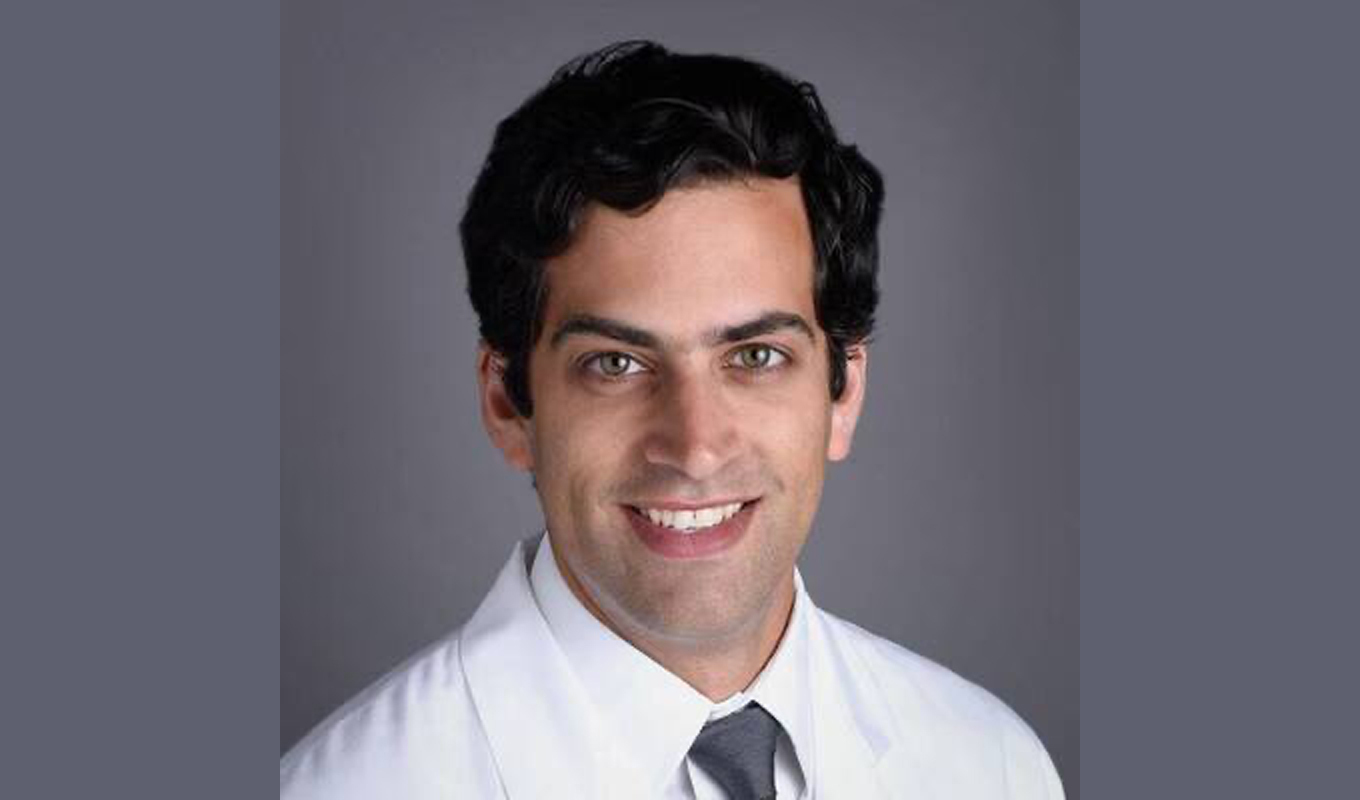
Dr. Matthew Abraham knows the free market can work in halth care. (Supplied photo)
Dr. Matthew Abraham takes a free-market approach to health care
By Anna Moore · Mar 23, 2026
In medical school, Dr. Matthew Abraham heard the free-market doesn’t work in medicine—an idea he never stopped questioning.
“We were told you can’t use free-market principles in medicine because patients can’t be informed consumers, and it’s just too complicated and nobody can afford it anyway,” he said. “We were also taught that physicians shouldn’t be involved with the finance and business side of medicine because it's a conflict of interest and it’s unethical.”
Dr. Abraham, a member of Samaritan Ministries, grew up in Ohio, attended medical school there, completed his residency in Tennessee, and then practiced in North Carolina. He became board-certified in two medical specialties: general surgery and critical care/trauma.
He saw firsthand while working in a hospital in 2020 how physician autonomy was shrinking and how political and ethical pressures were shaping everyday medical decisions. Those experiences pushed him to pursue a different kind of health care model.
He went on to co-found Veritas Surgery with David Foucachon, a member of the Samaritan Ministries Board of Directors. Veritas is a free-market surgery center serving the Pacific Northwest “without middleman markups.” Abraham also works there as a general surgeon.
Veritas operates on the very free-market principles he was once told would fail. Its cash-pay model bundles all costs into a single, transparent price, eliminating surprise bills. About half of the center's patients are members of health care sharing ministries. Many patients travel from other states for their procedures.
The patient is the customer
Dr. Abraham wanted to start the surgery center to offer an alternative medical system that cares for the whole patient—physically and financially.
“The whole insurance system is completely broken,” he said. “Prices don’t mean anything. The main cause of bankruptcy in the U.S. is medical bankruptcy, so patients are financially devastated. They’re avoiding surgeries they need because they can’t afford it.”
With Veritas, the aim is simple: treat the patient as the customer.
“Anytime you take the decisions out of the patient’s hands and, especially, stop treating the patient as the customer, then you start introducing all kinds of perverse incentives, and that’s how we end up with the broken system,” he said. “Fundamentally, in the traditional medical system in America, the patient is not the customer. It’s the insurance company that’s the customer because they’re paying for everything.”
Better care, faster recovery
Dr. Abraham said ambulatory surgery centers perform many surgical procedures more efficiently because patients receive greater attention and more focused care. They often experience better outcomes, fewer infections, and faster recoveries.
“It’s a faster, more efficient place to have surgery because you’re not dealing with all the other stuff in the hospital,” he said. “Hospitals are a great place for taking care of sick people who need a lot of support. They’re not a great place for doing things like basic blood work and simple surgeries and other stuff like that.”
Patients also spend far less time on-site.
“In the surgery center, you’re only there for three hours. You come in, have your procedure, wake up, and you leave,” he said. “So, it forces patients to stay more functional and more active, and it pushes them down the road to recovery faster.”
Veritas adds a personal touch to each patient’s recovery by providing a catered meal after surgery.
“It’s not just fixing the medical problem. We’re treating them as a whole person,” Dr. Abraham said. “If you’re not eating well, you can’t recover well.”
The patient gives prior authorization
At Veritas, patients are at the center of every decision, ultimately choosing what they want and what they can afford.
“We can talk with the patient directly about what makes the most sense for them,” Abraham said. “It’s not a question of whether laparoscopic or open surgery will be paid for, it’s, ‘What do you want as the patient? Here are the benefits. If we do it this way, you’ll have a little bit more pain, and it’ll be a slower recovery, but it’ll save $2,000. Or you can do it the other way, and it’ll be a little bit more expensive, but you’ll have these advantages with orthopedic surgeries.’”
In the surgery center, you’re only there for three hours. You come in, have your procedure, wake up, and you leave.
Dr. Matthew Abraham, Veritas Surgery
Doctors are also more readily available to answer follow-up questions or address concerns without the barriers common in insurance-driven care.
“We only get paid when we provide the service to the patient, and so we are very available to the patient by text or call or video conference to follow up on any issues or questions,” Dr. Abraham said. “The patients are really confident they can get ahold of us anytime they want with any questions or concerns, even just to ask for a restaurant recommendation for when they’re in town for their surgery.”
‘Humans are relational’
As more surgery centers emerge nationwide, patients are beginning to recognize that they have alternatives to the traditional hospital and insurance system. Dr. Abraham believes this shift isn’t just about new facilities—it's about a new mindset.
Just as his own membership with Samaritan Ministries reflects a commitment to health care freedom, he wants his patients to experience that same empowerment by becoming active, informed participants in their care. For him, the future of health care isn’t built on bigger, broken systems, but on transparency and personal relationships.
“Humans are relational,” he said. “Everybody craves that personal relationship. It’s just part of how God made us. I think the only way to really fix heath care in a durable way is building off personal relationships in small settings.”