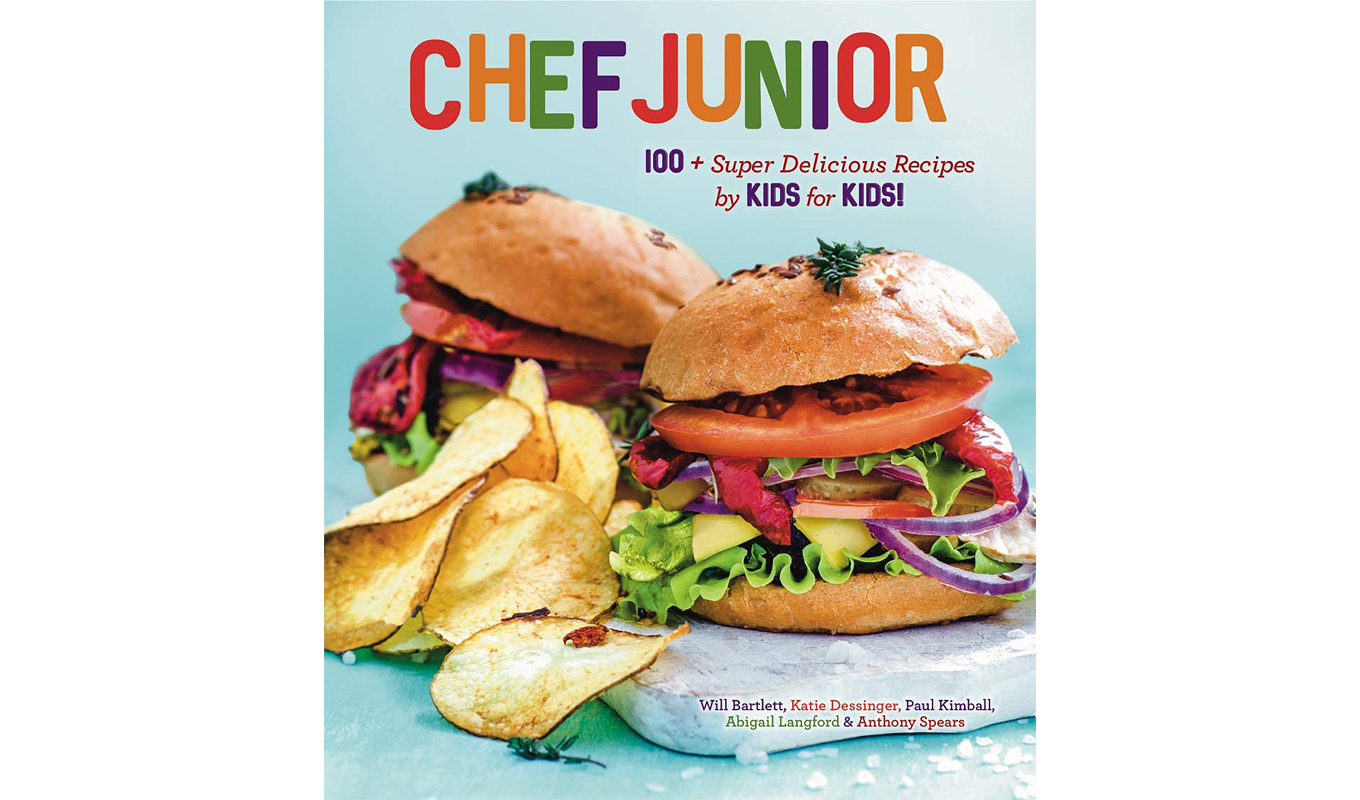
'Chef Junior' features recipes plus kitchen guidance for young cooks
By Michael Miller · Aug 16, 2024
Young entrepreneurs share their cooking skills
If you’re a young person who wants to learn to cook or just wants to cook more, Chef Junior: 100 Super Delicious Recipes by Kids for Kids ($19.95, Sterling Epicure) is a great place to start.
The 2020 book was written by five kids, four of whose families are Samaritan Ministries members, and features 100 recipes. The authors are Will Bartlett, Katie Dessinger, Paul Kimball, Abigail Langford, and Anthony Spears.
Besides being beautifully designed and photographed, Chef Junior is easy to use and comes with some great kitchen education for young chefs (and old newsletter editors, too).
The recipes are divided into six categories: breakfast, lunch, dinner, snacks, dessert, and drinks. In each category there are recipes that the authors have either created from scratch or adapted from, say, recipes popular in their families.
Each recipe features a brief description of the specific dish in question, along with some entertaining comments. For example, Abigail’s comment on her “Baked Oatmeal Squares” recipe is “Oatmeal with blueberries! Try. The. Recipe. NOW!”
I’m thinking it’s one of her favorites.
Several entries also feature tips, like Paul’s info on the best cheeses to use for grilled cheese sandwiches. (If you’re curious, check them out on page 115 of the book. Oh, OK—they’re pepper Jack, Monterey Jack, provolone, Havarti, sharp Cheddar, and mild Cheddar. But you have to read the book to find out the distinct advantages of each.) Another tip says that “Crushing garlic and letting it rest before cooking with it increases its health benefits.”
Skill levels are included for each recipe, too. “Chia Pudding” is easy, “Great-Grandma’s Spaghetti from Italy” is moderate, and “Tomato, Zucchini & Mozzarella Bake” is advanced. The book also provides active time of preparation, total time, and the number of servings for each recipe.
One feature that makes the book stand out for young and other inexperienced cooks is its list of equipment needed for each recipe to help the cook get everything ready before starting. I wish every cookbook and online recipe featured that.
But Chef Junior doesn’t just tell you what equipment to use. It also coaches you in the directions. For instance, there is guidance on when to make sure you’re wearing oven mitts, or when to get that cutting board and a chef’s knife out, or being sure to rinse canned beans “until the water runs clear.” The authors don’t assume that you’re an experienced cook.
That teaching approach includes some features early in the book.
Anthony has a chapter on “Real Food,” with suggestions on buying produce, meat, dairy, eggs, and fish and seafood. He also explains what food label information means when it comes to such categories as organic and natural food. Abigail writes a chapter on “How to Use the Equipment in This Book,” a more in-depth look at kitchen tools than are provided in the recipes. She offers wise cautions (“Kids should never try to deep-fry anything. Ever.”) and useful information, going over equipment like ovens, blenders, immersion blenders, graters, and peelers. More info is offered on measuring cups and other items.
Paul has a chapter on “Using Knives Safely,” explaining everything from how to hold a knife, choosing a knife, and how to use a knife to cut different ways.
Finally, Katie writes about “How to Substitute Ingredients to Make Recipes Allergy-Friendly,” with valuable content on substitutes for dairy, eggs, nuts, soy, corn, and wheat flour.
Believe me, the recipes are delicious, too. Using Chef Junior, I have made Flourless Banana Split Pancakes (recipe at right), and Pinto Gallo (Gallo Pinto). As an infrequent cook, I valued the simple, clear directions, and am confident that just about any young chef who is good at following directions could do just as well or better than I did.
The pancakes were delicious and tasted like, well, pancakes, even though they were made mostly from overripe bananas and eggs. The Pinto Gallo (Gallo Pinto)—Paul says he always got the name confused while growing up—was a major hit at dinner with my family; I recommend using the chicken broth option for full flavor, and don’t cheat on the garlic. Finally, as a big fan of eggs fresh from the hen, I followed Abigail’s Scrambled Eggs recipe, which brings new luster to a basic dish.
All in all, you can’t go wrong with using Chef Junior to help a burgeoning or even experienced young cook grow their skills and expand their kitchen repertoire.