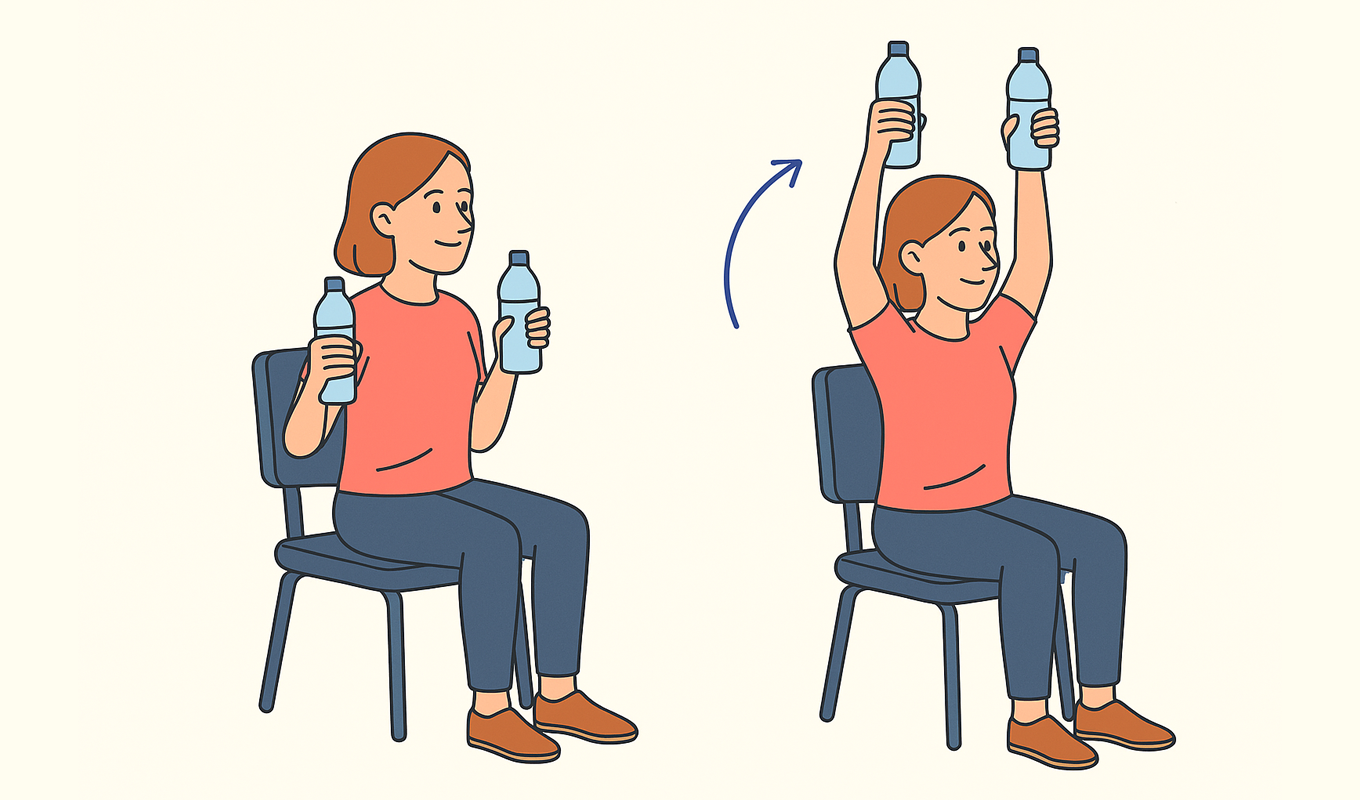
Build strength and mobility with simple chair workouts
By Nathan Appleby · Mar 09, 2026
Chair-based exercises are one of the most practical, low-risk options available for those who have trouble standing for long periods due to balance issues, joint pain, weakness, or other limitations. These exercises allow older adults to build and maintain strength, flexibility, endurance, and circulation without risking falls or stressing achy joints.
According to Harvard Health, "Chair-based workouts can help you build and maintain strength, flexibility, and endurance. They also provide a stable base from which to exercise and can alleviate pressure on achy knees or wobbly ankles." Any type of exercise—including seated—can help older adults remain healthy, happy, and independent.
These benefits help with daily tasks (for example, easier sitting/standing transitions, better posture, reduced stiffness) and can lower fall risk over time. But let's be clear: results vary by individual, and these won't reverse severe mobility loss on their own. Start slow, stay consistent (exercising two to three times per week), and progress only as tolerated.
These exercises require only a sturdy chair (no wheels; chair arms optional for support). Consult your doctor first—especially if you have any relevant physical conditions, recent injury, or pain. Stop if anything hurts (beyond normal effort), breathe out on exertion, and never push through sharp pain.
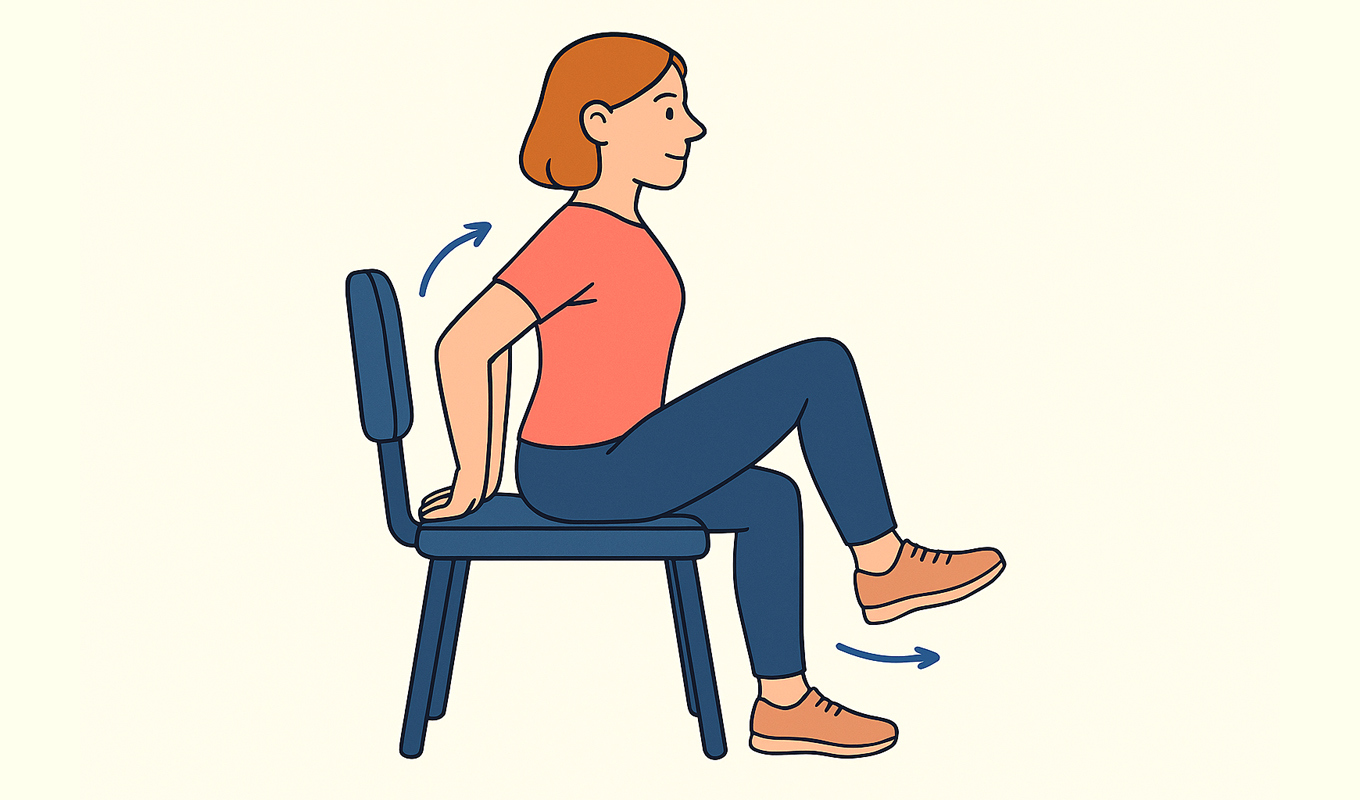
Seated Marching exercise. (AI-generated image created using Microsoft Copilot.)
1. Seated Marching
Benefits: Gently elevates heart rate, strengthens hip flexors/legs, improves circulation and coordination.
How to do it:
- Sit tall, feet flat, hands-on thighs or arms for balance.
- Lift one knee toward chest (as high as comfortable), lower slowly.
- Alternate in marching motion.
Do 8-12 lifts per leg, 2-3 sets. Rest 30-60 seconds between.
Modification: Tap toes forward if full lift is tough.
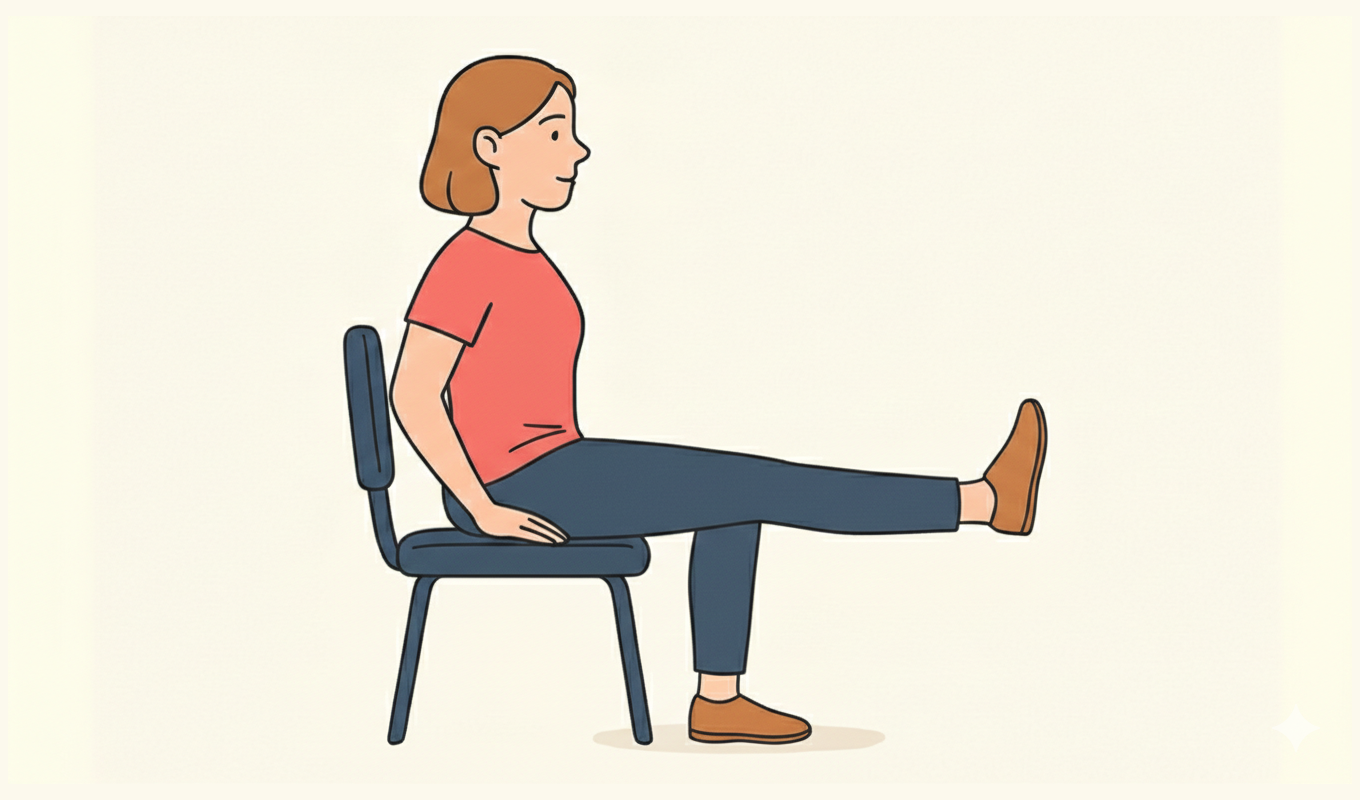
Seated Leg Extension exercise. (AI-generated image created using Google Gemini.)
2. Seated Leg Extensions
Benefits: Strengthens quadriceps for better knee stability and sit-to-stand transitions.
How to do it:
- Sit tall, feet flat.
- Slowly straighten one leg out (parallel to floor or as far as possible), point toes.
- Hold 2-3 seconds, lower slowly.
Do 8-12 reps per leg, 2-3 sets.
Modification: Partial extension if knees are in pain.
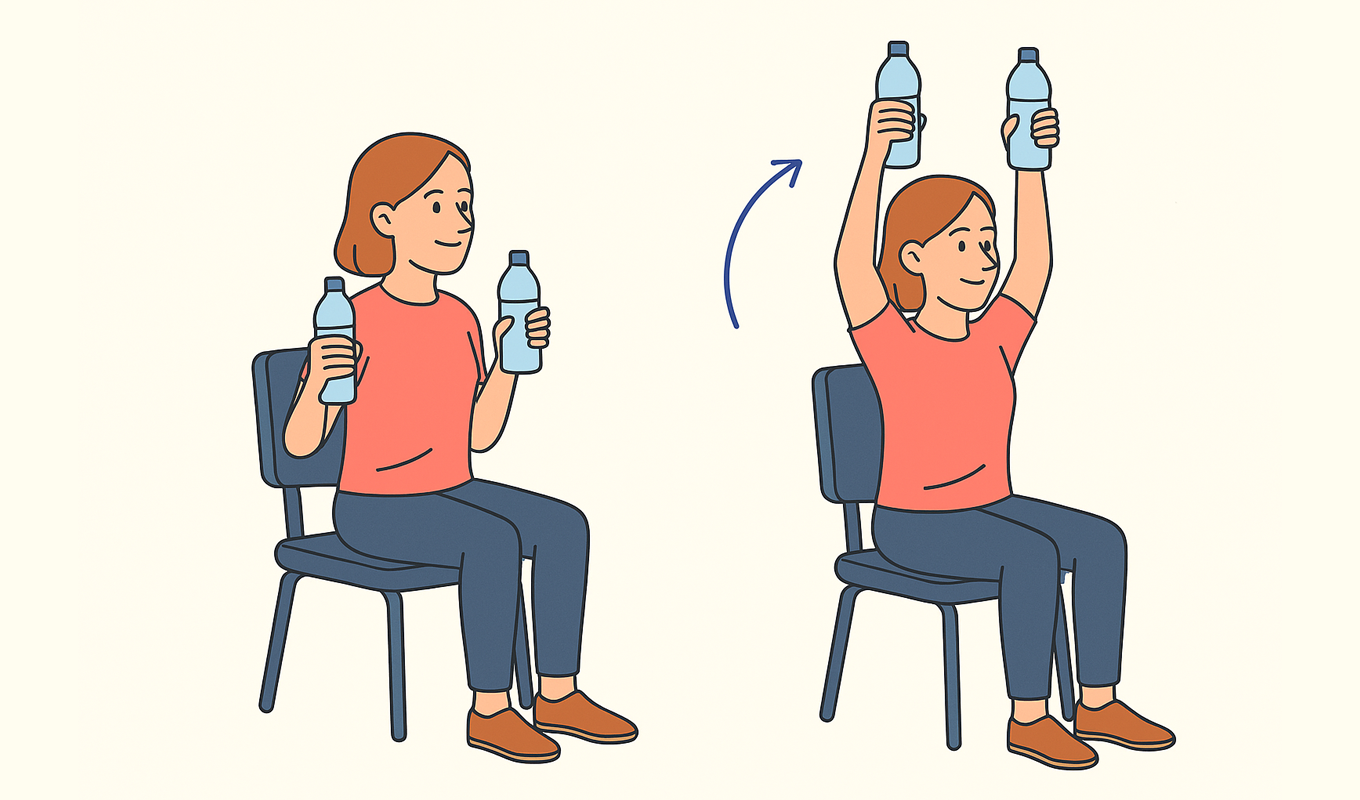
Arm Raises/Shoulder Press exercise. (AI-generated image created using Microsoft Copilot.)
3. Arm Raises/Shoulder Press
Benefits: Builds shoulders, upper back, and arms for reaching, dressing, and posture.
How to do it:
- Sit tall.
- Start arms at shoulder height, elbows bent, palms forward.
- Press arms overhead (straight or as high as comfortable), then lower.
Do 8-12 reps, 2-3 sets. Add light weights (for example, water bottles) if ready.
Modification: Stop at shoulder height if in pain.
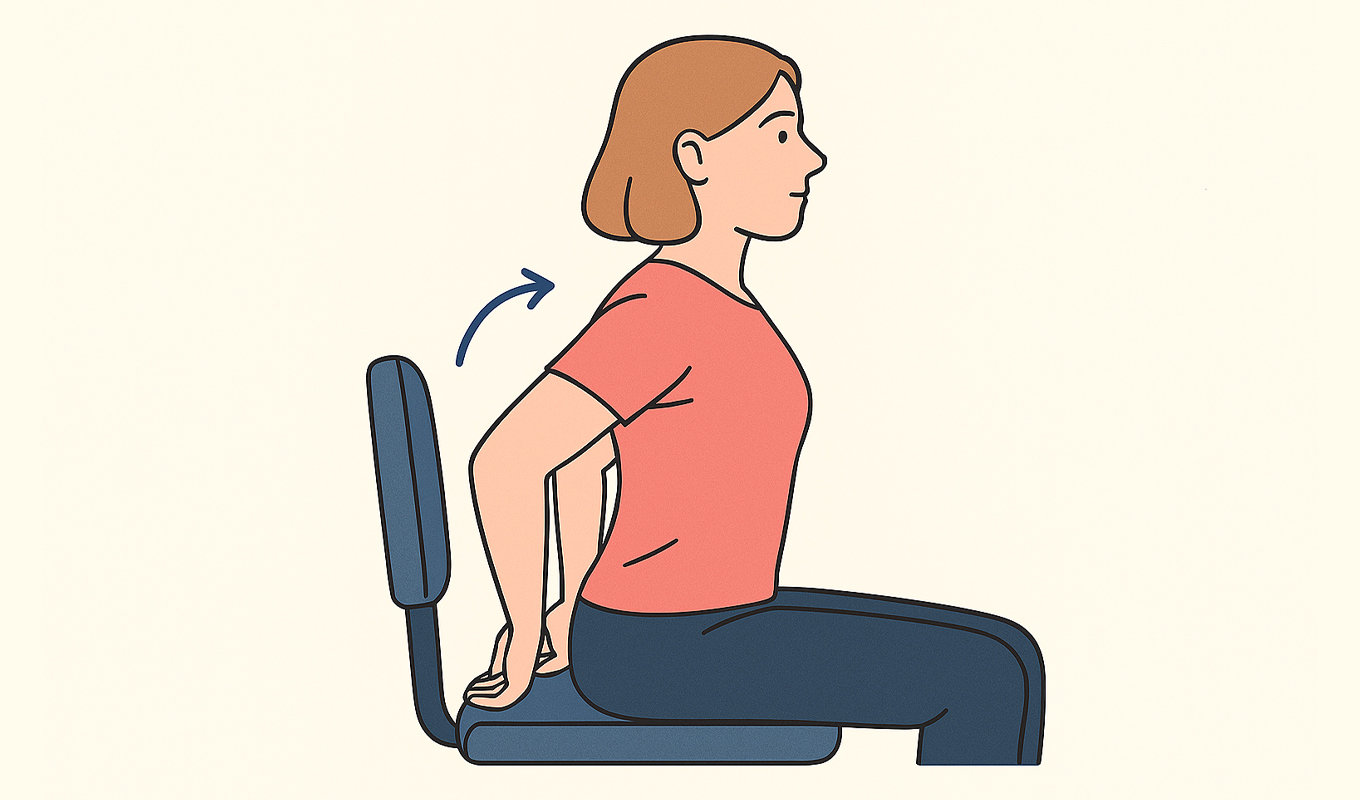
Seated Shoulder Blade Squeeze exercise. (AI-generated image created using Microsoft Copilot.)
4. Seated Shoulder Blade Squeeze
Benefits: Targets upper back to fight slouching and reduce neck/shoulder tension.
How to do it:
- Sit tall, arms relaxed.
- Squeeze shoulder blades together (like pinching a pencil between them).
- Hold 3-5 seconds, release slowly.
10-12 reps, 2-3 sets.
Modification: Smaller squeeze if tight.
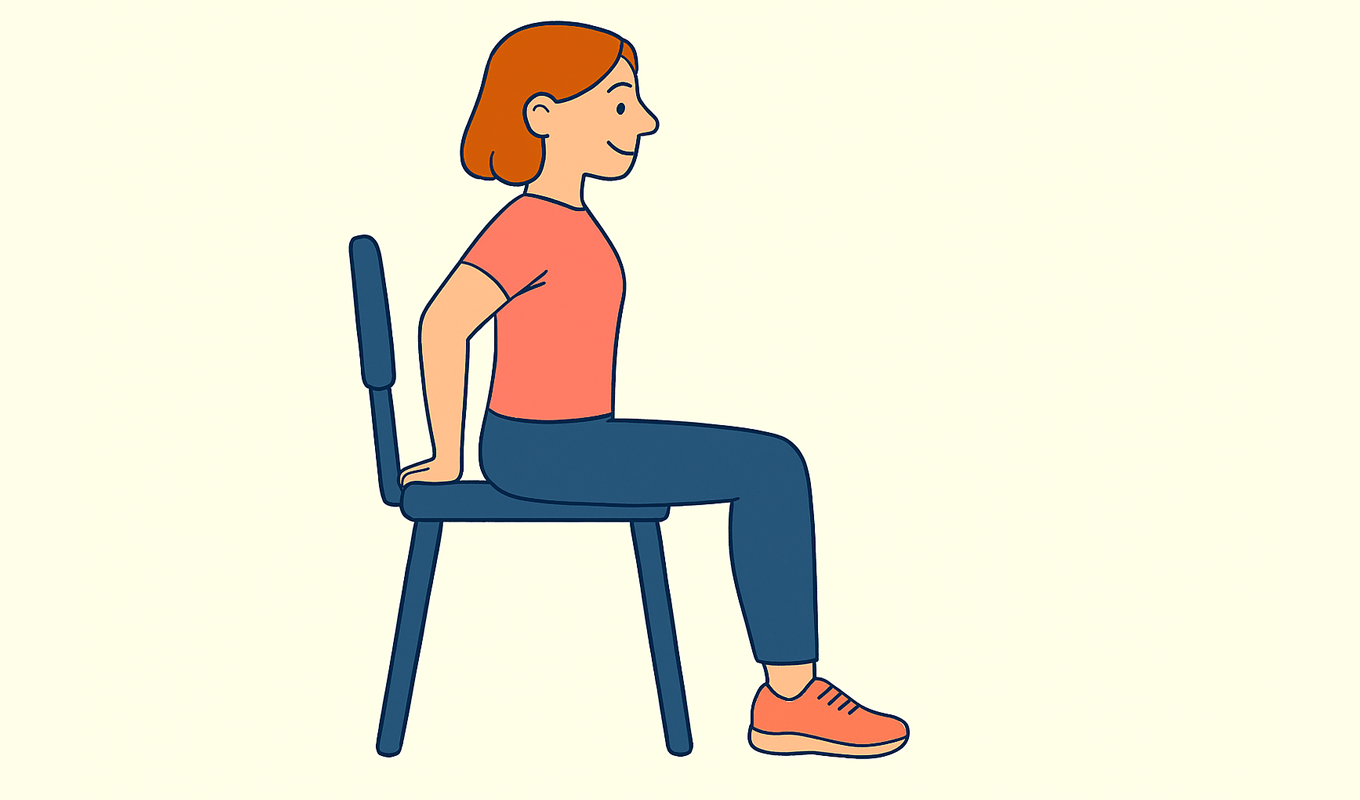
Seated Calf Raises exercise. (AI-generated image created using Microsoft Copilot.)
5. Seated Calf Raises
Benefits: Strengthens calves/ankles, boosts lower-leg circulation, supports standing balance.
How to do it:
- Sit tall, feet flat.
- Lift heels (point toes down), then lower. Or alternate: point toes forward, then flex back.
Di 12–15 reps, 2–3 sets.
Modification: One leg at a time.
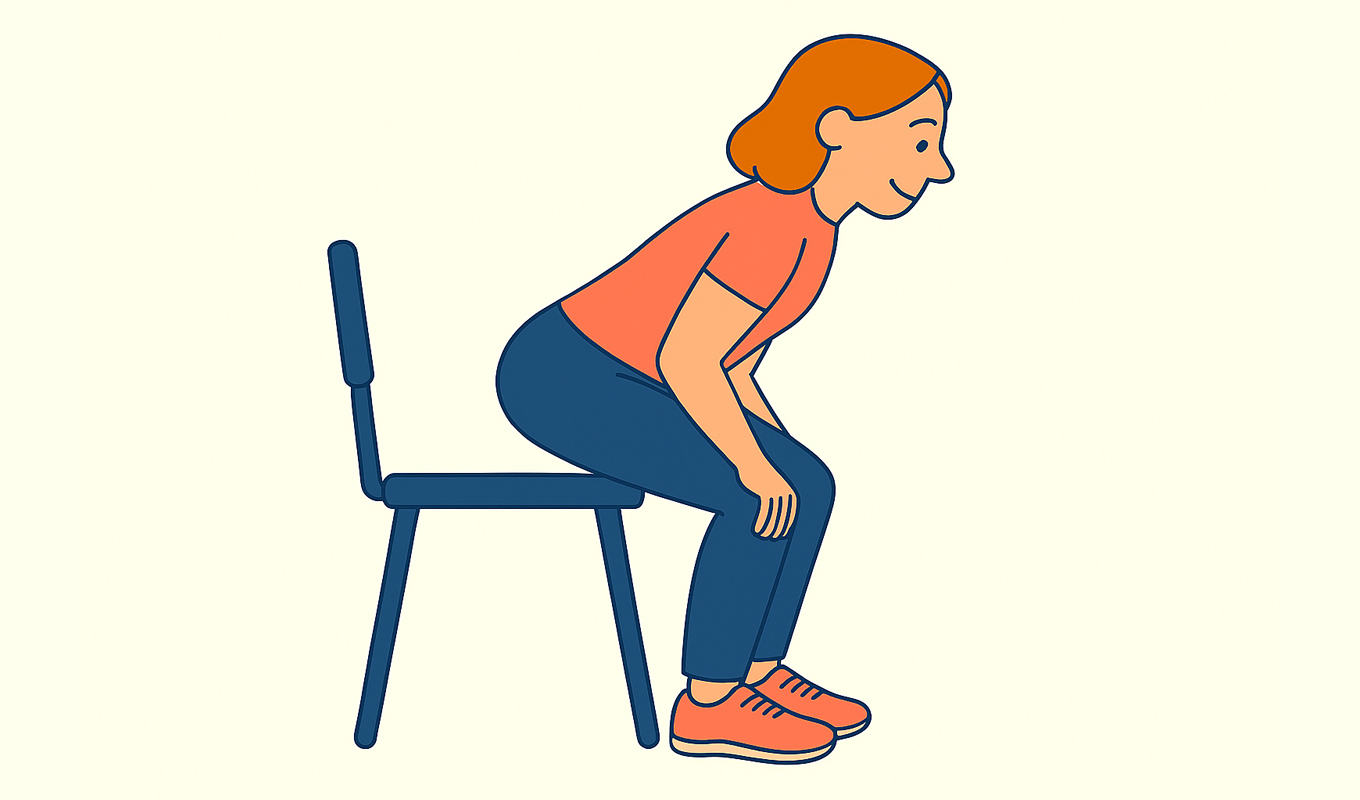
Sit-to-Stand Progression (AI-generated image created using Microsoft Copilot.)
6. Optional: Sit-to-Stand Progression
Benefits: Builds leg strength/confidence for safer transfers (skip if unsafe).
How to do it:
- Scoot to chair edge, feet shoulder-width, hands on arms.
- Lean forward, push through heels, stand with arm assist.
- Pause, sit controlled.
Do 5-8 reps, 1-2 sets.
Important: This is progression only—master seated exercises first.
Do these exercises regularly 10-15 minutes at a time for real gains. Small, consistent effort beats sporadic intensity.
Health & fitness disclaimer: This content is for general informational and educational purposes only and is not medical advice or a substitute for professional medical guidance. Chair exercises carry risks of injury, especially for older adults or those with health conditions, balance issues, joint pain, or prior injuries.
Consult your physician before starting any exercise program. Stop immediately if you feel pain, dizziness, or discomfort, and seek medical help.
You participate at your own risk. Nathan Appleby and Forged In Motion LLC disclaim all liability for any injury, damage, or loss arising from use of this information.
Perform at your own risk.
Samaritan Ministries member Nathan Appleby is a physical therapist and creator of Forged In Motion.