
Caregiver solutions include outside support and respite
By Kristina Twitty · Apr 19, 2024
Part 2 of 2.
In part 1 in April, we discussed the growing number of older adults (and their children) finding themselves in need of daily activity support, care, or respite. Our population is getting older as our birth rate slows, and more baby boomers are turning 65 this year than ever before. The financial cost of medical care, the economy, and family structure all feed the need to plan well—and many are already living a caregiving life. Now, in part 2, we turn to practical solutions for respite and relief, ministry, and the role of the local church.
Hiring help
Many families find that hiring a part-time, in-home caregiver offers much-needed relief and support for daily tasks that their loved one is no longer able to manage alone. In addition, family members may also find a community of encouragement through activities offered outside the home.
Finding support and respite for both you and your loved one is critical. Whether you choose a caregiving agency or a private caregiver, you will want to have clear expectations of what is needed and what they provide.
Prior to having a caregiver introduced to your loved one, hiring an aging-care manager will help you plan for care, exploring the many facets of your loved one’s needs and insurance that may assist. (Long-term care insurance often provides financial assistance for these consultations and for hiring an in-home caregiver.) If they face a move from their home to assisted living or memory care, housing transition advisors can help evaluate not only the needs your loved one has, but what is available. It is never too early to plan for the financial needs of caring for yourself or your family.
Caregiver respite
Faith-based respite ministries and caregiver support groups within church families are growing.
Oftentimes led by a caregiving spouse or child who has lost their loved one, these groups offer connections providing more than a home with limited space or visitors can. In some parts of the country, LifeSpan Respite Care programs provide planned or emergency respite for caregivers of an older adult. The federal government also recognized the growing need for caregiver support through the RAISE Family Caregivers Act of 2018 and the Administration for Community Living, established by the caregivers act. State Area Agencies on Aging (AAAs) are also a clearing house for local resources for elder care.
Nonprofits offer full support, like Interfaith Caregivers in Minnesota, and social support, like Aloha to Aging in Marietta, Georgia, Folks at Home, in Sewanee, Tennessee, and The Respite for All Foundation nationwide. (The last is a faith-based ministry serving both those suffering from memory loss and their families). Forms of dementia have already become such a significant factor in caregiving that many assisted living communities now offer a higher level of care for individuals who need memory care. Let’s take a closer look at the impact and needs that dementia presents.
In his recent book, Do Not Cast Me Away: Dementia in the Congregation, Pastor Paul Rader writes of his experience caring for those in his congregation impacted by this disease—both the “patients” and their caregivers. For a season, his church family offered a “Sing from Memory” program, creating a musical reprieve with hymns many of their beloved elders know by heart.
Rader has come to understand what few other pastors have realized:
The church in North America scarcely needs another crisis, but one is coming. … In a few short years millions of our members will be forced out of our congregational lives either by dementia or by caring for those with dementia. … (T)he funds [expected to be $1 trillion by 2050] spent on dementia care are funds that could have been given to churches and other non-profits. Dementia will affect every facet of our lives.*
Daphne Johnston, founder of the Respite for All Foundation, wrote a step-by-step guide for church-based ministry titled Reclaiming Joy Together. The heartwarming stories and full-page photos display the joy of a connected community loving each other. Johnston’s foundation has already assisted over 40 churches to develop mutually supportive communities under their own roof. Each one demonstrates a theology soaked in honoring the Imago Dei—Image of God—in each of us, no matter our condition.
Calling on the Church: a word to our pastors
If you are a pastor or ministry leader, both books mentioned above would be worthy additions to your reading list in 2024! There is no need to reinvent the wheel. Many practical solutions with proven results are already being offered within the Body of Christ. Our call to show hospitality to other believers (Romans 12:13) and strangers (Leviticus 19:33, Hebrews 13:2) is fulfilled in these ministries, as is the “pure religion” of caring for widows (James 1:27).
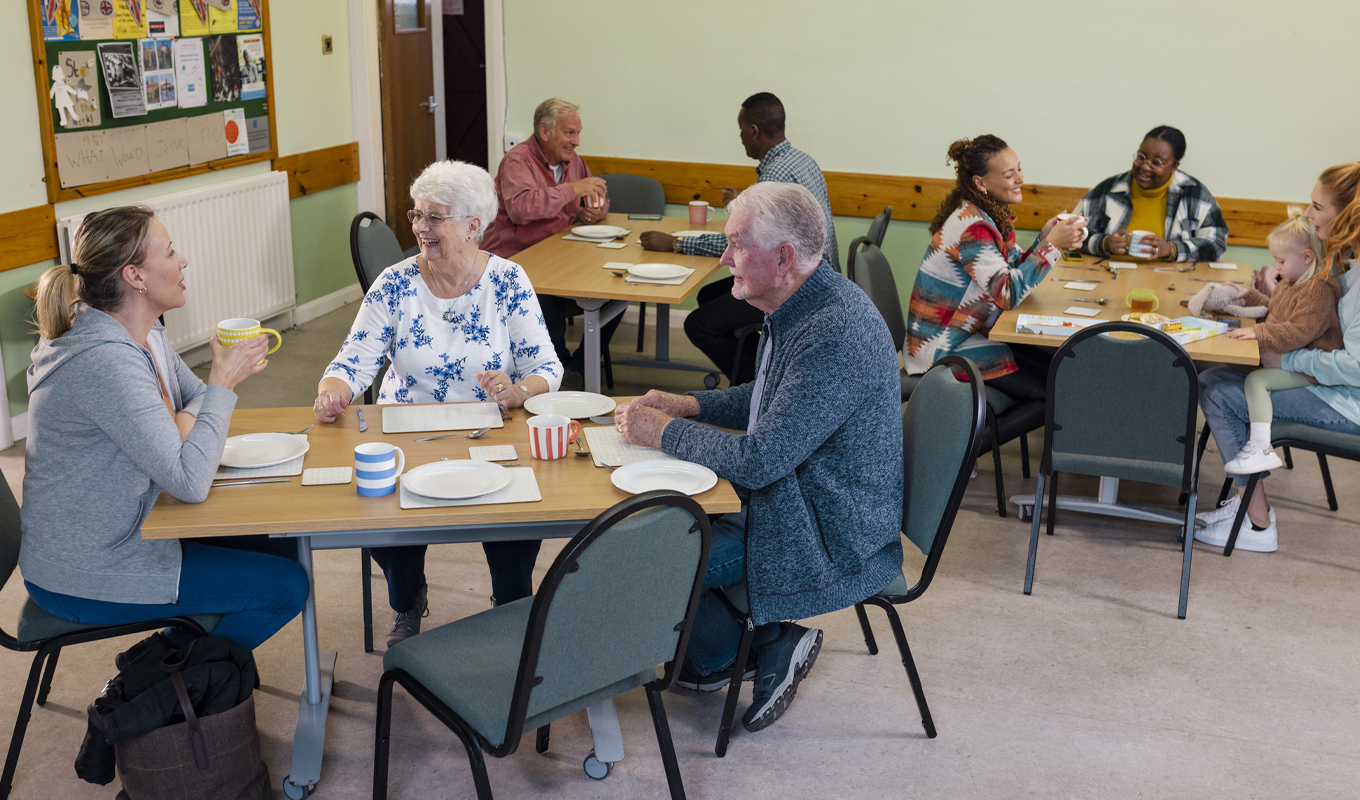
There is a tremendous opportunity, not to mention calling, for churches that develop these ministries. They offer loving support to parents and grandparents of your congregation and the children and grandchildren of the aging. Our local communities, within sight of our church buildings, need support too. Using often empty and quiet buildings during the week, the Respite for All Foundation model develops a community of support not only for the family caregivers and individuals isolated by memory loss, but also retirees, college students, and others in the community who make up the volunteer staff. It is a family, each one playing their part.
(iStock/SolStock)
Hmm, that sounds familiar, doesn’t it?
If you have a young congregation, perhaps your ministry focus would be support for those difficult and often complex conversations about planning for end-of-life care and medical treatments. The Conversation Project, an initiative of the Institute for Healthcare Improvement, provides conversation guides for choosing (and being) a health care proxy, caring for a child with serious illness, caring for people with dementia, and talking with your health team. For congregations, it provides a complete “how-to” on evaluating needs, sermon suggestions for helping members to make decisions about guardianship, and provision for minor children or caregivers in case of a medical emergency.
It isn’t just the aging who need assistance. Families need the expertise of their church, and “solo agers” need someone to practically depend on. Those numbers are growing rapidly. According to the U.S. Census Bureau, “In 2020, about 1 in 6 people in the United States were age 65 and over. In 1920, this proportion was less than 1 in 20.”
National Healthcare Decision Day (April 16, 2024) has just passed, so why not start now to create a ministry supporting biblical decisions among your flock before 2025?
These “pure religion” ways of caring for widows (and widowers) offer a way to shine Jesus into a lost world by practically loving our neighbors. These ministries give our retirees a place to serve in their golden years and honor the legacy of those who paved the way. What better way to care for those who literally and spiritually “built the church” than to offer them the love and care they have faithfully given to so many others by their offerings, gifts, and talents. It is truly the Body of Christ, being built into the holy temple of God.
If your church already has a ministry like this, you are way ahead of the curve. Congratulations. May God richly bless you and your efforts.
If you shepherd a flock, you will not have to look far to see that some of your sheep are hurting (or missing) due to the impact of caregiving or aging. In his letter to Titus, Paul encouraged the younger man to speak boldly of the grace and mercy of God in Christ so that “those who believed God would be careful to devote themselves to good works. These things are excellent and profitable for people (Titus 3:8).”
Perhaps it is time to consider how you and your congregation might gather your flock back into the fold and prepare for the care of so many more who will soon need you. Perhaps your preparation now will one day result in care for you and your family, too.
Kristina Twitty is the founder of Decision Care Advocates and a graduate of Covenant Seminary and Trinity Graduate School. For ministry start-up support, contact her at [email protected] for a brief complimentary consultation.
*Paul Rader, Louisville Institute Project Report, 2023, provided by the author.