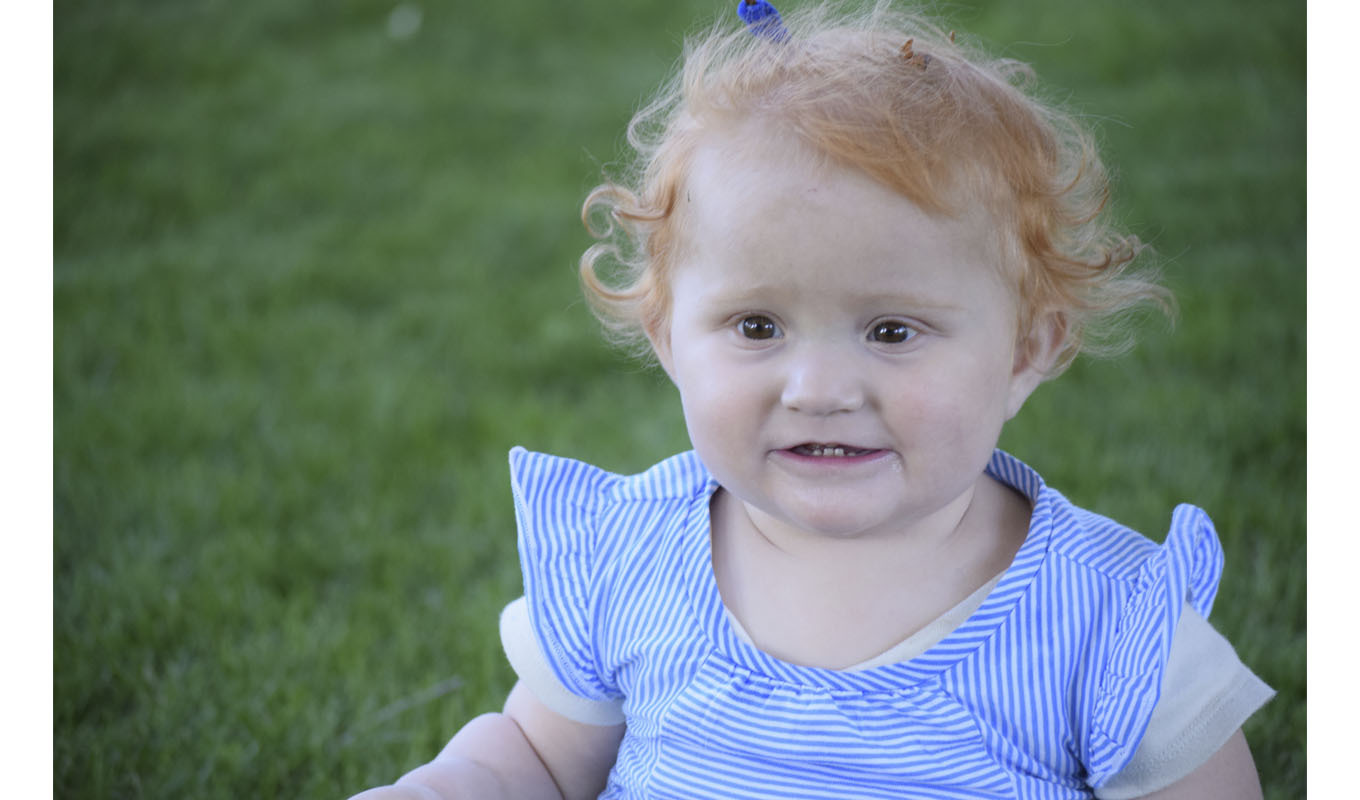
2-year-old's challenges 'cause for giving thanks'
By Michael Miller · Mar 20, 2024
To keep track of how Heather and the Boyds are doing, follow her progress at CaringBridge. You will also find information there about the Boyds’ search for a kidney donor for Heather.
Heather Boyd is about 2½ years old and is growing like most children her age.
In fact, said parents Ben and Sheri, she’s a little “chunky” and “a lot of fun.” Her older siblings play with her and make her laugh.
That’s a testament to God’s blessings and the love Heather is getting because she also has to endure 10 hours of nightly kidney dialysis, has frequent doctor visits, and is on the waiting list for a kidney transplant.
“She’s doing well for what she’s dealing with,” Sheri said.
Heather’s kidneys failed after a blood transfusion was performed soon after she was born. The transfusion was needed because her bilirubin was climbing to “potentially dangerous levels.” Bilirubin is “a chemical that occurs during red blood cell breakdown” and can cause jaundice if it goes too high. She was given a transfusion to address the bilirubin levels but suffered a reaction that resulted in her heart stopping and her body going into shock, “so the doctor stopped the transfusion,” Ben said.
That heart stoppage and shock led to her kidneys shutting down.
“They have never recovered their full function,” Ben said. “We’ve never gotten any answers as to the causes of the reaction that caused her heart to stop.”
Heather spent 150 days in the neonatal intensive care unit at Seattle Children’s Hospital in Seattle, Washington, more than 350 miles from the Boyds’ home in Enterprise, Oregon. Since coming home, Heather has been on a constant regimen of feeding tubes, daily dialysis, appointments, labs, and injections.
And yet, she is a “pretty happy baby” overall, Sheri said.
“She has continued to grow,” Sheri said. “Most dialysis kids aren’t even on the growth chart.”
Giving thanks
The situation has been admittedly taxing for the Boyds, who homeschool their other six children around Heather’s appointments and treatments. But it has also been a cause for giving thanks to God.
“We have had spiritually low lows and high highs,” said Ben. “We have many reasons to be thankful for what the Lord has done. It causes us to give thanks during the daily medical duties we perform for Heather.”

Ben and Sheri Boyd and family (supplied photo)
That hasn’t been easy, though.
“I think maybe a day or so after Heather was born, Ben turned to me and said, ‘We have to give thanks, because we’re instructed to do so at all times,’” Sheri recalls. “That was a hard thing for me to do because I wasn’t feeling thankful. But I need to give thanks whether I feel like it or not—joy that’s hard to find in difficult situations, gratitude for Heather’s life no matter what.”
The Boyds have had a lot to be grateful for, they said.
“We’re thankful for six other kiddos,” Sheri said. “We’re thankful that God provided a house near Seattle when we needed it.”
Heather’s NICU stay was during COVID-19 restrictions, too, which meant most other family members weren’t able to regularly visit the struggling newborn.
The Boyds are all home now, though, and have started a CaringBridge page to keep friends and family updated on how Heather’s doing.
Heather’s day
A typical day for the Boyds starts with Sheri getting up early and preparing to homeschool their other children. She also gets Heather’s “feeds” (liquid nutrition and medicines) ready. Ben and Sheri then remove Heather from the dialysis machine, to which the toddler has been attached throughout the night, and clean everything up.
“We have to be very sanitary about it,” Sheri said.
Then she gives thanks that Heather is free from the machine for the rest of the day.
“Throughout each day we feed her through her G-tube and take care of her medicine. She throws up a lot since she often has an upset stomach. It’s just a reality that there are going to be a lot of bodily fluids to clean up during the day. It’s all day,” Sheri added, laughing.
Heather is brought to the table for all the family meals, even though she doesn’t eat the solid food. Still, the Boyds’ diligent care helps Heather to grow.
Sheri sees it as “a great miracle, a blessing from the Lord.”
Family support
Sheri said that it’s hard for her to be “both the nurse and the mom,” but that she has a lot of support.
“I’m so thankful for my other kids,” she said. “They bring life and joy to Heather when I’m tired. They’ll play with her when I’m exhausted.”
The Boyds also have to order supplies and keep track of all her meds. Plus, with the size of Heather’s Need, there’s “a lot of bookkeeping.”
“I’m on the phone a lot,” Sheri said. “We’ve had Needs before, but they’ve been one and done. I’m learning you have to be very proactive about billing issues. You have to keep calling about them. Ben has been taking a lot of those, especially if we’re being overcharged and have to call. I also try to make some of those phone calls when I take Heather for walks.”
Then, at night, it’s time to get the dialysis machine set up again for its 10-hour run while Heather sleeps.
As the Boyds move from day to day, they stay in the Word of God and prayer.
“It’s helpful, I think, reading through all the healing that Jesus did, because you don’t know how long these people had these problems before Jesus came along and healed them,” Sheri said. “Our trial feels long, but it’s just the mercy of the Lord to heal. But sometimes it’s many years, and healing can look different. God’s been encouraging me to read through healing stories to remember that these people endured many years of this. One of my daily prayers is for perseverance and strength.”

Ben and Sheri Boyd with newborn Heather (supplied photo)
One book they say has helped them is Psalms for Trials: Meditations on Praying the Psalms by Lindsey Tollefson.
“One of the things I’m thankful for is the opportunity this trial has given our family to give thanks in difficult times, to learn about God’s goodness,” Sheri said.
Burden relief
Ben said the Boyds have found encouragement in paying Heather’s expensive NICU and dialysis bills through the support of Samaritan members.
“We’re odd ducks in being cash-pay in the nephrology (kidney) and dialysis niche,” Ben said.
A hospital executive who is a Christian helped tailor a program for Heather that allowed smoother payment of bills, especially as the time approaches for a transplant.
The sharing experience for Heather has demonstrated the financial and spiritual generosity of other members and help from the staff, Sheri said.
“I never called Samaritan and had somebody say about a bill, ‘That’s a lot,’” she said. “They’re very compassionate, asking how they can pray for us.”
Processing the checks is practically a part-time job.
“I think one month we had 500 checks come in,” Sheri said. “My mom’s very good with finances, so I enlisted her help. She made a spreadsheet, and we set up a different account from our checking account for Heather.
“Members are helping us to pay a debt we could not pay otherwise.”
The messages members have sent in with Shares have also been heartfelt.
“I wasn’t a crying person before,” Sheri said, “but now I feel everything. I open a card and someone says they’re praying for Heather and I just start crying. Sometimes I don’t think someone realizes how much that means—people that don’t even know you are caring and praying for you.”
The Boyds also utilized the Samaritan Ministries Community Facebook Group for help while they were in Seattle.
“We asked for ideas for housing, and a member somewhere in the Seattle area said, ‘Hey, we have a camper that we just recently lived in because our child was a patient at Seattle Children’s Hospital,’” Ben said. “We didn’t end up taking it, but it was quite a blessing for it to be offered.”
Transplant plans
Heather has been on the kidney donor list (which is for deceased donors) since she started dialysis, "which is encouraging," Sheri said.
“They do usually prioritize kids. Also, she’s an O blood type, which is much more easy to match than a type B.”
In late February, Heather's medical team placed her on "active" status on the deceased donor kidney transplant waitlist. In addition, the living donor program at the University of Washington is vetting several generous volunteers who match Heather's O blood type.
Heather probably will need two to three transplants as she ages, but one thing is certain: She will not lack family or prayer support.
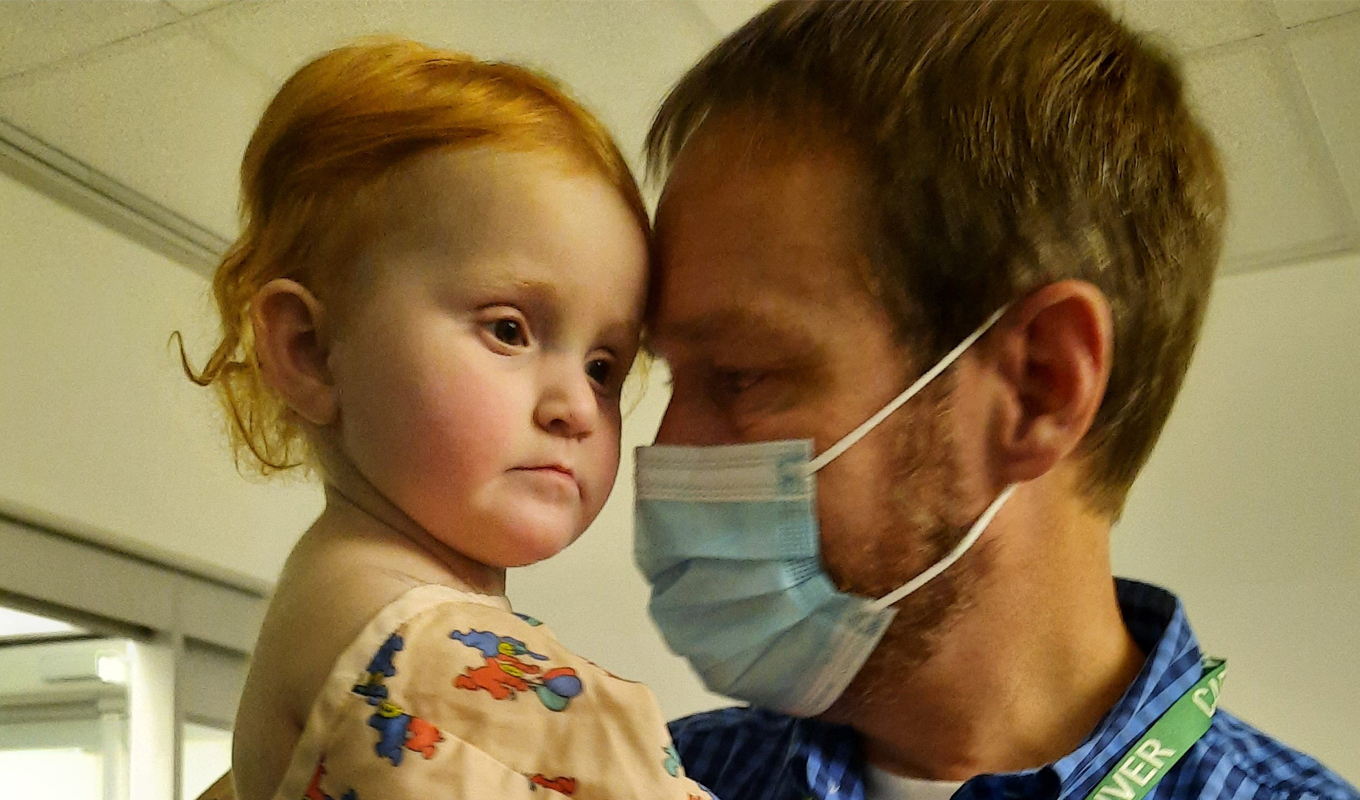
Ben holds Heather (supplied photo)